
Gang Gang Cockatoo
Callocephalon fimbriatum
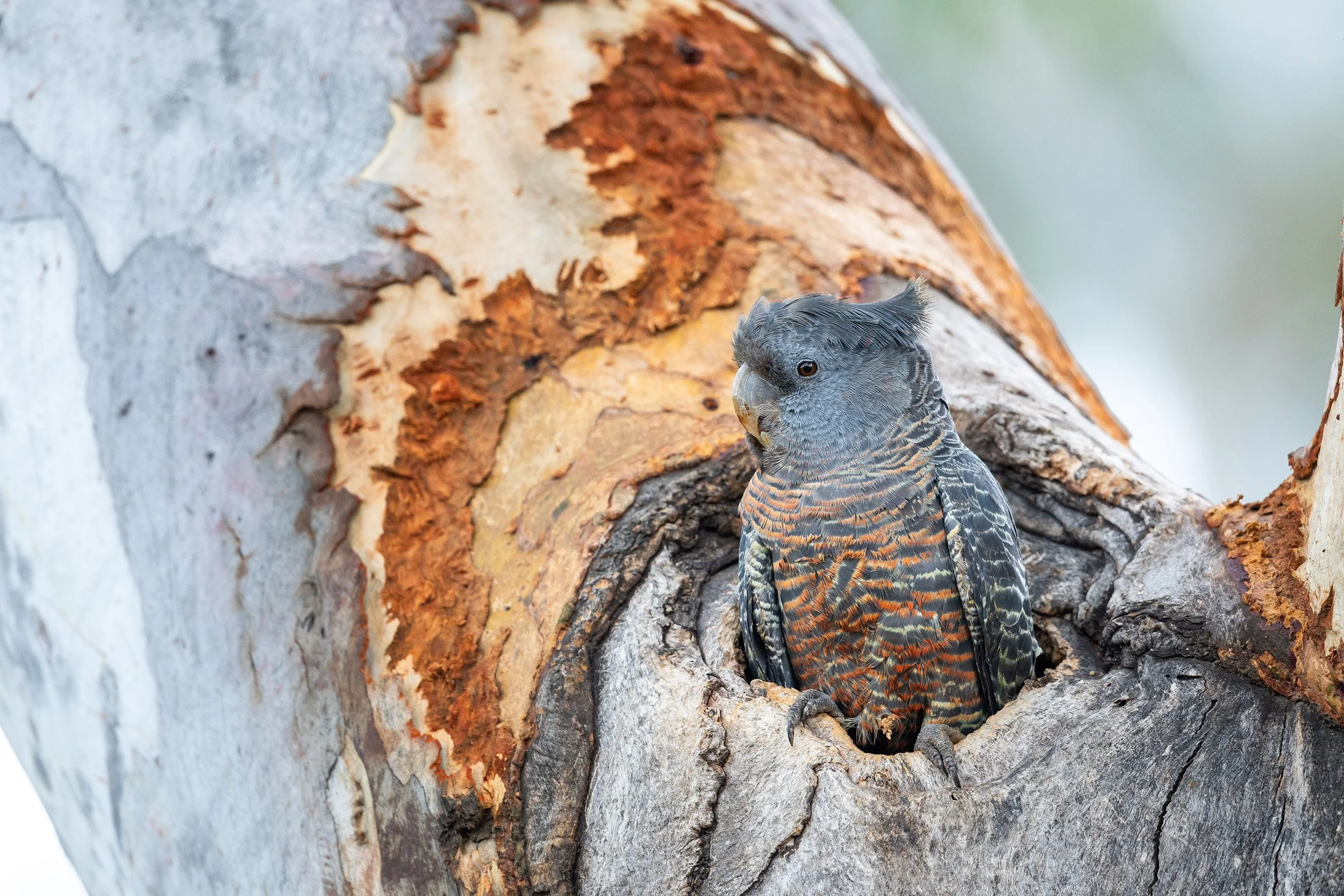
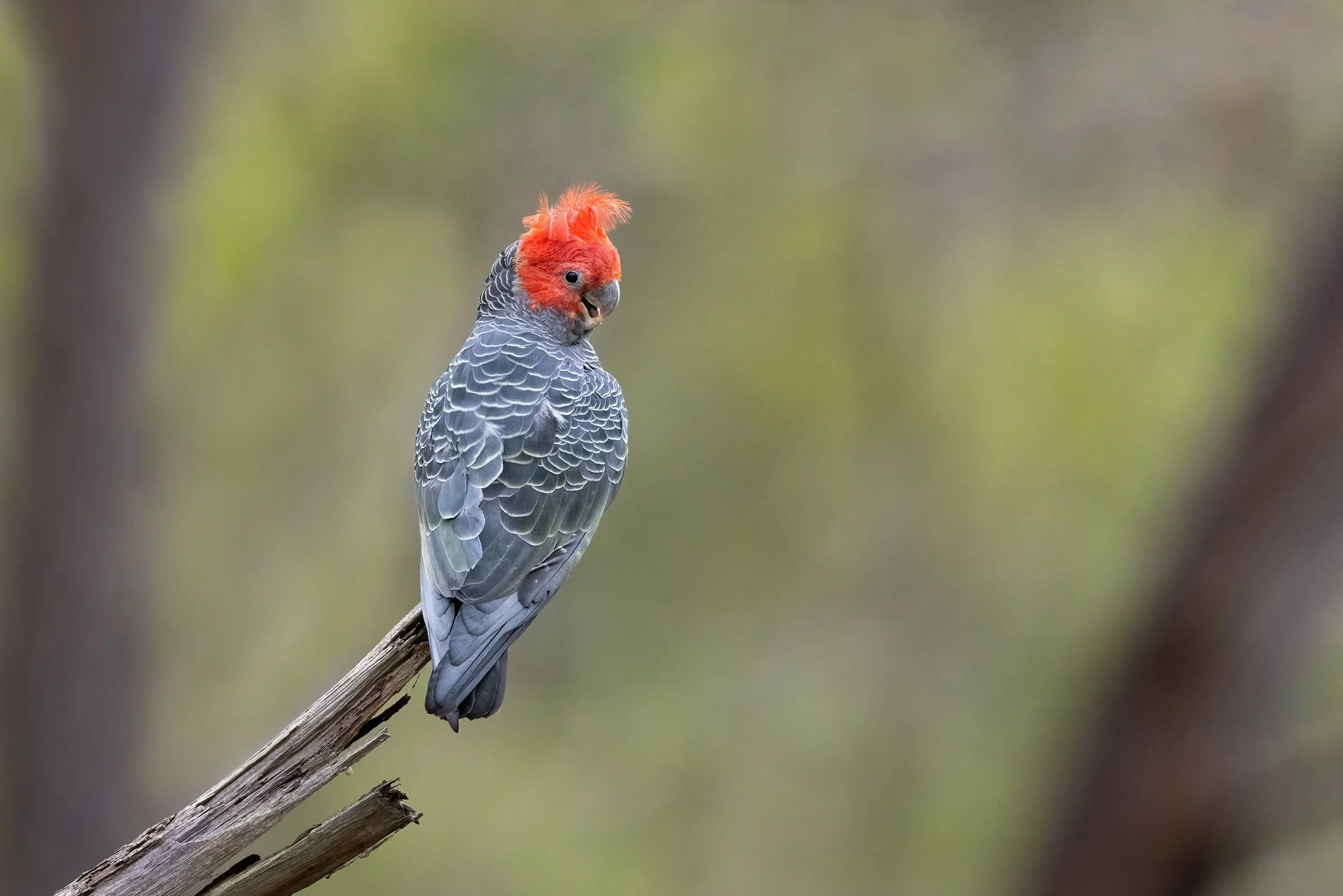
With their cheeky crests and ‘creaky door’ call, gang-gang Cockatoos are one of Australia’s most beloved birds. Once a common sight in forests and suburbs alike, their numbers have fallen sharply since 1999, a decline made worse by the devastating 2019–2020 bushfires. In 2022, the species was officially listed as endangered by the Australian Government.
Despite their popularity, much about the gang-gang remains a mystery. There’s still no national monitoring program, meaning scientists don’t know how many remain or where their most critical habitats lie. Canberra, where these birds are regularly seen and often nest in urban trees, is now considered the heart of the gang-gang’s range.
Known for their strong social bonds and tendency to gather during breeding, protecting all known nesting areas has become an urgent conservation priority.
Banner image and above photo: David Stowe
Why is it difficult?

Low densities
Gang-gang Cockatoos are now so scarce in the ACT that scientists can’t accurately count them. This makes it difficult to uncover the reasons for their decline.
Picky house-hunters
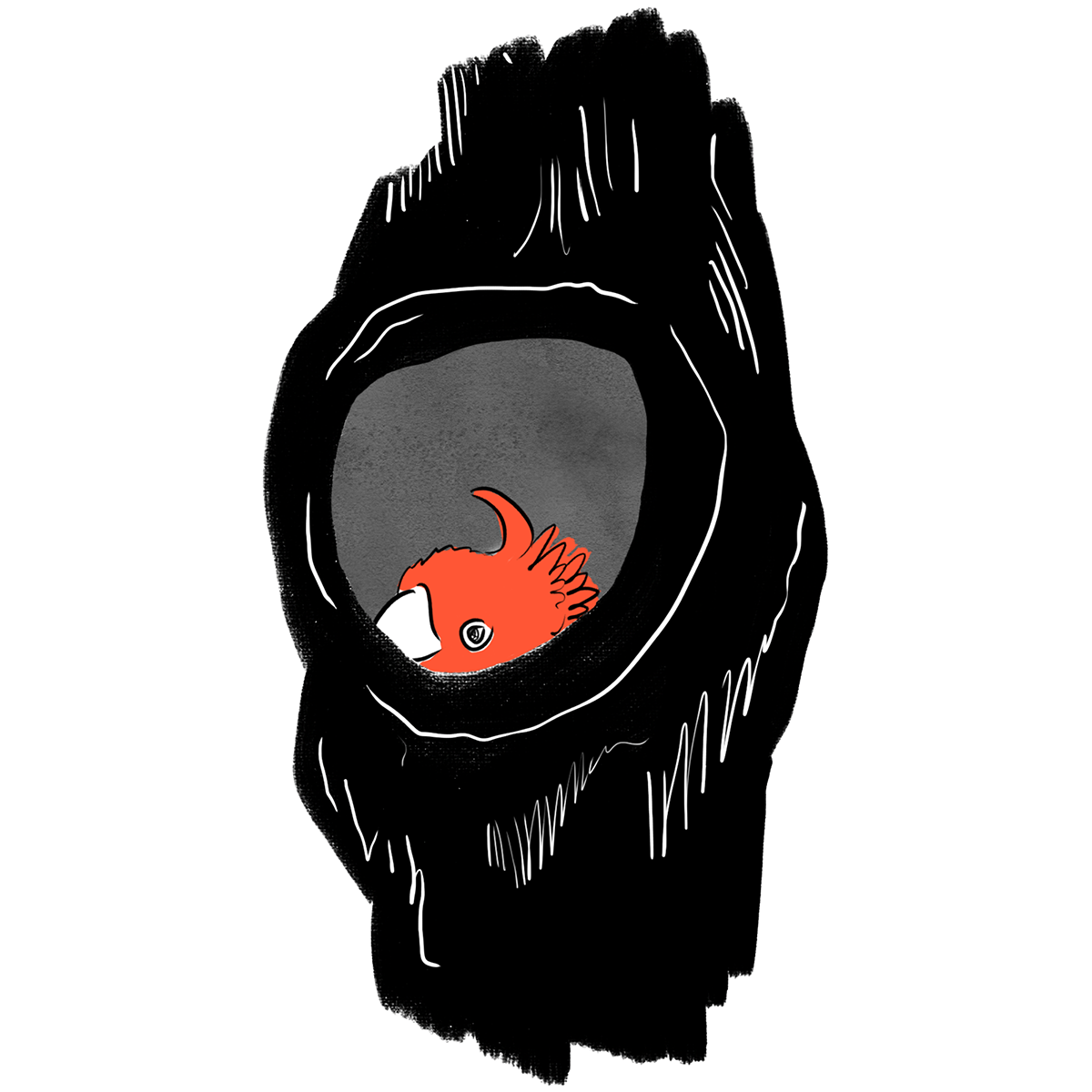
For gang-gang Cockatoos, the perfect home is a tree hollow shaped just right for raising their chicks. Finding these rare nesting spots isn’t easy, and involves climbing tall trees to study them up close.

Gaps in knowledge
There is no range-wide monitoring for Gang-gangs, which means the distribution of critical habitat and their numbers is unknown.
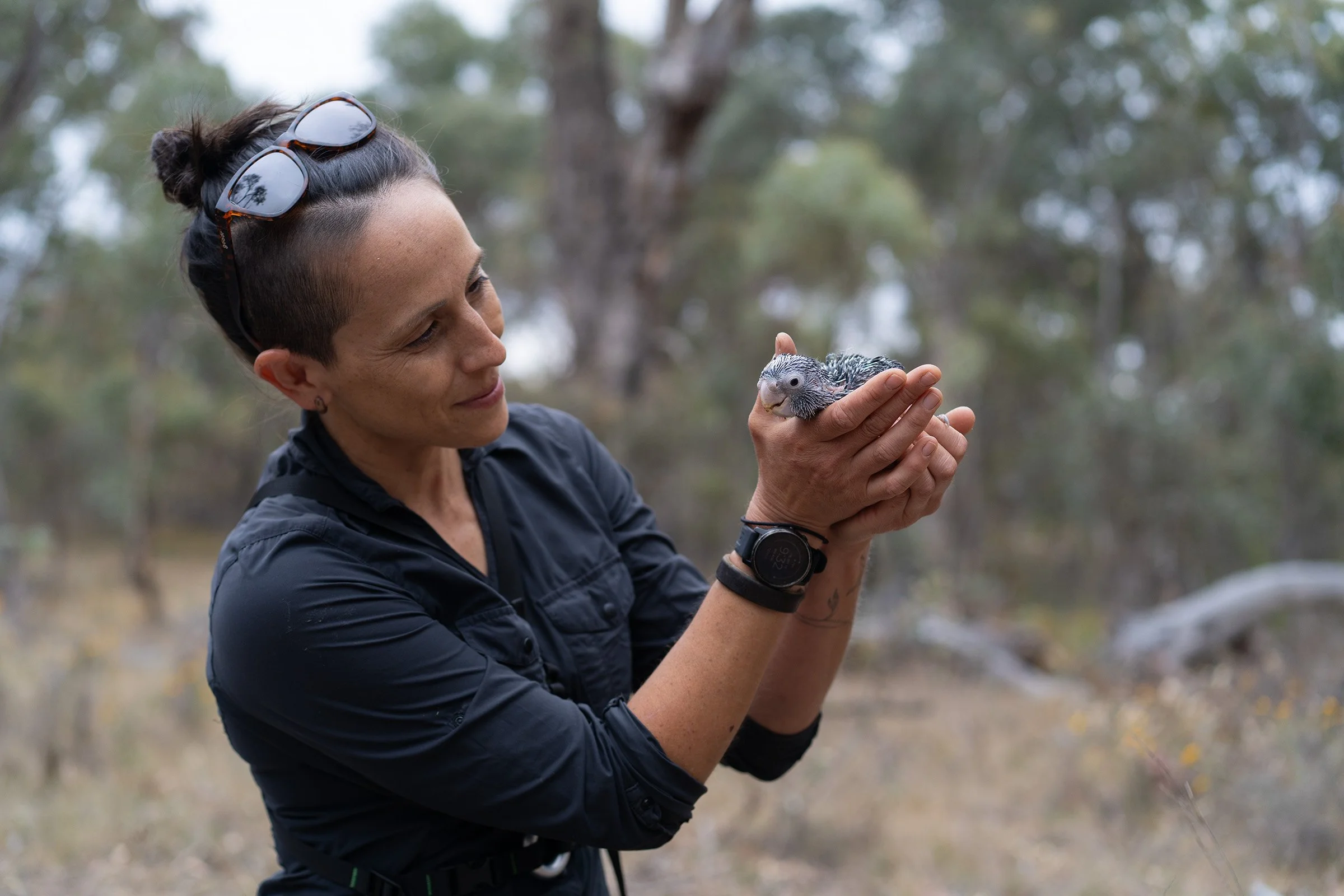
Photo: Elsie Percival
What are we doing?
Research & monitoring
Despite being one of Australia’s most iconic birds, we know very little about the gang-gang Cockatoo. Learning more about their behaviour and habitat is essential for their conservation.
Much of what we do know comes from dedicated citizen scientists in the ACT. Working with them and the ACT Government, we’ve been studying how well gang-gangs are breeding and which trees they prefer to nest in.
Our research has helped identify the types of trees and hollows they need, and we’ve carried out surveys to plan a long-term monitoring program. This work has also shown that we need new and creative ways to track these birds and close the gaps in our understanding to better support their conservation.
Future research
Our research is helping to uncover how gang-gang Cockatoos live, move, and breed across southeastern Australia. Here’s what we’re doing:
Finding nesting sites: Locating and describing the places where gang-gangs breed in New South Wales and Victoria.
Monitoring nests: Keeping track of how successful breeding is at all known nest sites across the ACT, NSW, and Victoria.
Tracking movements: Testing small GPS transmitters to learn how far the birds travel and where they go during and after breeding.
Mapping their range: Collecting every possible gang-gang sighting to create maps showing where they live and how their distribution is changing.
Studying genetics: Examining the genetic diversity of gang-gangs across their range to understand how populations are connected.
Testing new techniques: Trying out non-invasive genetic sampling (like collecting feathers or eggshells) to monitor changes in population size over time.
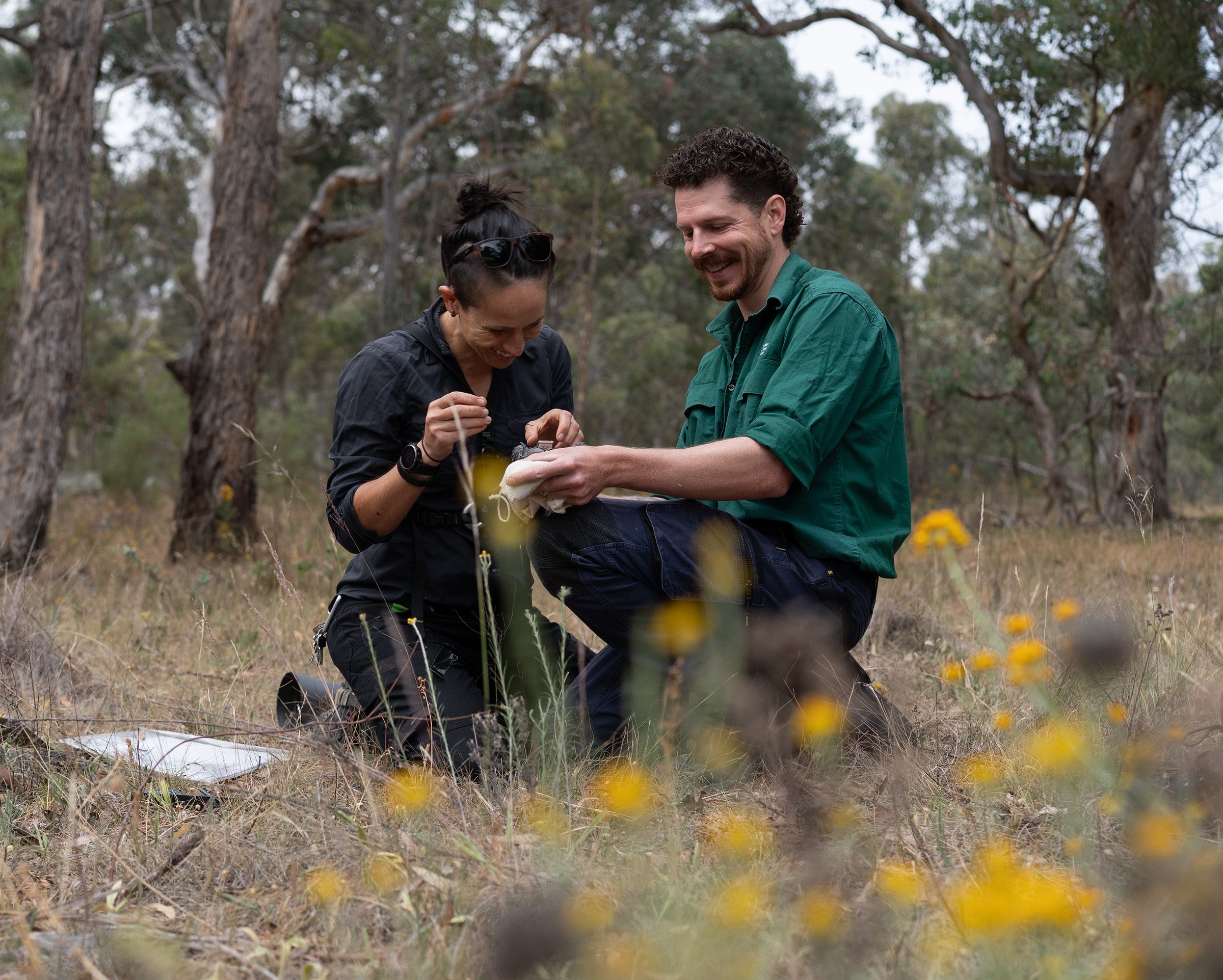
Photo: Elsie Percival
What can you do?
How You Can Help Protect gang-gang Cockatoos
We’re proud to be working alongside local communities, land managers, and councils to protect the much-loved gang-gang Cockatoo. You can play an important part in their conservation by getting involved in a few simple ways:
Record Your Sightings
If you spot gang-gangs using tree hollows, for example, entering and exiting repeatedly between September and January or feeding young chicks, please record your observations on NatureMapr or contact us directly. Every record helps us understand where and how these birds are breeding.
Collect Feathers for Research
If you find a gang-gang feather on the ground, please collect it and send it to us. Shed feathers provide valuable genetic information without disturbing the birds. Check our Feather Guide for tips on identifying Gang-gang feathers and how to store them safely.
Let Them Feed Naturally
Feeding gang-gangs may seem helpful, but their natural diet is incredibly diverse and changes with the seasons. Foods like sunflower seeds don’t provide the nutrition they need, so it’s best to let them forage naturally.