





Study Species
Study Species
Study Species
Study Species
The Difficult Bird Research Group works to monitor and protect some of Australia’s rarest and most threatened birds by tracking populations, filling knowledge gaps and guiding conservation actions to help these species survive and recover.
Swift Parrot
Swift Parrot
Swift Parrot
Lathamus discolor
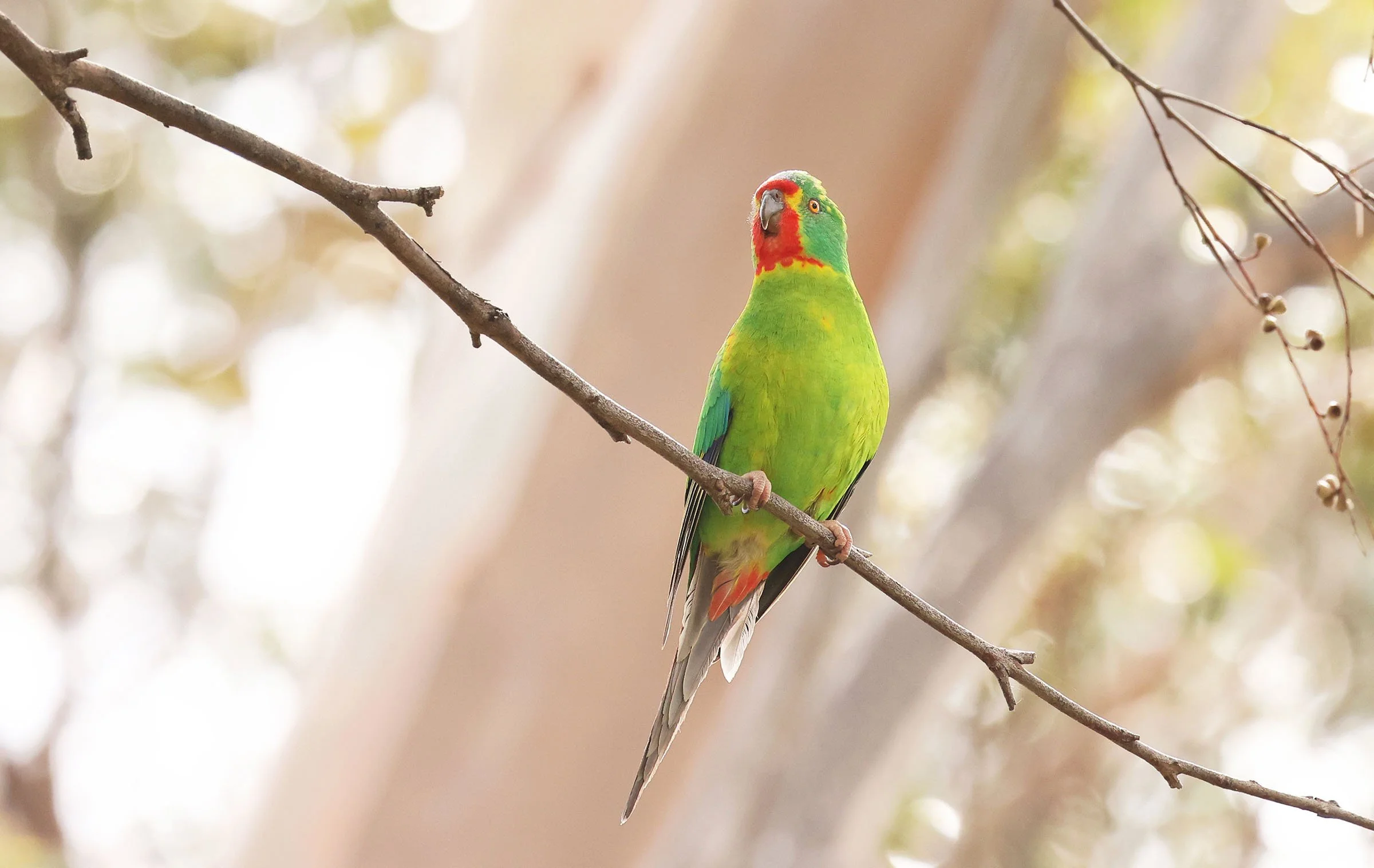
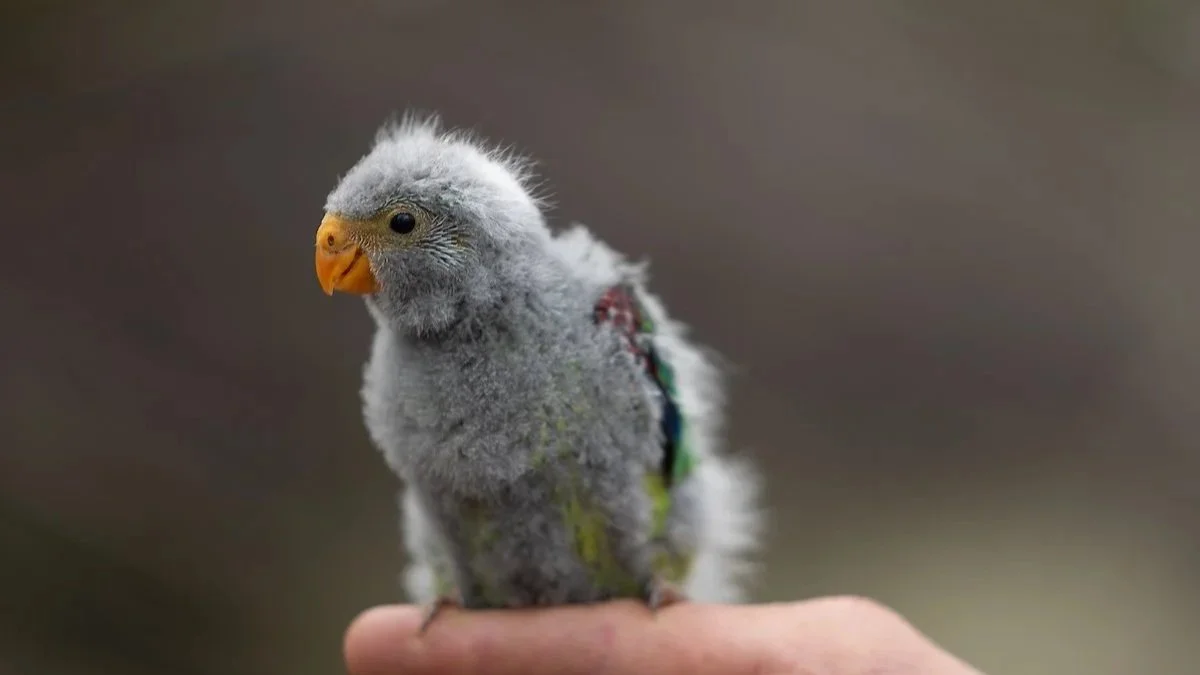
The bright green, fast-flying swift parrot breeds in Tasmania and migrates to the mainland of Australia each year. It is currently listed as Critically Endangered, with numbers continuing to fall rapidly. This vibrant parrot relies on flowering eucalypt forests for food and nests in deep tree hollows in old trees. Logging of habitat and predation on nests continue to place the Swift Parrot at serious risk, making urgent conservation action essential to secure its future.
Why is it difficult?

Habitat loss
The small area of Swift Parrot breeding habitat directly overlaps with focal areas of native forest logging.
Predation
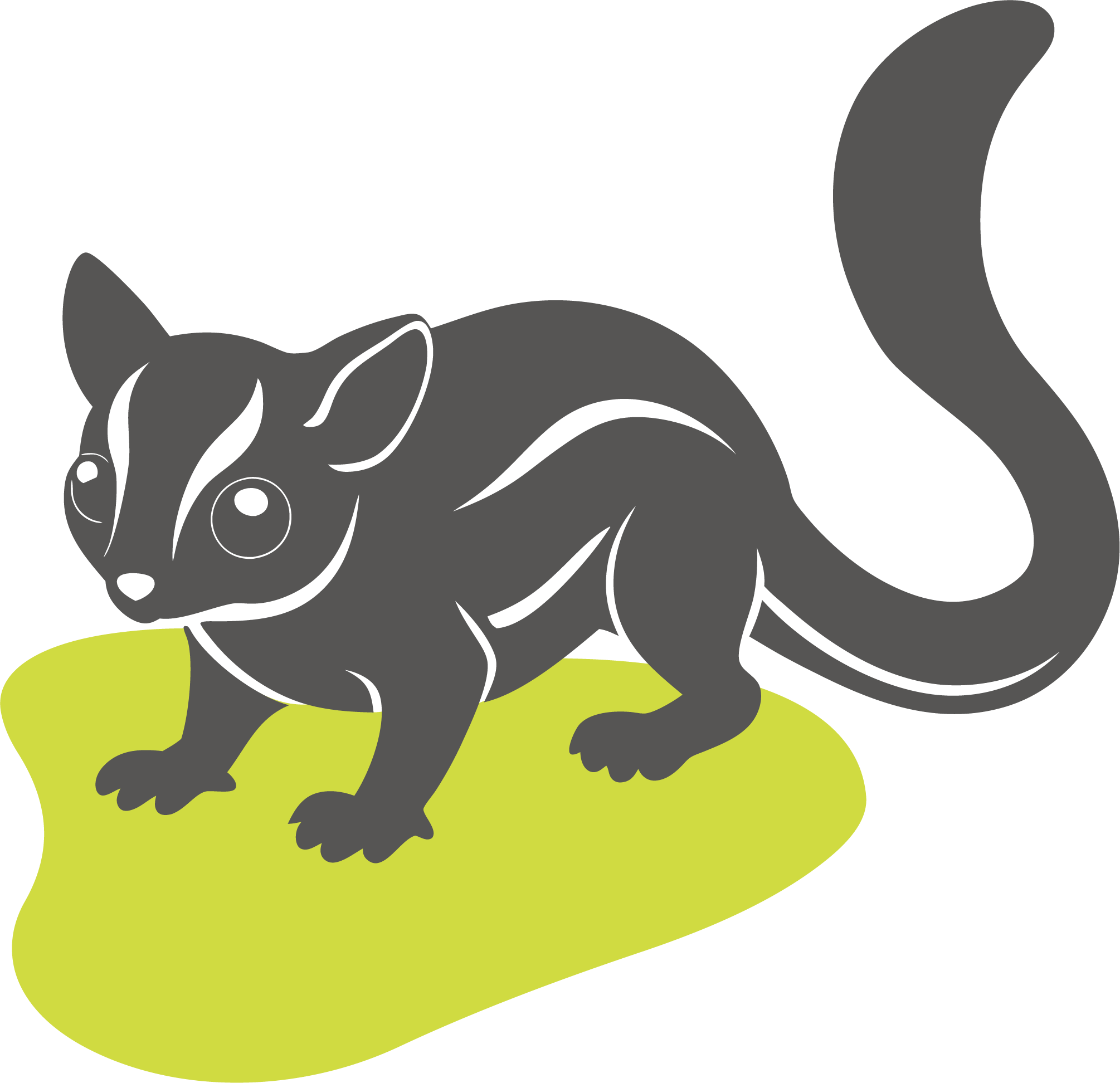
The most serious predator of Swift Parrots is the sugar glider (Petaurus notatus). Sugar gliders are able to squeeze past the small entrance hole of Swift Parrots, and are not daunted by entering the deep nest cavities.
Moving around
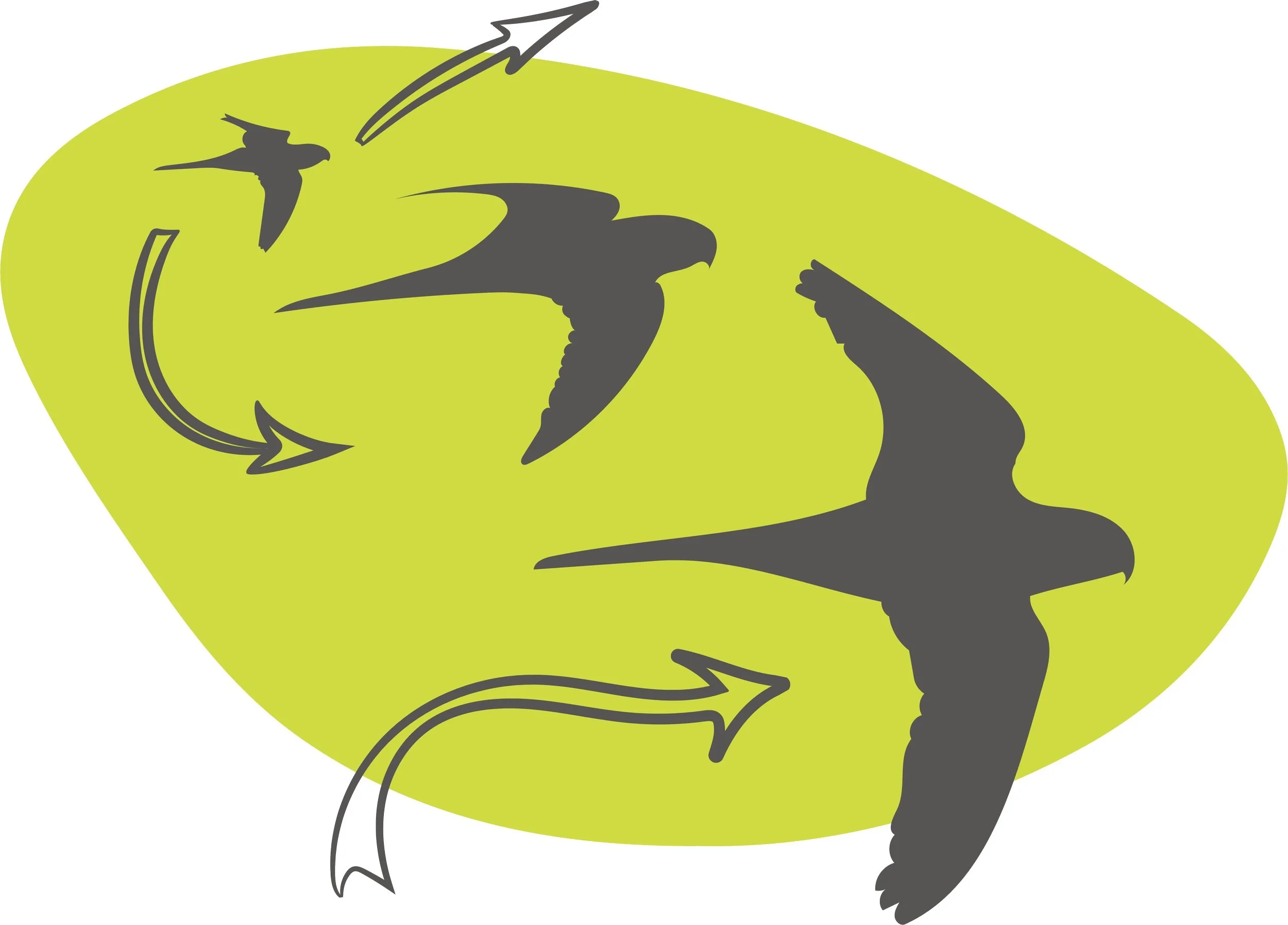
As well as making the annual trip across the Bass Strait to breed, swift parrots move around in their Summer and Winter locations based on food availability. This makes them vulnerable while migrating, and harder to protect.
What are we doing?
Research & monitoring
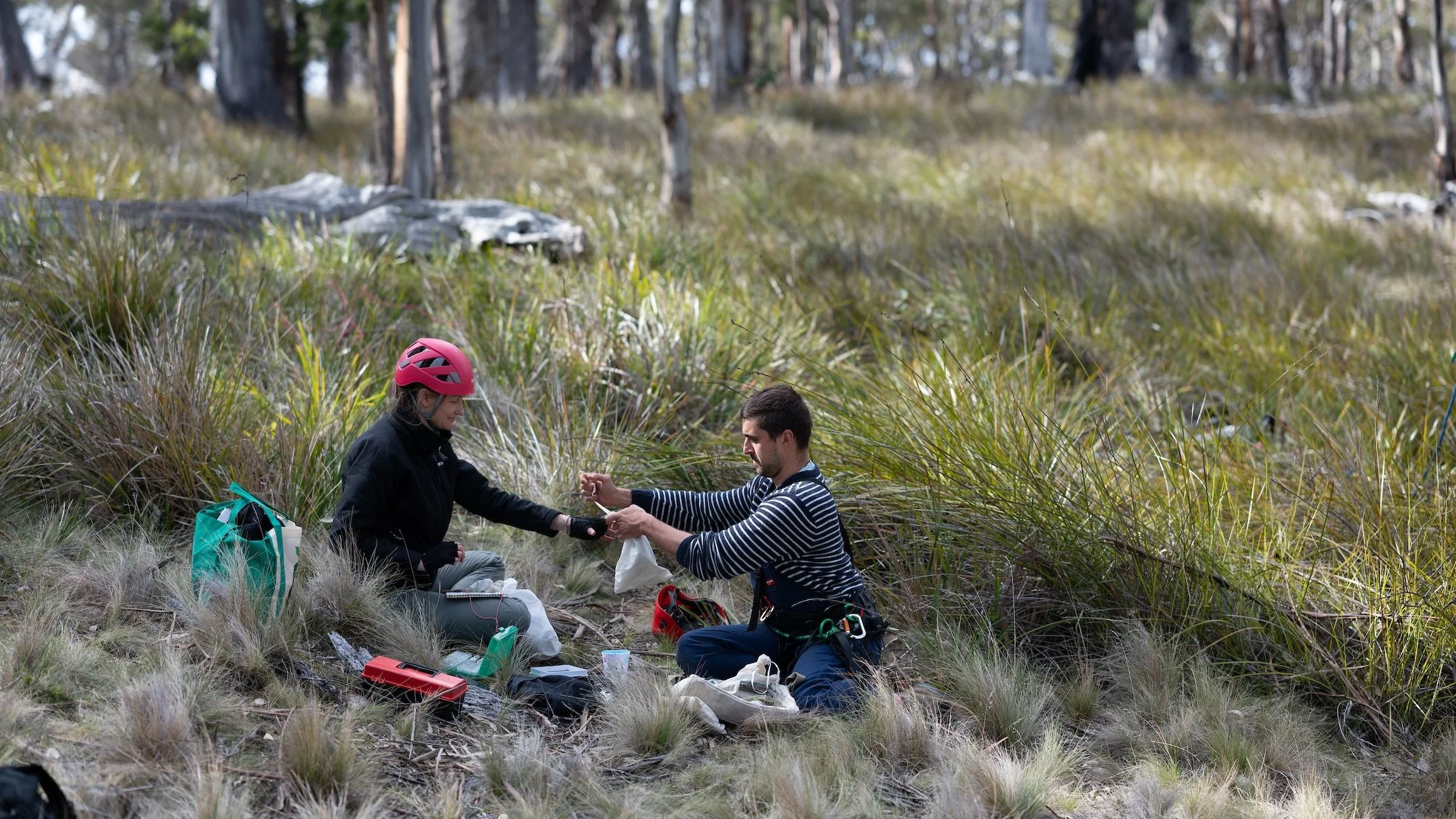
For over ten years, our team has been monitoring the Swift Parrot, researching behaviour, survival, and the challenges it faces. We continue to test how well conservation efforts are working—trialling nest boxes and new ways to keep them safe from predators. One of our most tangible successes was upgrading the listing of the Swift Parrot to Critically Endangered, helping to protect the species further, and increase conservation efforts.
Future research
Despite the intensive research and public interest in the conservation of swift parrots, there are many knowledge gaps about their conservation and ecology.
Life history
The background of swift parrot mortality rates.
Finding an effective way to accurately estimate population size.
Understanding where swift parrots go, and how they travel between breeding seasons.
Understanding how winter habitat affects swift parrot health.
Conservation management
Finding simple, effective and affordable ways to stop sugar gliders from attacking swift parrot nests.
Predicting when and where food trees will flower.
Understanding the ecology of sugar gliders in healthy vs. disturbed swift parrot habitat in Tasmania.
Do sugar gliders attack the same places every year?
Are nest boxes a useful conservation tool?
How long do nest hollows last and how quickly do new ones form after logging?
Are restoration efforts are helping swift parrots?
Are the remaining forests in Tasmania enough for swift parrots to survive long-term?
What can you do?
Help us monitor existing nest boxes
If you come across a nest box, you can contribute to research by recording ground-based observations, including which species are using them, via our web form.
Note: checks of nest boxes can only be done by ANU approved personnel, under animal ethics and scientific permits.
Publications
-
Owens, G., Heinsohn, R., Gibbons, P. et al. Quantifying forest degradation, deforestation and land use change in vital swift parrot breeding habitat. Sci Rep15, 8546 (2025).
Silver LW, Stojanovic D, Farquharson KA et al. A reference genome, mitochondrial genome and associated transcriptomes for the critically endangered swift parrot (Lathamus discolor). F1000Research 2024, 13:251
Olah, G., Waples, R. S., & Stojanovic, D. (2024). Influence of molecular marker type on estimating effective population size and other genetic parameters in a critically endangered parrot. Ecology and Evolution, 14, e11102.
Owens, G., Heinsohn, R., Crates, R. & Stojanovic, D. 2022 Long-term ecological data confirm and refine conservation assessment of critically endangered swift parrots. Animal Conservation. In Press
Stojanovic D., Olah G., Webb M., Peakall R. & Heinsohn R. 2018. Genetic evidence confirms severe extinction risk for critically endangered swift parrots: implications for conservation management. Animal Conservation, In Press
Campbell C. D., Sarre S. D., Stojanovic D., Gruber B., Medlock K., Harris S., MacDonald A. J. & Holleley C. E. 2018. When is a native species invasive? Incursion of a novel predatory marsupial detected using molecular and historical data. Diversity and Distributions, In Press
Stojanovic, D. et al. 2016. Loss of habitat for a secondary cavity nesting bird after wildfire. — Forest Ecology and Management 360: 235-241.
Porfirio, L. L., R. M. B. Harris, D. Stojanovic, M. H. Webb, and B. Mackey. 2016. Projected direct and indirect effects of climate change on the Swift Parrot, an endangered migratory species. Emu 116:273-283.
Heinsohn, R., M. H. Webb, R. Lacy, A. Terauds, R. Alderman, and D. Stojanovic. 2015. A severe predator-induced decline predicted for endangered, migratory swift parrots (Lathamus discolor). Biological Conservation 186:75-82.
Stojanovic, D. et al. 2015. Exploiting the richest patch has a fitness payoff for the migratory swift parrot. — Journal of Animal Ecology 84: 1194-1201.
Webb, M. H. et al. 2014. Location matters: Using spatially explicit occupancy models to predict the distribution of the highly mobile, endangered swift parrot. — Biological Conservation 176: 99-108.
Stojanovic, D. et al. 2012. Ground-based survey methods both overestimate and underestimate the abundance of suitable tree-cavities for the endangered swift parrot. — Emu 112: 350-356.
Saunders, D. L. and Heinsohn, R. 2008. Winter habitat use by the endangered, migratory swift parrot (Lathamus discolor) in New South Wales. — Emu 108: 81-89.
Regent Honeyeater
Regent Honeyeater
Regent Honeyeater
Regent Honeyeater
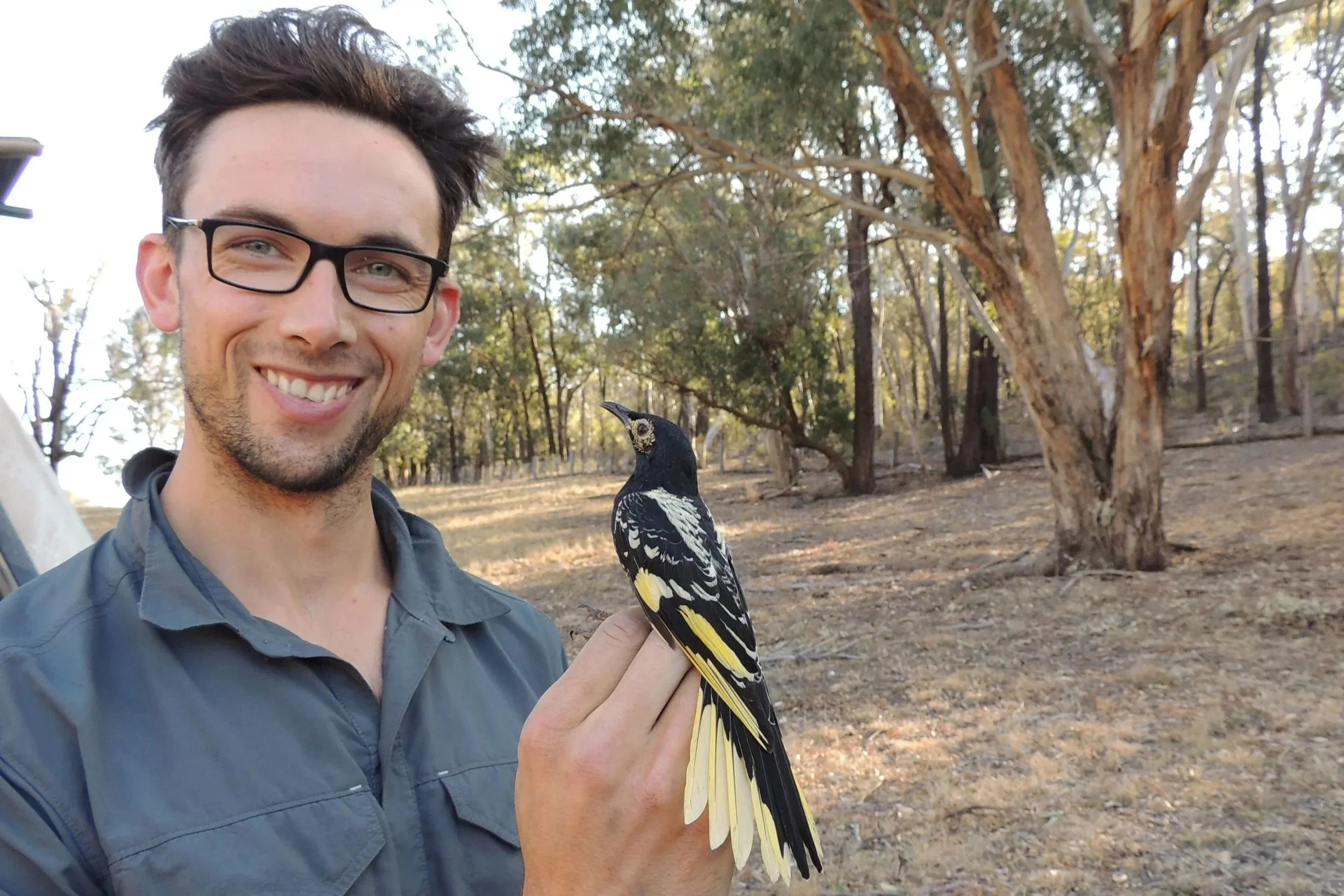
The regent honeyeater is Australia’s most threatened songbird. Once common across south-eastern Australia, including major cities, its population has collapsed due to widespread land clearing. Fewer than 400 birds remain, and the species is now listed as Critically Endangered.
Regent honeyeaters rely on flowering eucalypts for food, especially yellow box and mugga ironbark trees. They move across large areas to follow flowering events and breed where food is available.
Photo: David Stowe
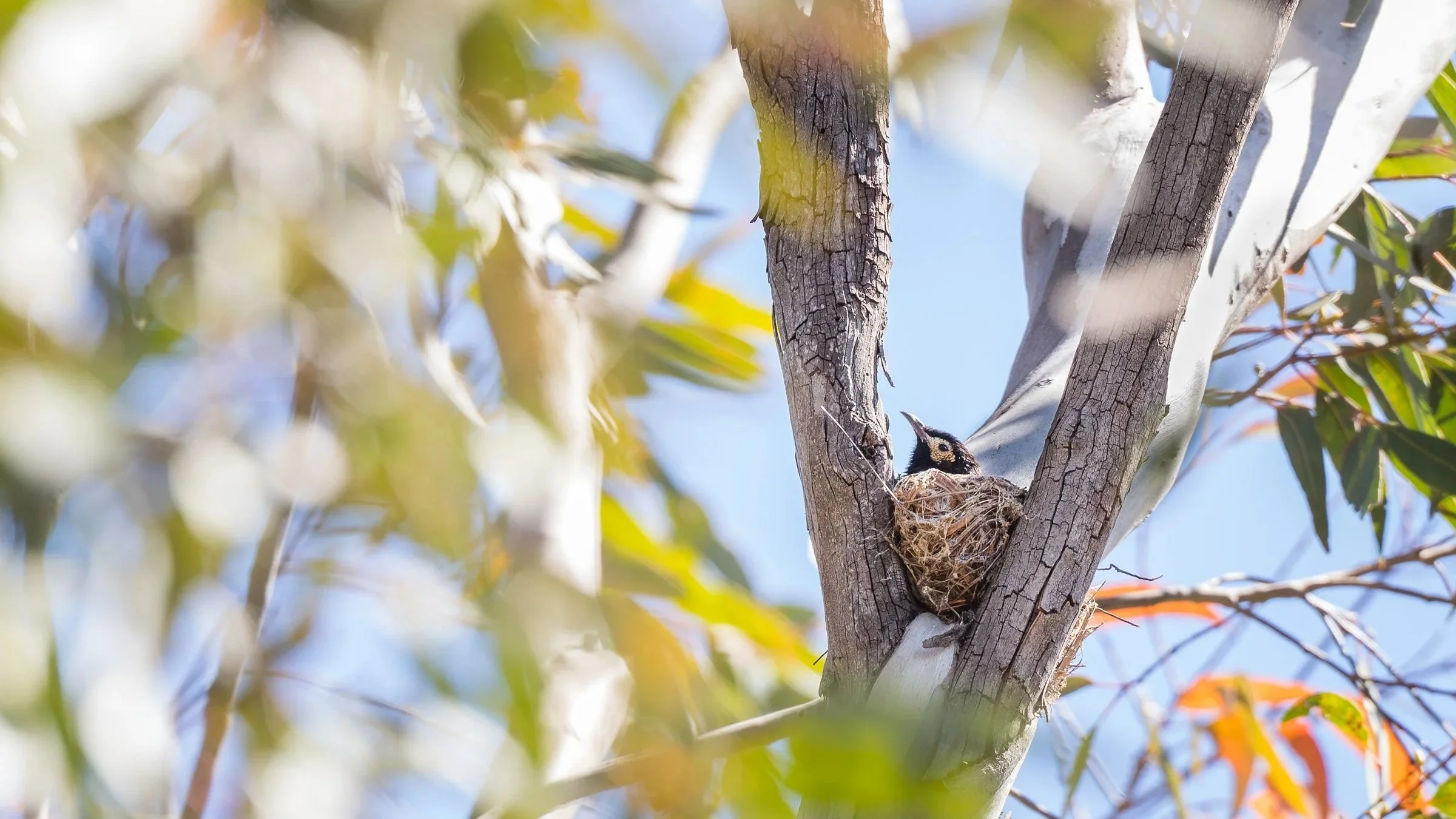
Photo: David Stowe
Why are they in trouble?
Habitat loss
Clearing of woodland has removed much of the flowering trees regent honeyeaters depend on.
Food shortages
The birds rely on irregular flowering events, making them vulnerable when key trees fail to flower.
Small population size
With so few birds left, even small losses can have a big impact on survival.
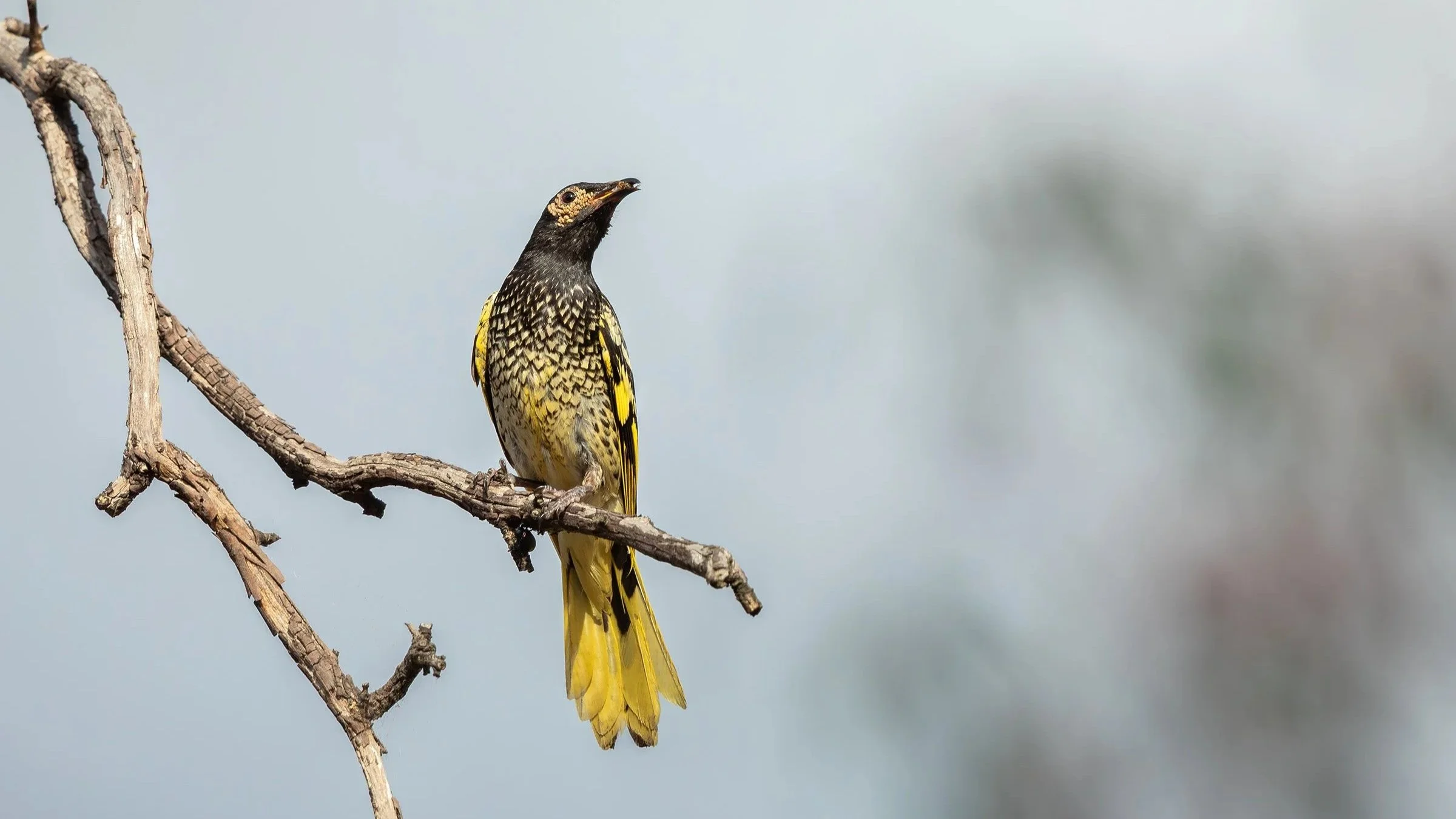
Photo: David Stowe
Why are they difficult to study?
Extremely rare
With fewer than 400 birds remaining, sightings are uncommon.
Moves long distances
Regent honeyeaters travel widely to follow flowering trees, making them hard to track.
Live across a huge area
Their range covers more than half a million square kilometres, limiting regular monitoring.
What are we doing?
Research and Monitoring
We are running the first coordinated, national monitoring program for regent honeyeaters. Using habitat models and past sightings, we have set up over 1,000 survey sites across priority areas. These surveys track bird numbers, nesting activity and flowering of key food trees to better understand where and when regent honeyeaters survive and breed.
Future research
Future work focuses on improving breeding success and long-term survival. This includes monitoring nests, studying competition with other birds, tracking movements, analysing genetics, and understanding how song changes in very small populations. Together, this research helps guide habitat restoration, protection and recovery actions to prevent extinction.
Publications
-
Crates, R., Langmore, N., Ranjard, L., Stojanovic, D., Rayner, L., Ingwersen, D. , Heinsohn, R. (2021). Loss of vocal culture and fitness costs in a critically endangered songbird. Proceedings of the Royal Society B: Biological Sciences 288, 20210225.
Crates, R., Olah, G., Adamski, M., Aitken, N., Banks, S., Ingwersen, D., Ranjard, L., Rayner, L., Stojanovic, D., Suchan, T., et al. (2019) Genomic impact of severe population decline in a nomadic songbird. PLOS ONE 14, e0223953. (doi:10.1371/journal.pone.0223953).
Orange-bellied Parrot
Orange-bellied Parrot
Orange-bellied Parrot
Neophema chrysogaster
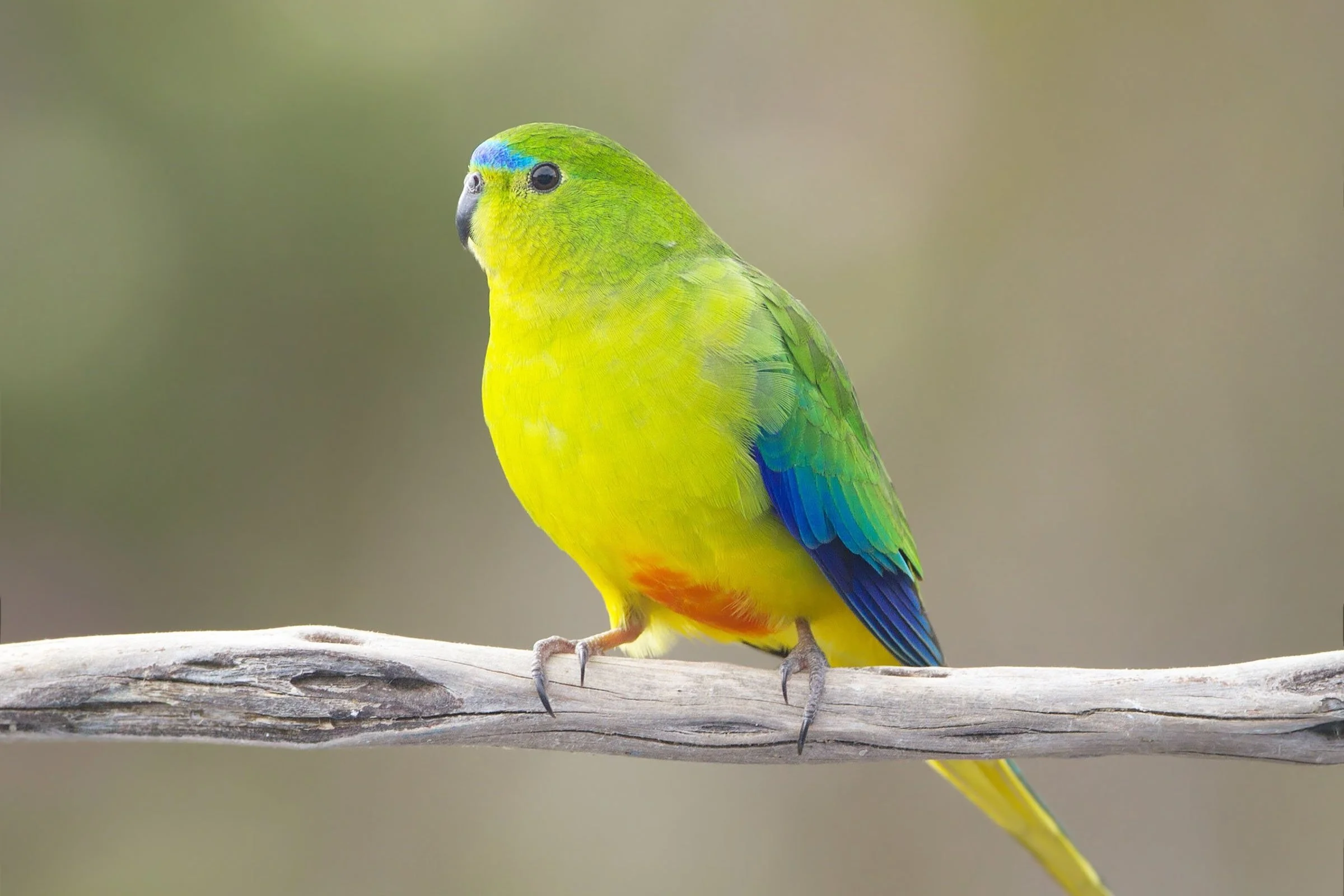
The orange-bellied parrot is one of Australia’s most endangered birds. It migrates each year between Tasmania’s wild southwest, where it breeds, and the mainland’s coastal salt marshes. Once common across southeastern Australia, its numbers have crashed to fewer than 100 in the wild. Decades of dedicated conservation, from captive breeding to habitat restoration, are now offering hope, with over 90 birds returning to breed in 2024.
Photo J. J. Harrison.
Why is it difficult?
Remote and migratory lifestyle
The species breeds in a small, isolated area of southwest Tasmania and migrates across Bass Strait to mainland Australia each year. This long-distance movement across remote regions makes tracking and studying the birds extremely challenging.

Introduced species
Predation by cats, foxes, and rats, as well as competition for food and nesting sites from starlings, sparrows, and rabbits, further threaten survival.
Severe population decline
With fewer than 100 wild adults left, the population is critically small. Such low numbers make it hard for researchers to collect enough data and increase the risk of extinction from random events or disease.
Habitat Loss and Fragmentation
The parrots depend on very specific habitats—coastal saltmarshes and Tasmanian forests—many of which have been lost or degraded through land use changes, fire, and development, leaving them with fewer safe breeding and feeding sites.
What are we doing?
Research, conservation & monitoring
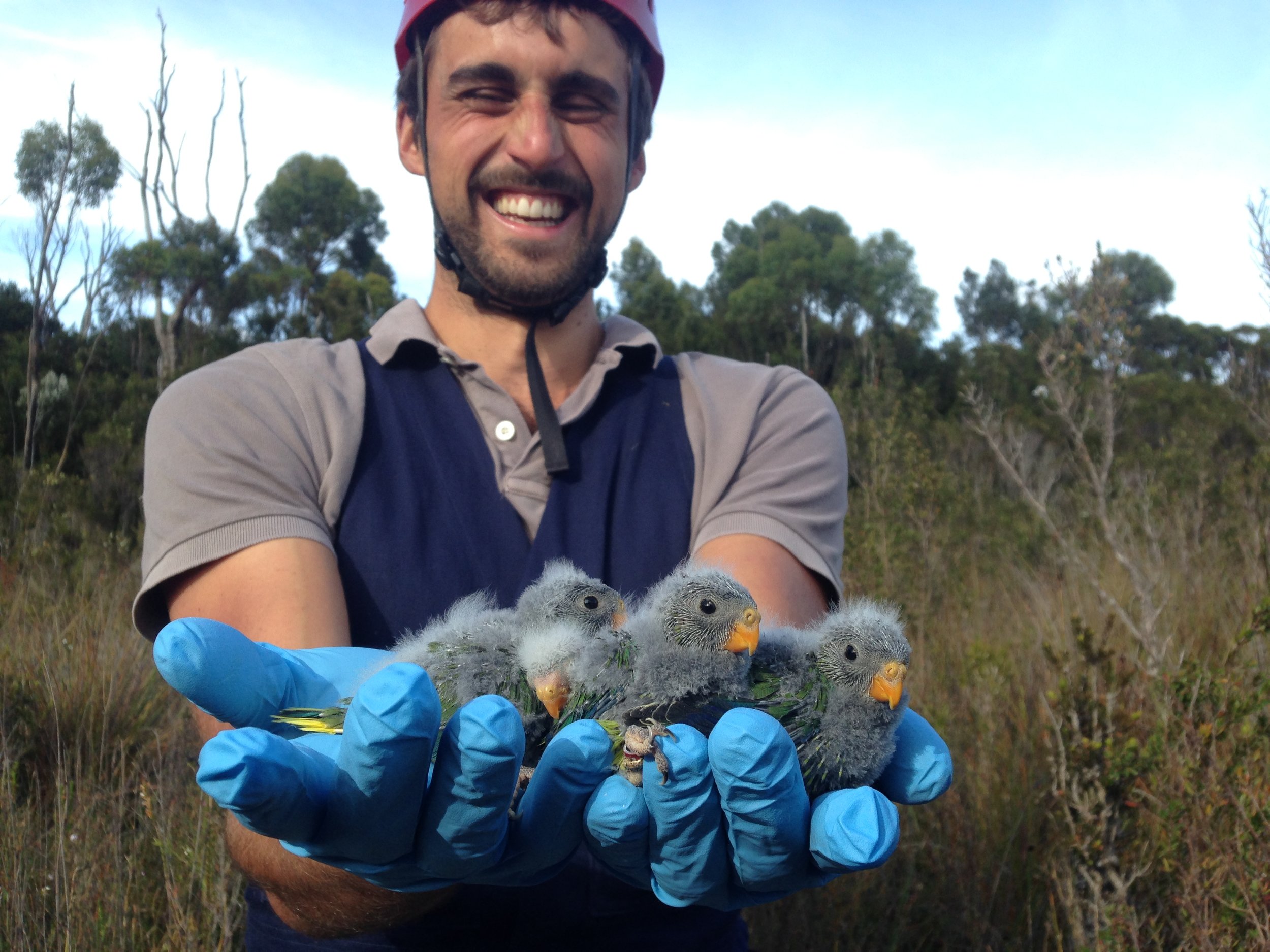
We take hands-on, individual-based approaches to boost the number of wild-born orange-bellied parrots. Our team swaps infertile eggs for fertile ones from captivity, adds extra eggs or chicks to nests to balance brood sizes, and steps in during emergencies to hand-rear or feed struggling young.
Each nest is monitored with cameras to track behaviour and breeding success. We also manage habitat quality through ecological burns, study competition with other species, and analyse decades of data to continually refine how we protect and grow this fragile population.
Future research
1. Survival:
Why do so few young parrots survive today? Why do released captive birds struggle to migrate? We are looking for ways to reduce deaths and help wild populations thrive with less human intervention.
2. Habitat:
Parrots need the right food, shelter, and safe habitats to survive. We are studying how fire, invasive species, and other changes affect their feeding, nesting, and wintering areas. Protecting and improving these habitats is vital.
3. Migration:
These parrots travel long distances each year, but many mysteries remain. Where exactly do they go in winter? What hazards do they face along the way? Understanding their movements helps guide conservation and land management.
4. Population and Genetics:
Keeping the population healthy means maintaining genetic diversity and managing diseases. We are exploring strategies like genetic rescue to strengthen the species and prevent the loss of wild lineages.
Publications
-
Stojanovic, D. & Heinsohn, R. 2023 Orange-bellied parrots. Current Biology 33, R939-R940. (doi:https://doi.org/10.1016/j.cub.2023.06.075).
Stojanovic, D., Gibbons, P., Young, C.M. & Owens, G. 2023 Fire-mediated tree cavity reduction needs to be considered in reintroduction strategies for a critically endangered bird. Restoration Ecology n/a, e13962. (doi:https://doi.org/10.1111/rec.13962).
Bussolini, L.T., Crates, R., Magrath, M.J.L. & Stojanovic, D. 2023 Identifying factors affecting captive breeding success in a critically endangered species. Emu - Austral Ornithology In Press. (doi:10.1080/01584197.2023.2194541).
Stojanovic, D., Hogg, C.J., Alves, F., Baker, G.B., Biggs, J.R., Bussolini, L., Carey, M.J., Crates, R., Magrath, M.J.L., Pritchard, R., et al. 2023 Conservation management in the context of unidentified and unmitigated threatening processes. Biodiversity and Conservation. (doi:10.1007/s10531-023-02568-0).
Forty-spotted pardalote
Forty-Spotted Pardalote
Forty-spotted pardalote
Forty-Spotted Pardalote
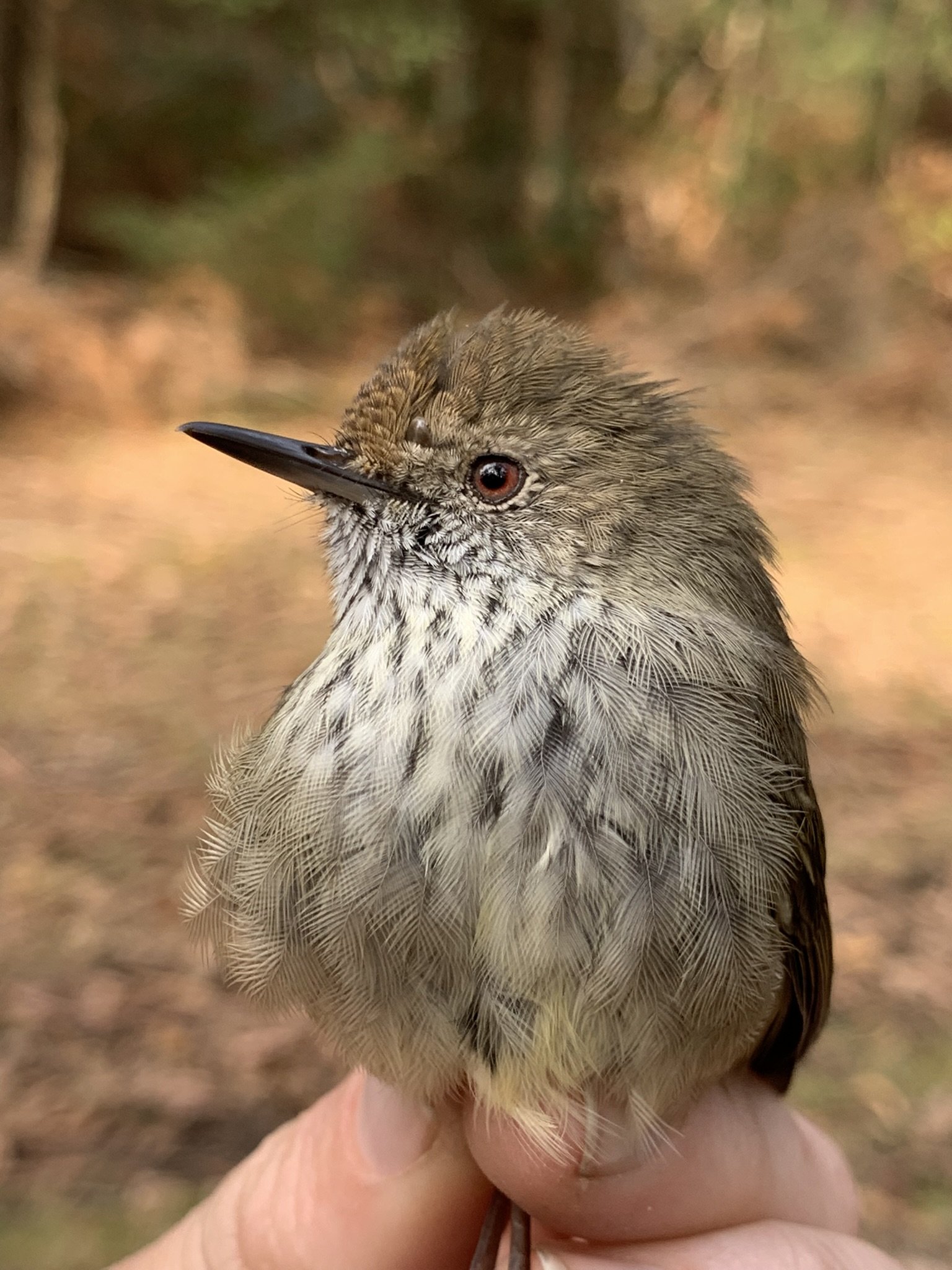
The forty-spotted pardalote (Pardalotus quadragintus) is an endangered songbird found only in Tasmania. It used to be widespread across the island’s forests where its preferred food tree, the white gum, occurs. This tiny bird now survives in small, fragmented populations and is one of Australia’s most endangered birds.
Why is it in trouble?
Habitat loss and degradation
Deforestation and degradation of old-growth forests has reduced tree hollow numbers that are essential for nesting.
Nest competition
Hollows are often taken by more common species like striated pardalotes and tree martins.
Parasitic fly
Native parasitic flies threaten nestlings and reduce their survival rate.
Why is it difficult?
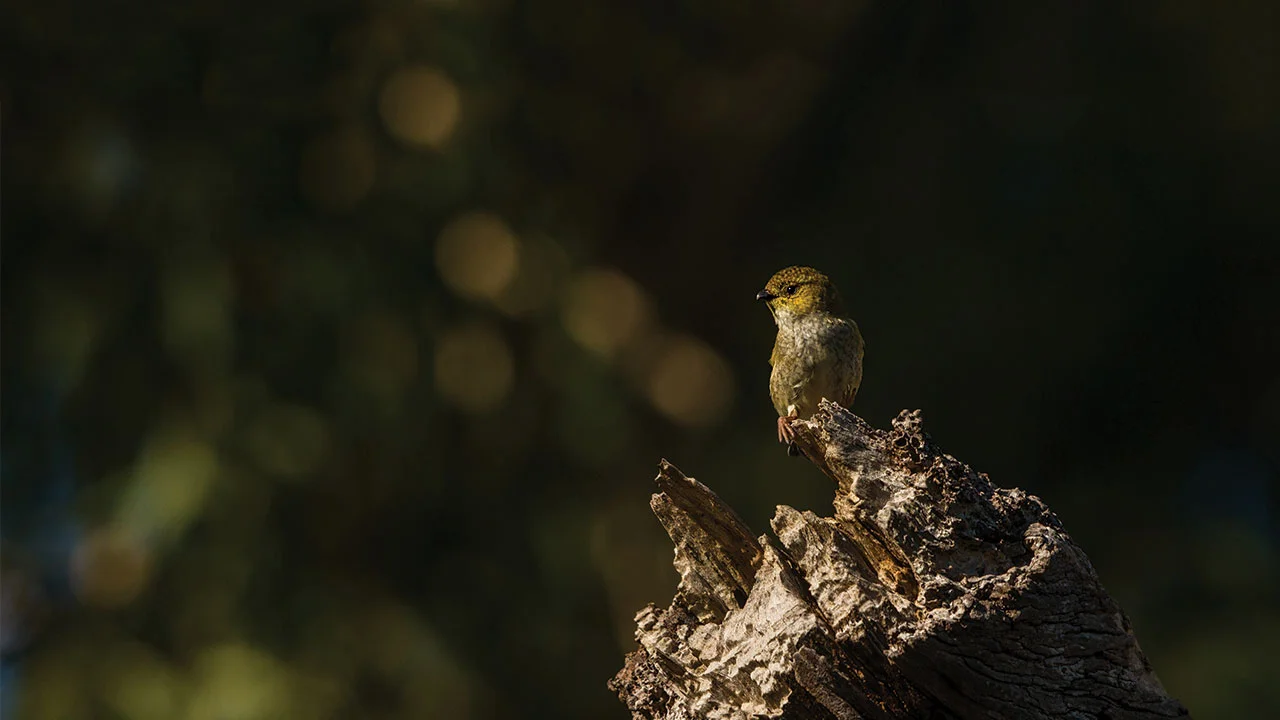
They are extremely small
Forty-spotted pardalotes are smaller than a matchbox and easy to miss.

They live high in the canopy
They nest in tiny tree hollows high in white gum trees, making nests hard to find and monitor.

They are quiet and elusive
Their soft calls are difficult to hear, even when nearby.
What we are doing?
Research and Monitoring
Since 2010, we have monitored forty-spotted pardalotes across their entire remaining range, including Bruny, Maria and Flinders islands. This work tracks population size and distribution, identifies important habitat, and has already led to the discovery of a new population, which is a major conservation success.
Parasitic Flies
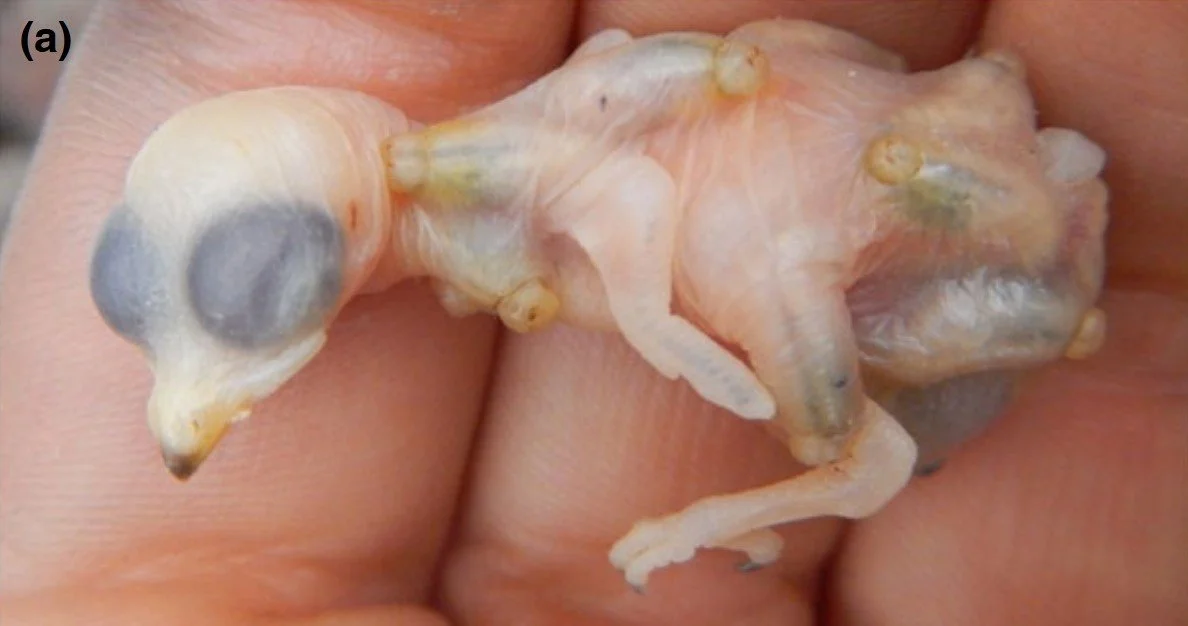
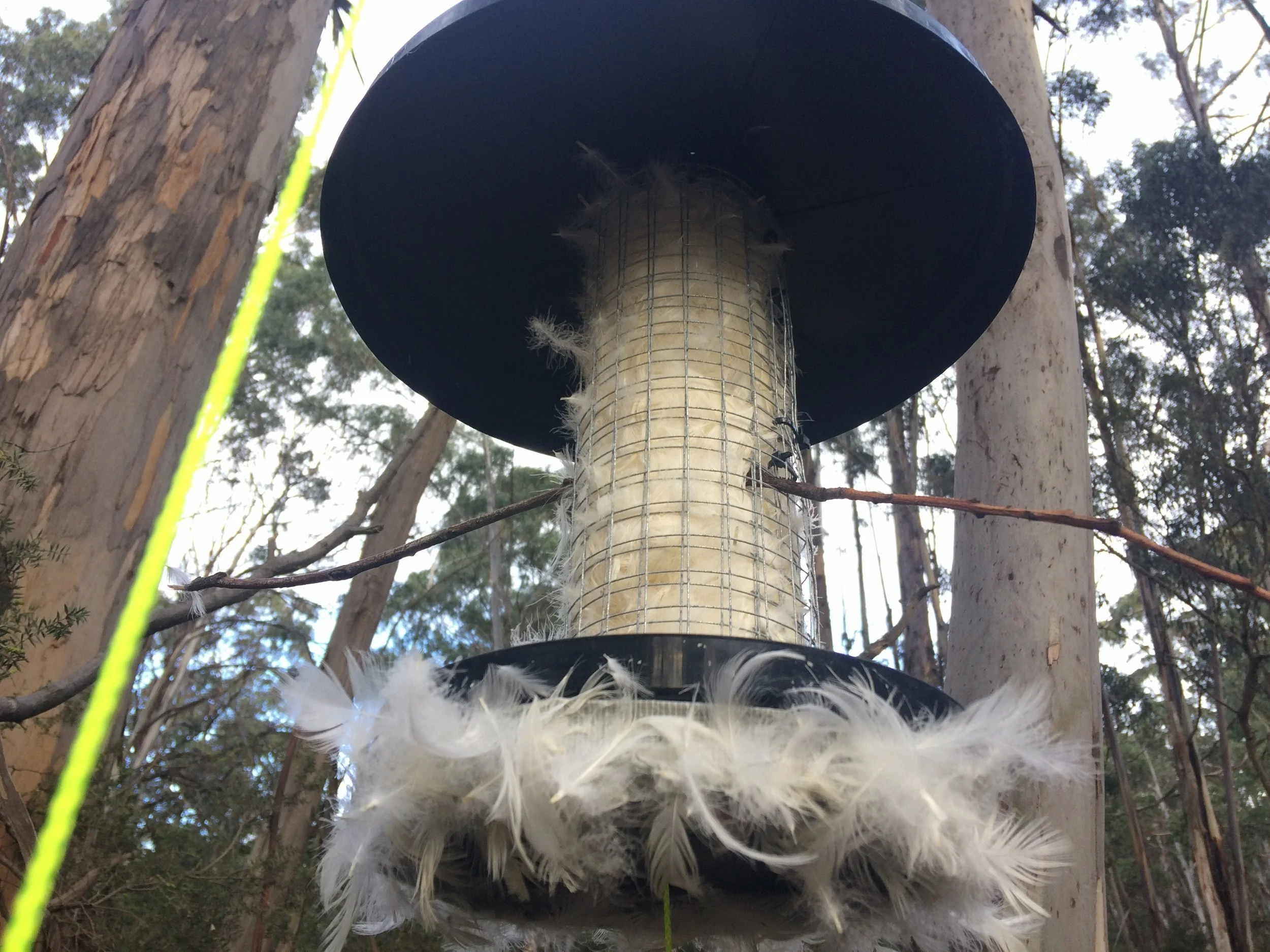
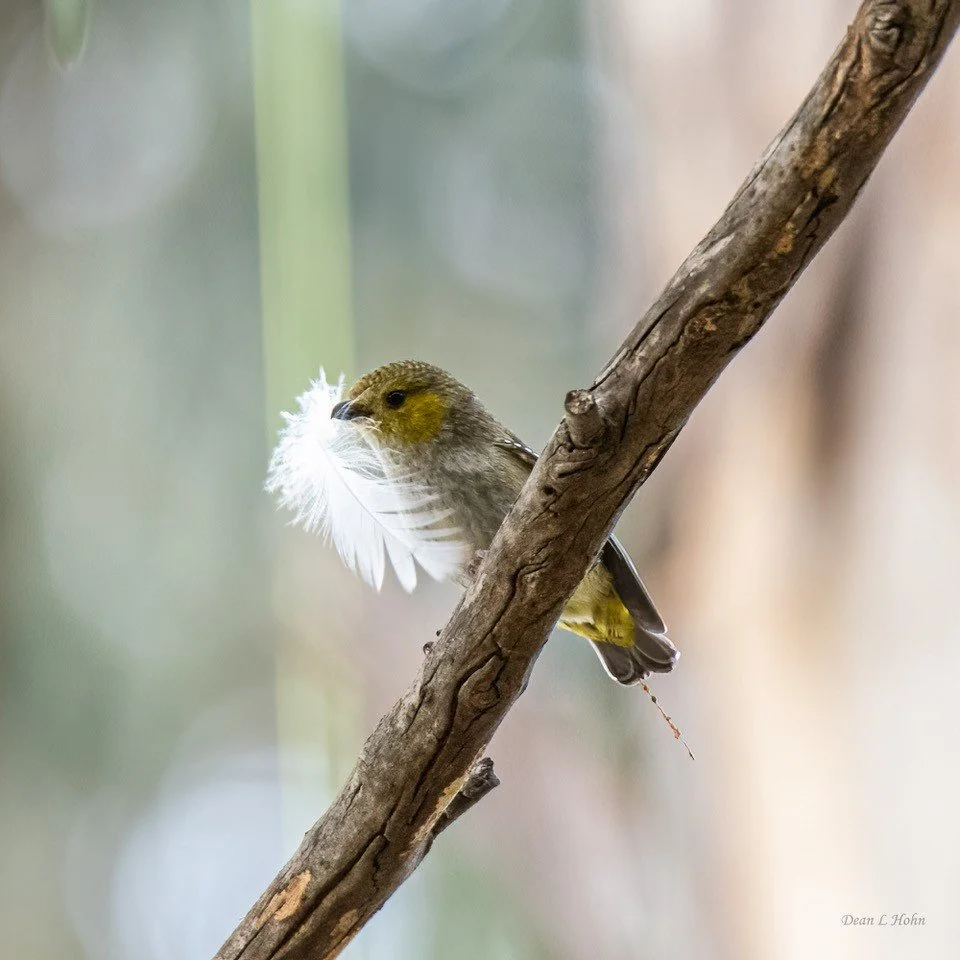
The forty-spotted pardalote is losing most of its chicks to a tiny parasitic fly, Passeromyia longicornis. This fly lays eggs in the birds’ nests, and the larvae feed on the chicks, causing very high death rates. To help, we developed a simple but powerful tool: feather dispensers filled with insecticide-treated feathers. The birds collect these feathers for their nests, and the treatment protects their young. We are now rolling out feather dispensers across North Bruny Island.
What next?
To understand the parasite, we need to catch it. We are now running the first-ever tests to trap adult flies. This will help us learn how the parasite lives and how to control it in the long term.
Publications
Superb Parrot
Superb Parrot
Superb Parrot
Polytelis swainsonii
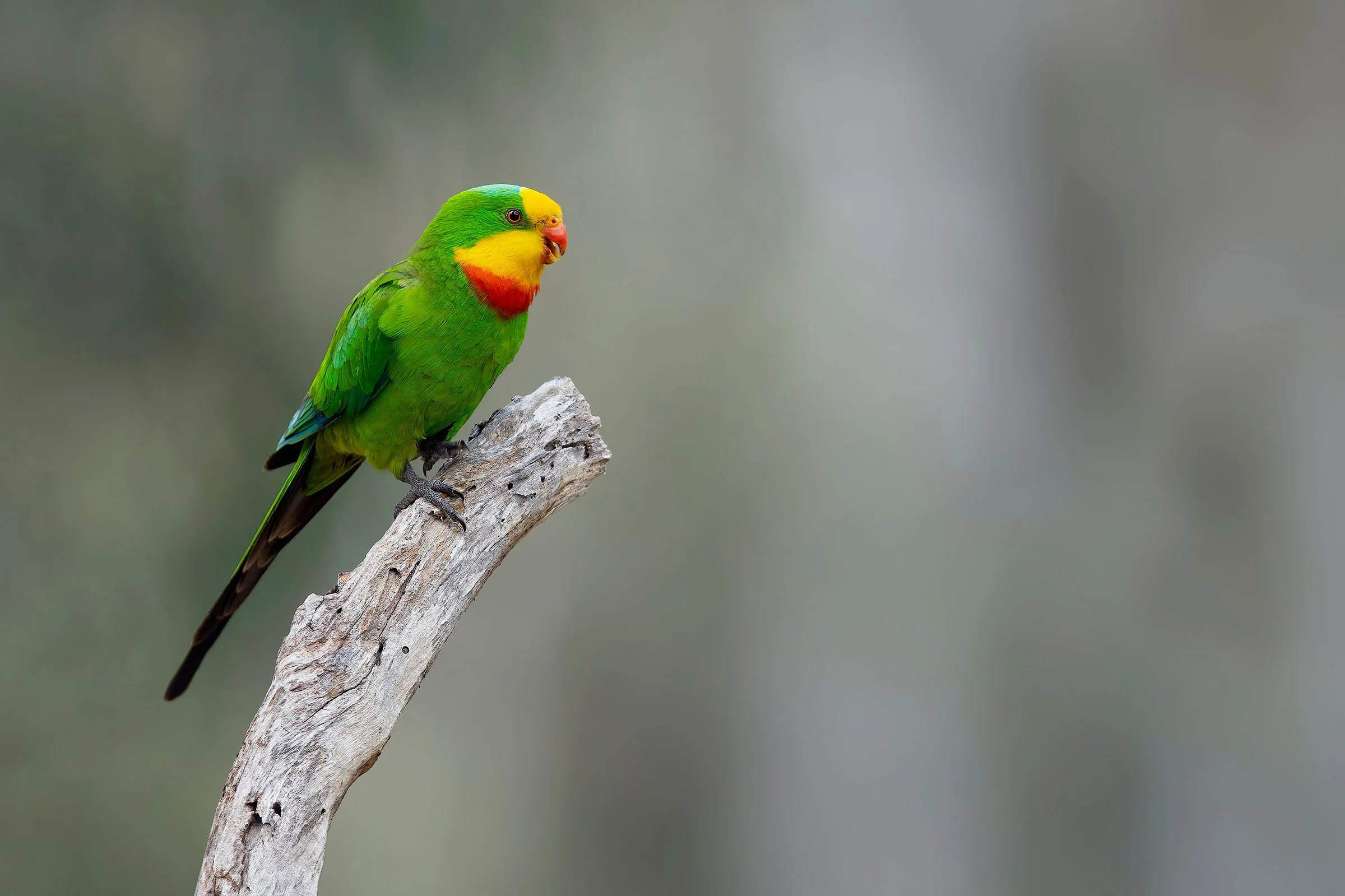
The superb parrot is a bright, colorful bird from south-eastern Australia. It follows food like seeds and flowers and nests in large hollow trees that take hundreds of years to grow. With most of its habitat cleared for farming and competition from other animals, these parrots face compounding challenges in their struggle to survive.
Photo J. J. Harrison.
Why is it difficult?
Habitat loss
Over 90% of the superb parrot’s woodland habitat has been cleared for farming, and with nesting trees taking over 220 years to form, parrots struggle to find safe places to live and move between.

Urban and renewable energy development
New buildings, roads, and wind or solar farms can destroy habitat or cause direct harm.

Competition for nests
With fewer nesting hollows available, parrots compete with other birds like crimson rosellas, european starlings, and honeybees, as well as marsupials like brushtail possums. This can reduce the number of chicks that survive and limit genetic diversity.

Climate Change
Rising temperatures, droughts, and bushfires may shrink suitable habitat and increase risks across their range.

Moving around
Superb parrots travel across a wide range depending on the season, availability of food, and breeding. This makes it tricky to understand their population size, mortality, and which areas to protect.
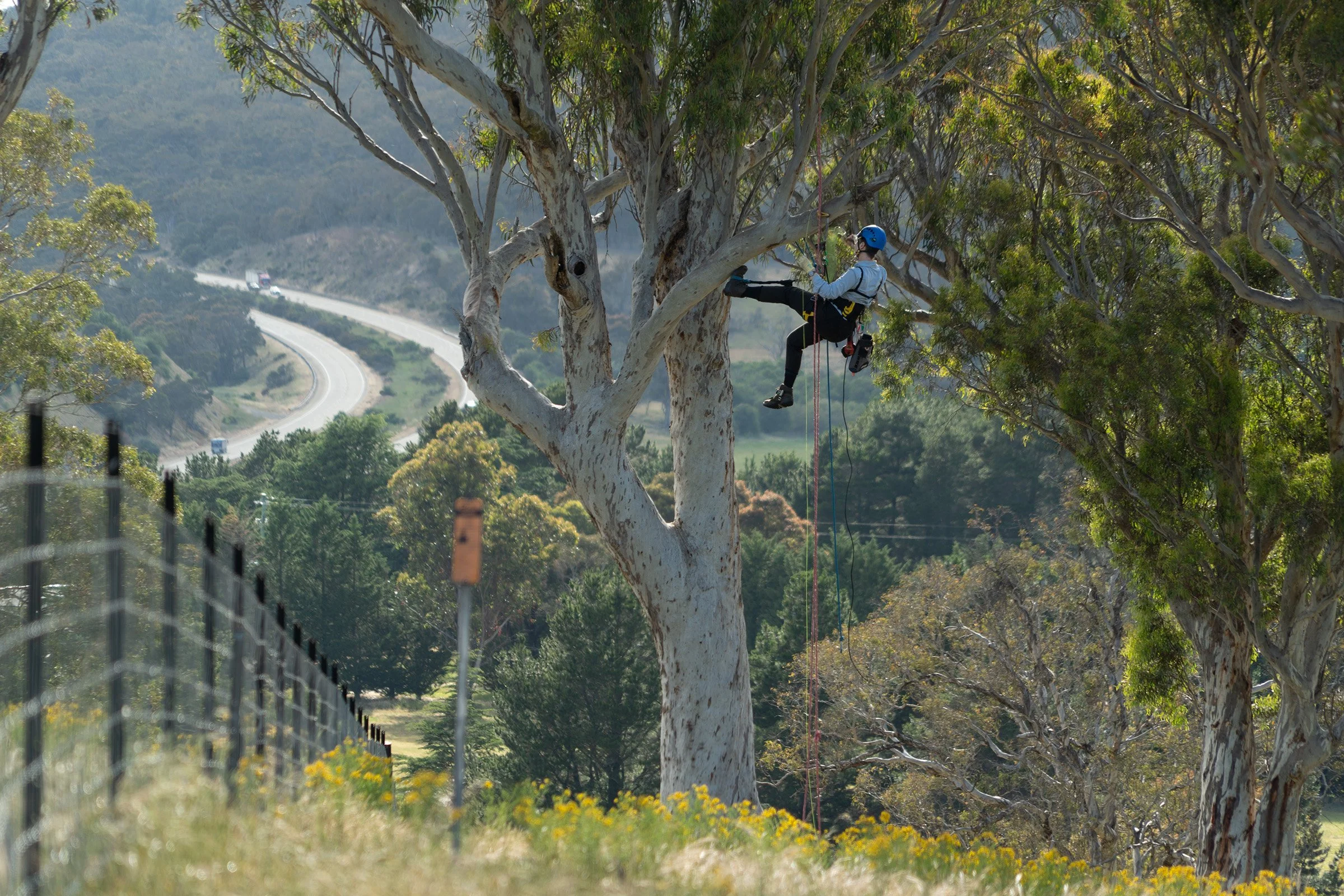
Photo: Elsie Percival
What are we doing?
Research & monitoring
The superb parrot is currently listed as Vulnerable, but with the loss of old, hollow-bearing trees and changes to climate, it could become “future endangered.” Many of the threats it faces are already happening, so starting research now is vital. By studying these birds in the wild, we can understand their movements, nesting needs, and population health before it’s too late.
Working with Professor Adrian Manning (ANU) and the ACT Government, we’ve studied where parrots choose to nest, tracked their movements using GPS devices, and banded over 40 birds. We’ve also monitored key breeding adults to understand how they use their habitat.
Next, we plan to expand our research across the parrot’s entire breeding range. This will help us learn how populations are connected, how they respond to climate change, and how the number of nesting trees affects survival. By collecting this information early, we can take smarter actions to protect the Superb Parrot and ensure these amazing birds continue to thrive in the wild.
Future research
Some of the key priorities for future research on the superb parrot include:
Seasonal movements: Track where birds go during different times of the year and how they use important habitat corridors.
Genetics: Study how different groups of birds are related and connected across their range.
Nest threats: Look at competition for nests and dangers from predators, both native and introduced.
Survival after leaving the nest: Find out how many young birds survive and join the adult population.
Human impacts: Understand how things like wind farms could affect the birds.
Nesting help: Test how effective nest boxes and hollow tree enhancements are.
Climate change: Explore how changing temperatures and weather patterns could affect where birds live.
Habitat restoration: See which ways of restoring habitat actually help the species.
Behaviour and habitat: Study how the birds’ social habits affect the places they use.
Where they settle: Find out what habitat features make certain sites attractive.
Movement patterns: Learn whether the birds travel, wander, or stay in one place.
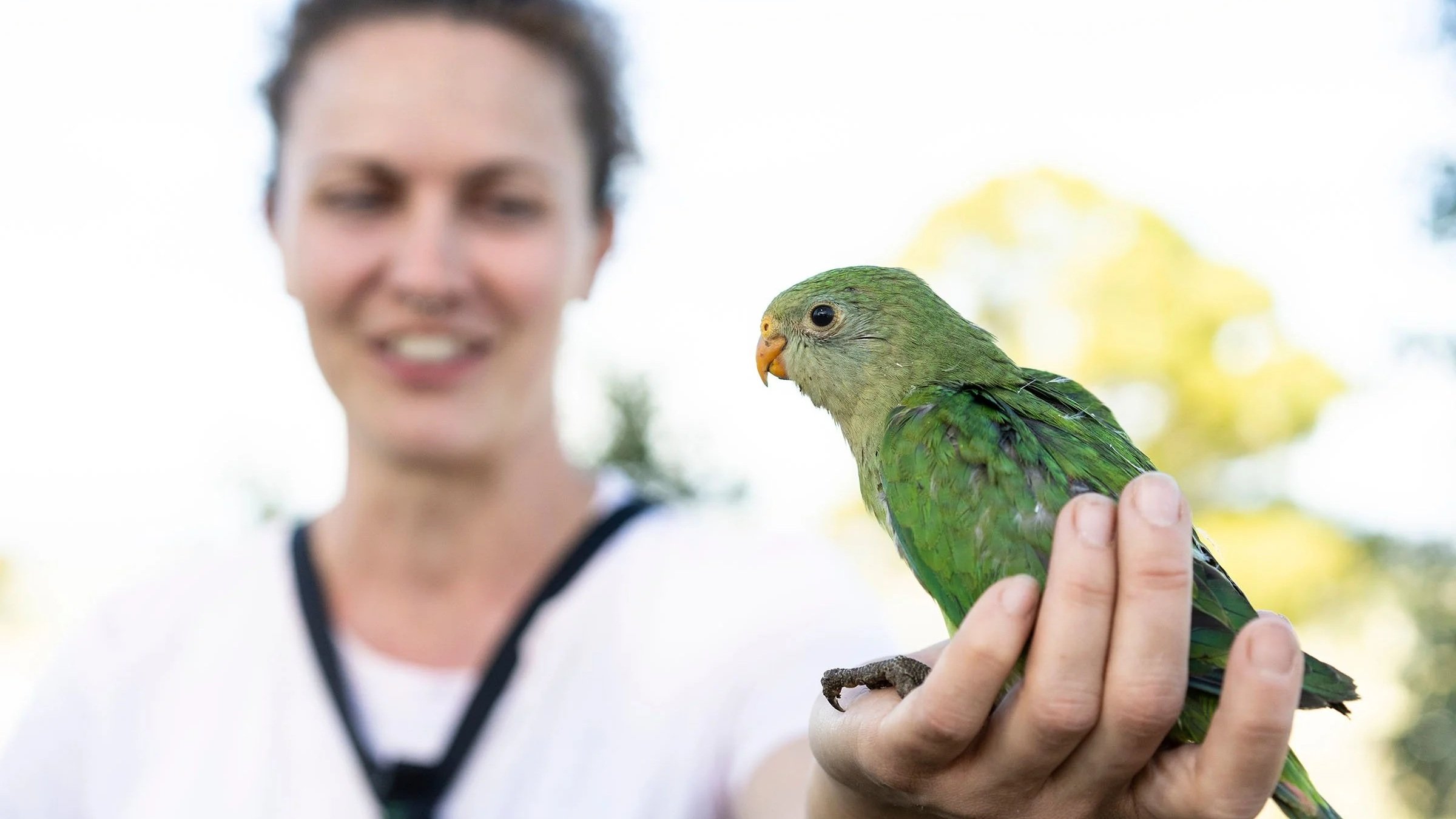
Photo: Elsie Percival
What can you do?
Working with the superb parrot Recovery Team and our research partners, we have created a long‑term monitoring program across the South‑west Slopes of NSW, the main breeding area for Superb Parrots.
The program focuses on two key questions: where superb parrots are breeding, and how their home range is changing over time. To help answer these questions, we have set up permanent survey sites to record parrot sightings, breeding activity, and important habitat features.
Because superb parrots move long distances and respond quickly to changes in their environment, long‑term monitoring is essential to understand how climate, habitat, and local threats affect their future.
Landholders, birdwatchers, community groups, and local organisations are encouraged to get involved. If you are interested in taking part, please contact the program leaders.
Contact
McLean.Cobden@act.gov.au
Laura.Rayner@act.gov.au
Publications
Gang-gang Cockatoo
Gang-gang Cockatoo
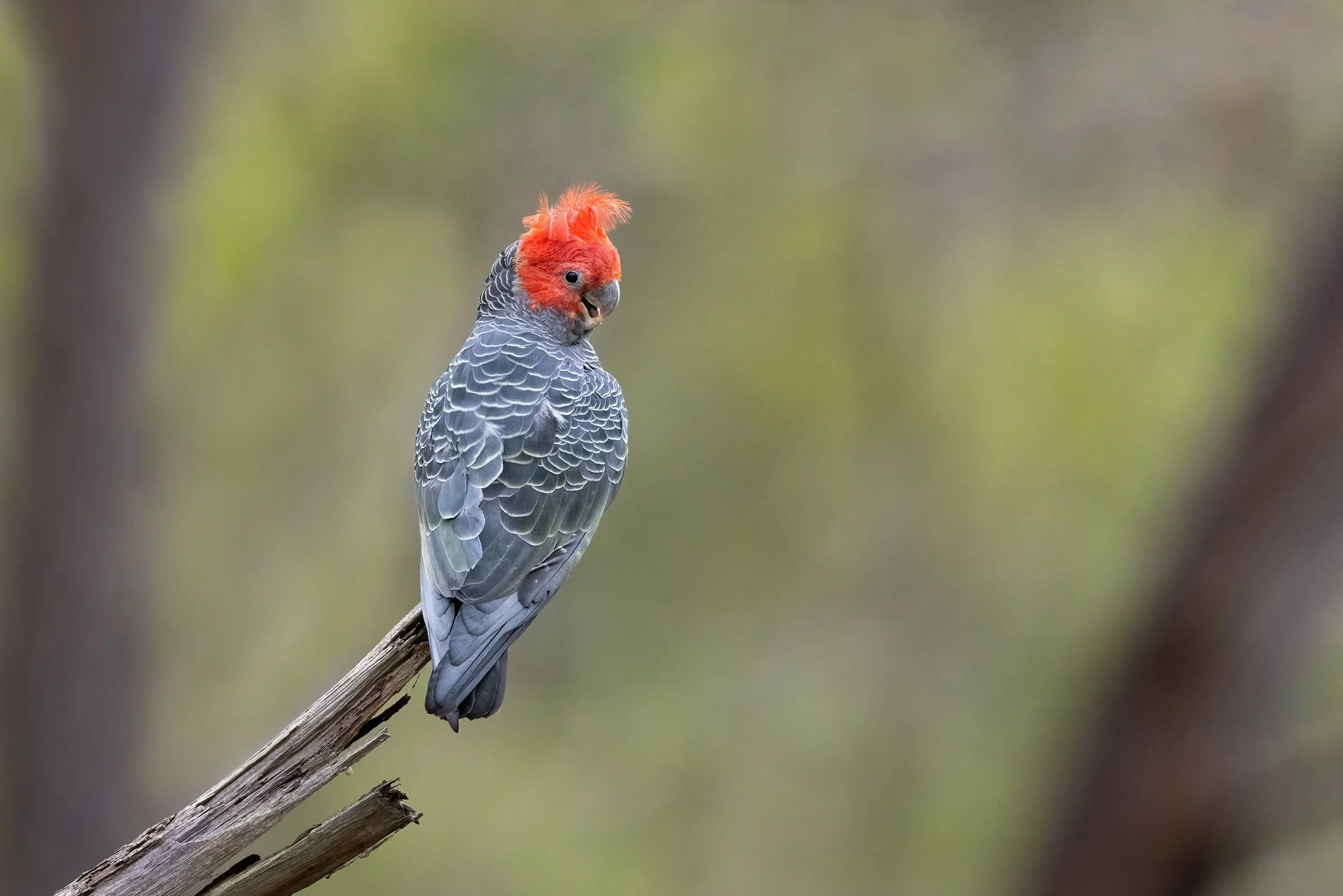
Gang Gang Cockatoo
Callocephalon fimbriatum
With their cheeky crests and ‘creaky door’ call, gang-gang Cockatoos are one of Australia’s most beloved birds. Once a common sight in forests and suburbs alike, their numbers have fallen sharply since 1999, a decline made worse by the devastating 2019–2020 bushfires. In 2022, the species was officially listed as endangered by the Australian Government.
Despite their popularity, much about the gang-gang remains a mystery. There’s still no national monitoring program, meaning scientists don’t know how many remain or where their most critical habitats lie. Canberra, where these birds are regularly seen and often nest in urban trees, is now considered the heart of the gang-gang’s range.
Known for their strong social bonds and tendency to gather during breeding, protecting all known nesting areas has become an urgent conservation priority.
Banner image and above photo: David Stowe
Why is it difficult?

Low densities
Gang-gang Cockatoos are now so scarce in the ACT that scientists can’t accurately count them. This makes it difficult to uncover the reasons for their decline.
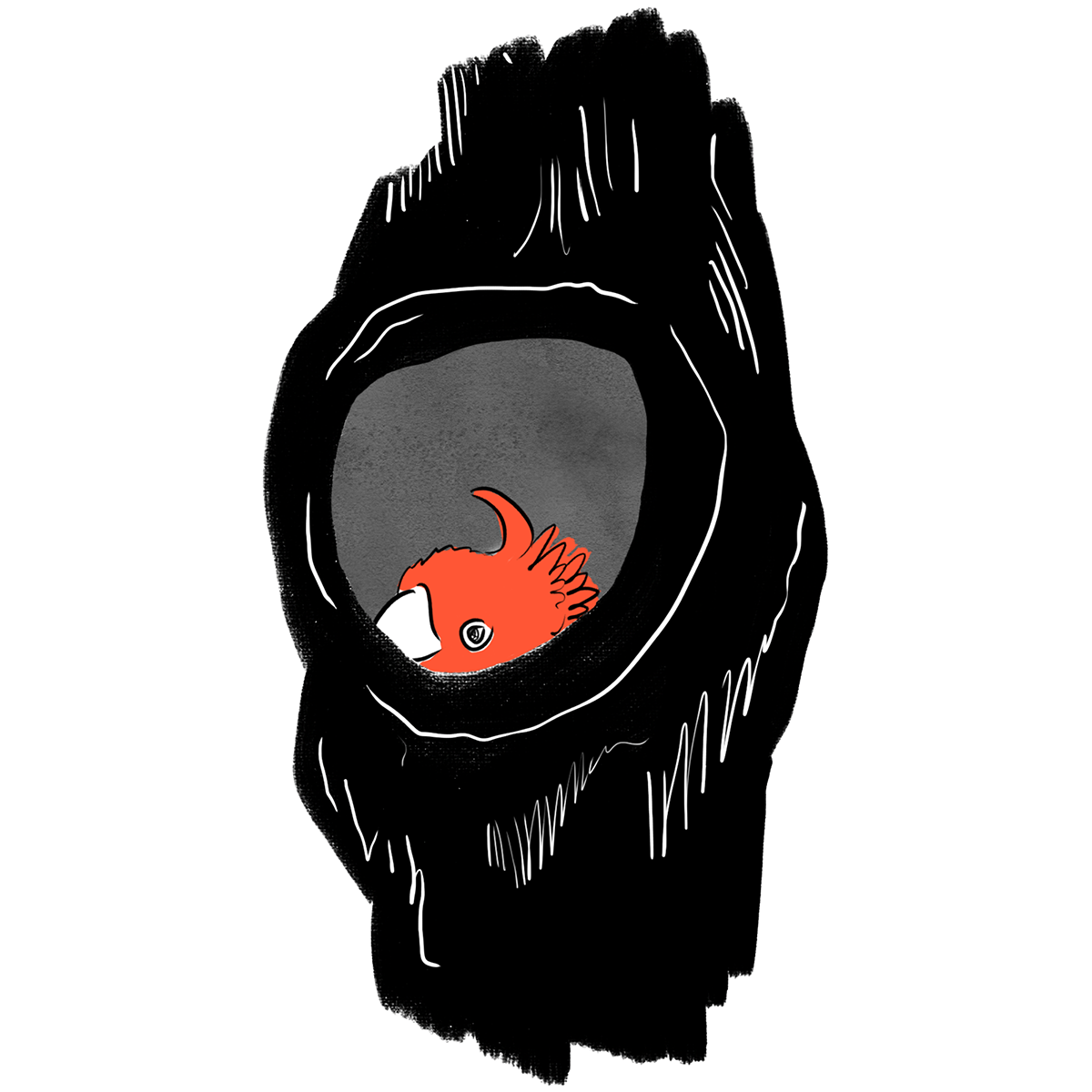
Picky house-hunters
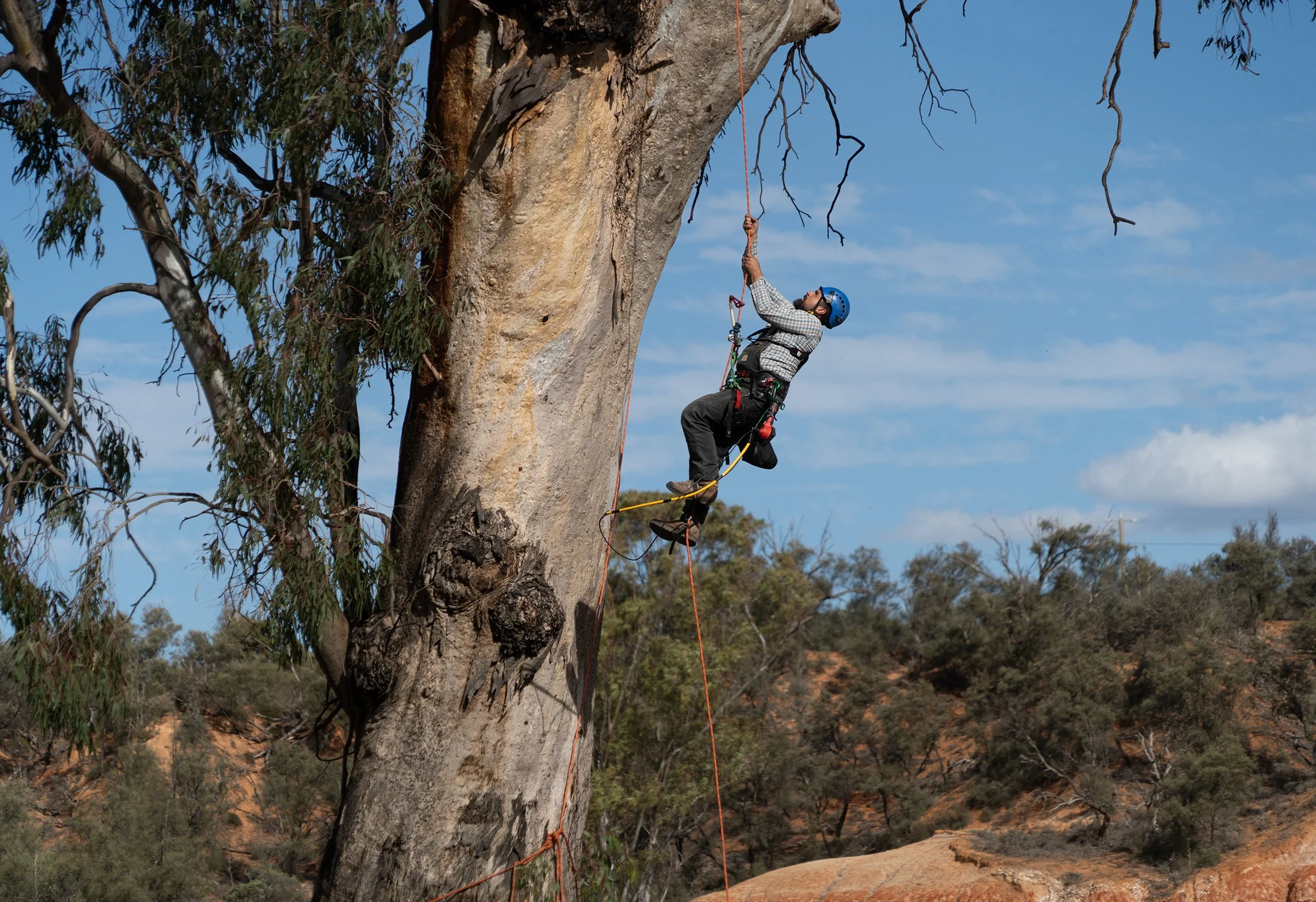
For gang-gang Cockatoos, the perfect home is a tree hollow shaped just right for raising their chicks. Finding these rare nesting spots isn’t easy, and involves climbing tall trees to study them up close.

Gaps in knowledge
There is no range-wide monitoring for Gang-gangs, which means the distribution of critical habitat and their numbers is unknown.
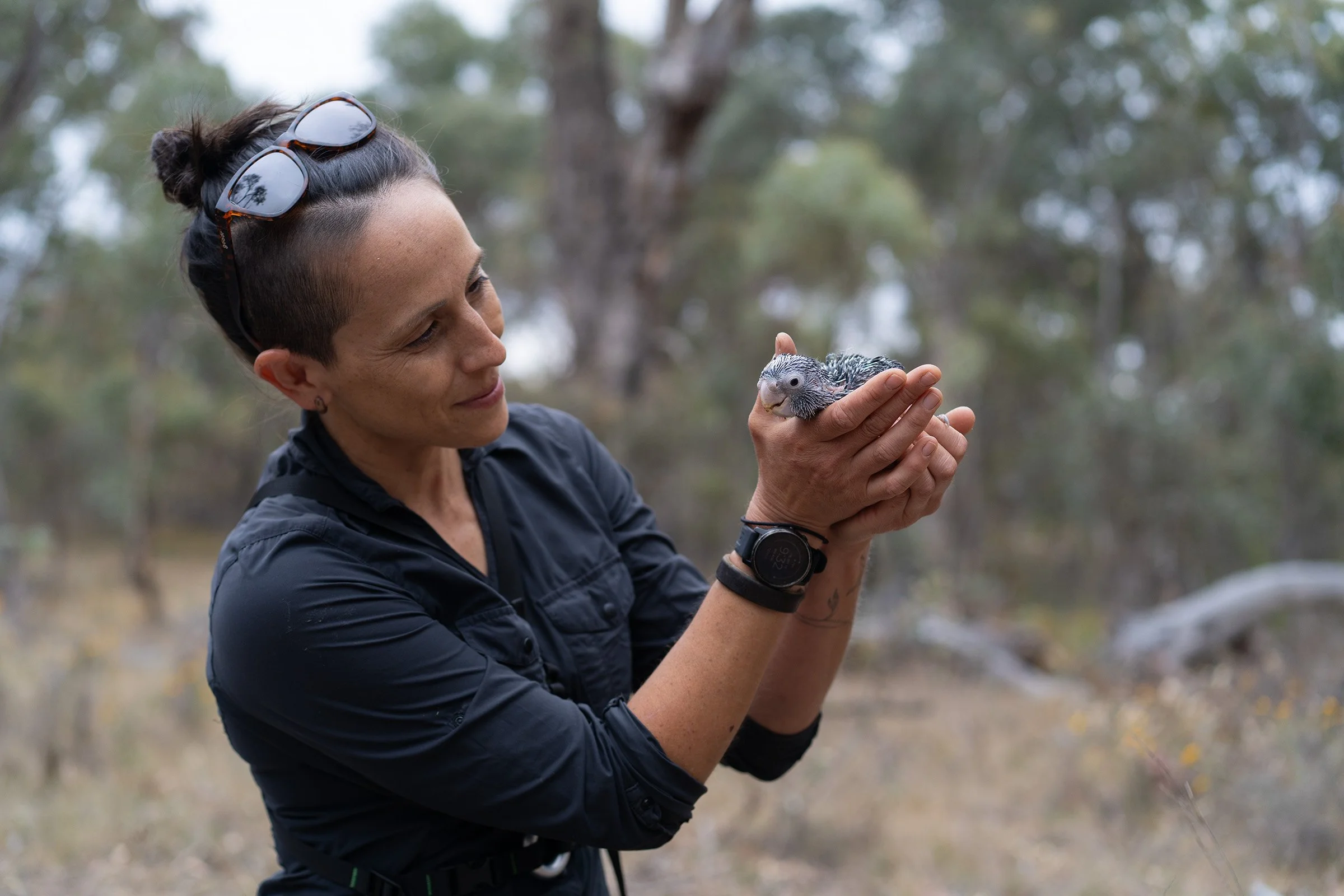
Photo: Elsie Percival
What are we doing?
Research & monitoring
Despite being one of Australia’s most iconic birds, we know very little about the gang-gang Cockatoo. Learning more about their behaviour and habitat is essential for their conservation.
Much of what we do know comes from dedicated citizen scientists in the ACT. Working with them and the ACT Government, we’ve been studying how well gang-gangs are breeding and which trees they prefer to nest in.
Our research has helped identify the types of trees and hollows they need, and we’ve carried out surveys to plan a long-term monitoring program. This work has also shown that we need new and creative ways to track these birds and close the gaps in our understanding to better support their conservation.
Future research
Our research is helping to uncover how gang-gang Cockatoos live, move, and breed across southeastern Australia. Here’s what we’re doing:
Finding nesting sites: Locating and describing the places where gang-gangs breed in New South Wales and Victoria.
Monitoring nests: Keeping track of how successful breeding is at all known nest sites across the ACT, NSW, and Victoria.
Tracking movements: Testing small GPS transmitters to learn how far the birds travel and where they go during and after breeding.
Mapping their range: Collecting every possible gang-gang sighting to create maps showing where they live and how their distribution is changing.
Studying genetics: Examining the genetic diversity of gang-gangs across their range to understand how populations are connected.
Testing new techniques: Trying out non-invasive genetic sampling (like collecting feathers or eggshells) to monitor changes in population size over time.
Photo: Elsie Percival
What can you do?
How You Can Help Protect gang-gang Cockatoos
We’re proud to be working alongside local communities, land managers, and councils to protect the much-loved gang-gang Cockatoo. You can play an important part in their conservation by getting involved in a few simple ways:
Record Your Sightings
If you spot gang-gangs using tree hollows, for example, entering and exiting repeatedly between September and January or feeding young chicks, please record your observations on NatureMapr or contact us directly. Every record helps us understand where and how these birds are breeding.
Collect Feathers for Research
If you find a gang-gang feather on the ground, please collect it and send it to us. Shed feathers provide valuable genetic information without disturbing the birds. Check our Feather Guide for tips on identifying Gang-gang feathers and how to store them safely.
Let Them Feed Naturally
Feeding gang-gangs may seem helpful, but their natural diet is incredibly diverse and changes with the seasons. Foods like sunflower seeds don’t provide the nutrition they need, so it’s best to let them forage naturally.
Publications
Palm Cockatoo
Palm Cockatoo

Palm Cockatoo
Probosciger aterrimus
Photo: JJ Harrison
The palm cockatoo is one of northern Australia’s most striking and intelligent birds, famous for its wild crest, powerful bill, and unique drumming displays. Despite its charisma, this iconic species is in serious trouble. Our research shows that Palm Cockatoos on Cape York Peninsula are declining rapidly, mainly due to habitat loss from mining, altered fire regimes, and very low breeding success.
Palm cockatoos are also the only non-human species known to craft and play a musical instrument. Males snap off branches, shape them into drumsticks, and beat on hollow trees to impress potential mates.
By studying their behaviour and the threats they face, we’re working to ensure this extraordinary bird continues to drum in the wild for generations to come.
Banner image above: David Stowe
Why is it difficult?
Remote and Hard to Reach
Palm cockatoos live deep in the remote woodlands of Cape York, up to 20 hours north of Cairns, some of the most inaccessible country in Australia. To study them, researchers climb trees or use cameras on tall poles to peek into nests.
Shy and Elusive
These birds are incredibly wary and difficult to approach, making traditional research methods nearly impossible and requiring patience, creativity, and years of persistence.

Loss of habitat
Palm cockatoos are rapidly losing habitat due to poor fire management and ongoing land-clearing.
One Egg, Few Survivors
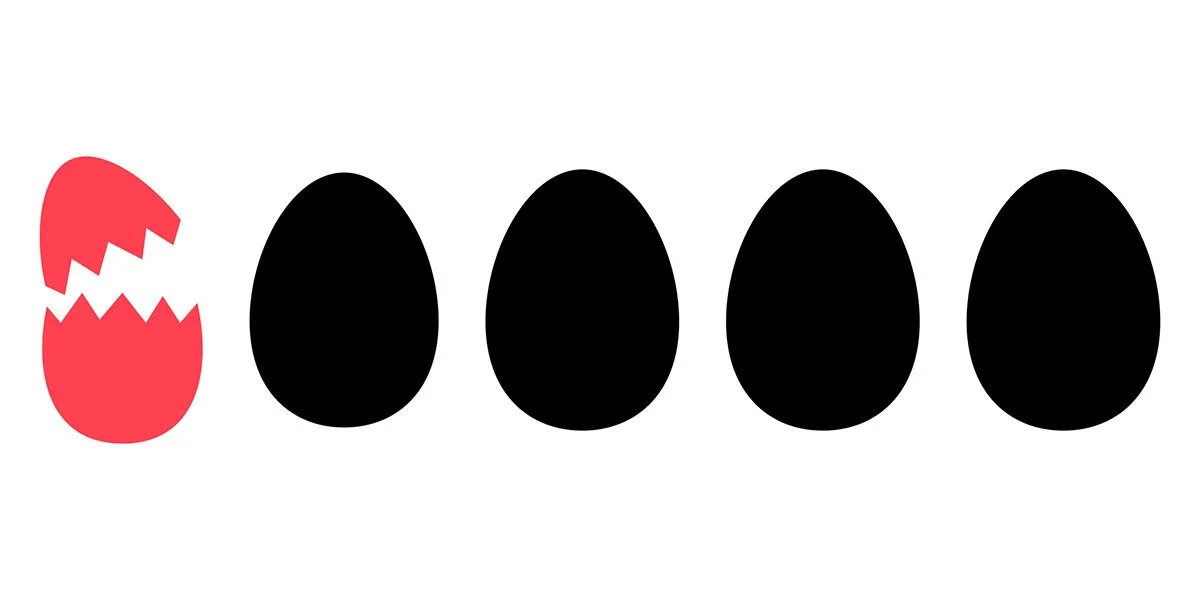
Females lay just one egg every two years, and only about one in five chicks survives, making this one of the lowest breeding rates of any parrot.
What are we doing?
Research & monitoring
Conservation Biology
Our team has been studying palm cockatoos since 1999, uncovering the challenges behind their decline. Females lay just one egg every two years, and only about one in five chicks survives, making this one of the lowest breeding rates of any parrot. This discovery led to the species being listed as Vulnerable under Australian law, giving it stronger protection.
We now study palm cockatoos across Cape York Peninsula to understand how different populations are connected. Our current focus is the western Cape York population, where land clearing from bauxite mining has changed large areas of habitat. We are researching breeding success, nest hollows and habitat use to better understand the risks facing these birds and how best to protect them.
Drumming Behaviour
Palm cockatoos are also famous for their rhythm. Males snap off branches, shape them into drumsticks, and beat on hollow trees to impress females. We have recorded this behaviour more than 60 times, confirming it as the only known example of musical instrument use by a non-human species. It offers a rare window into the evolution of intelligence and creativity.
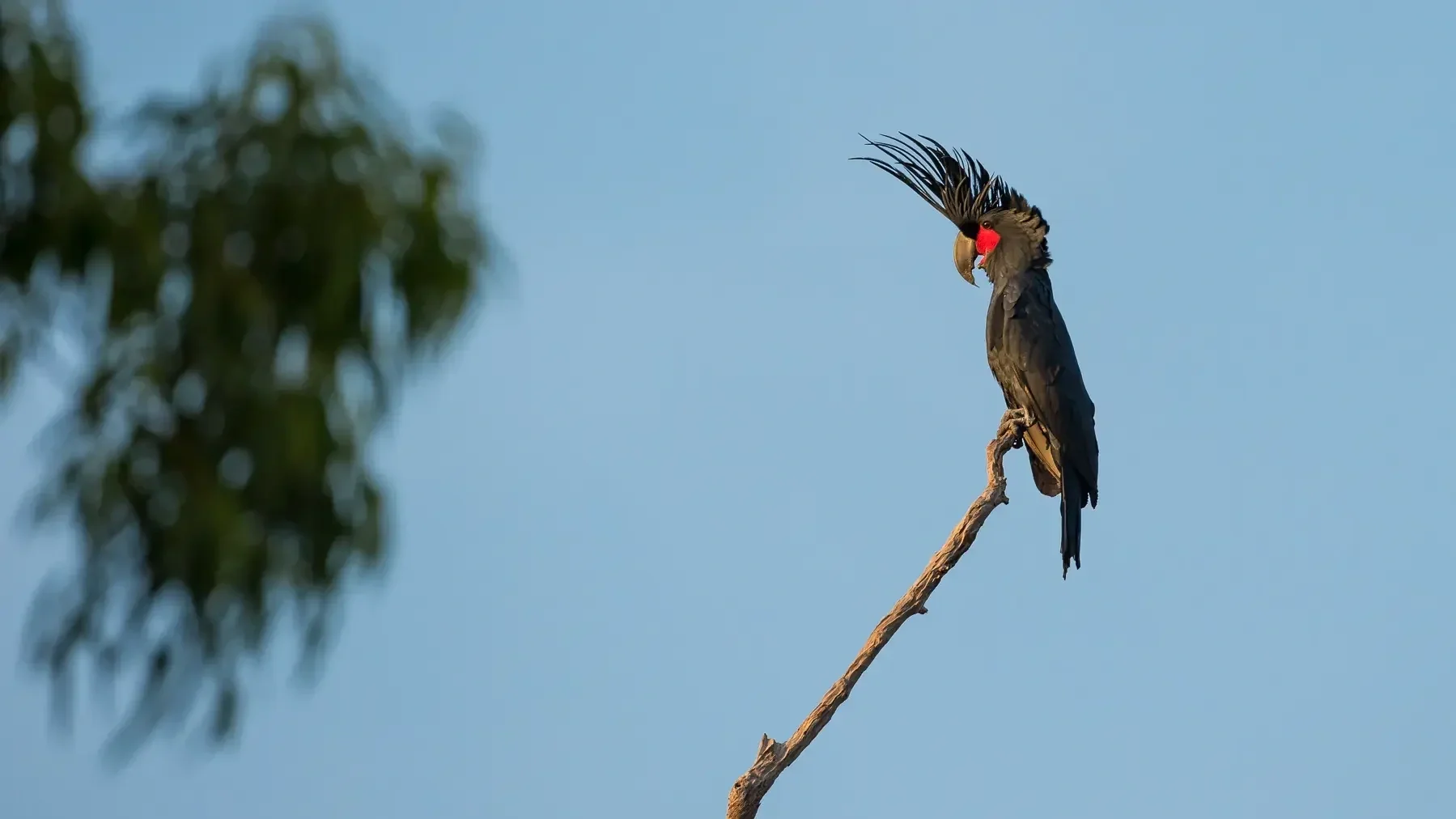
Photo: David Stowe
Tasmanian Masked Owl
Tasmanian Masked Owl
Tasmanian Masked Owl
Tyto novaehollandiae castanops
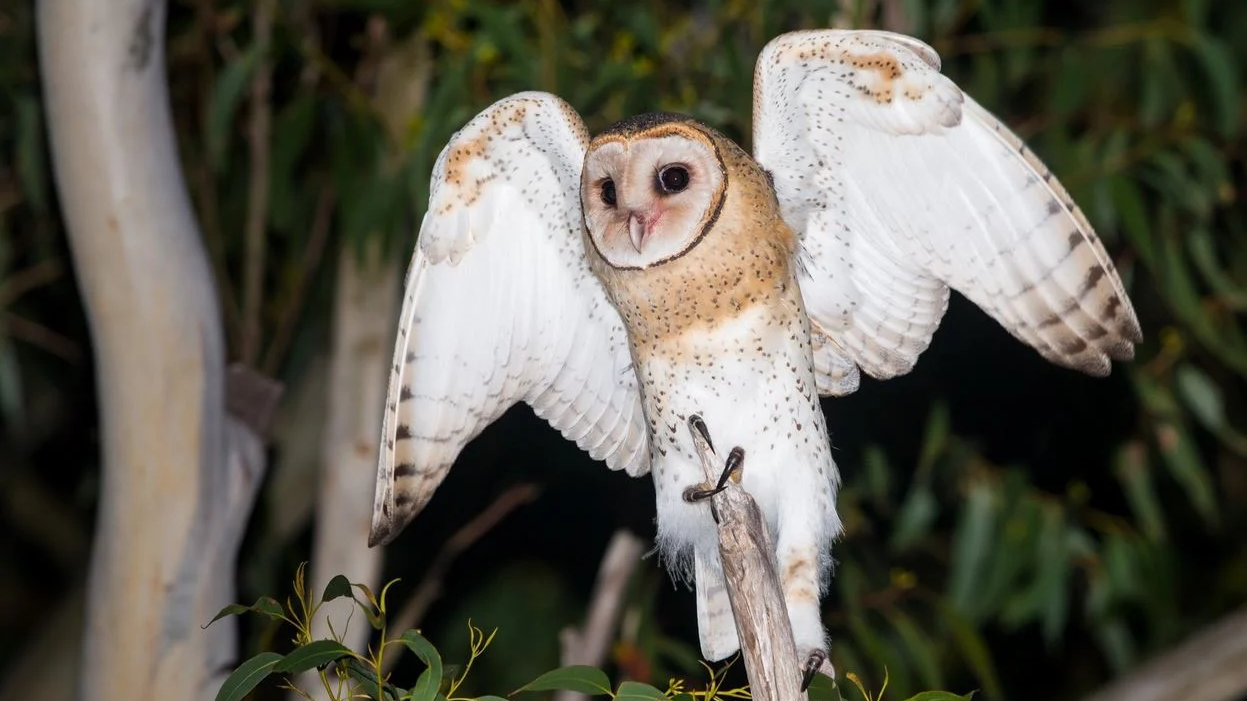
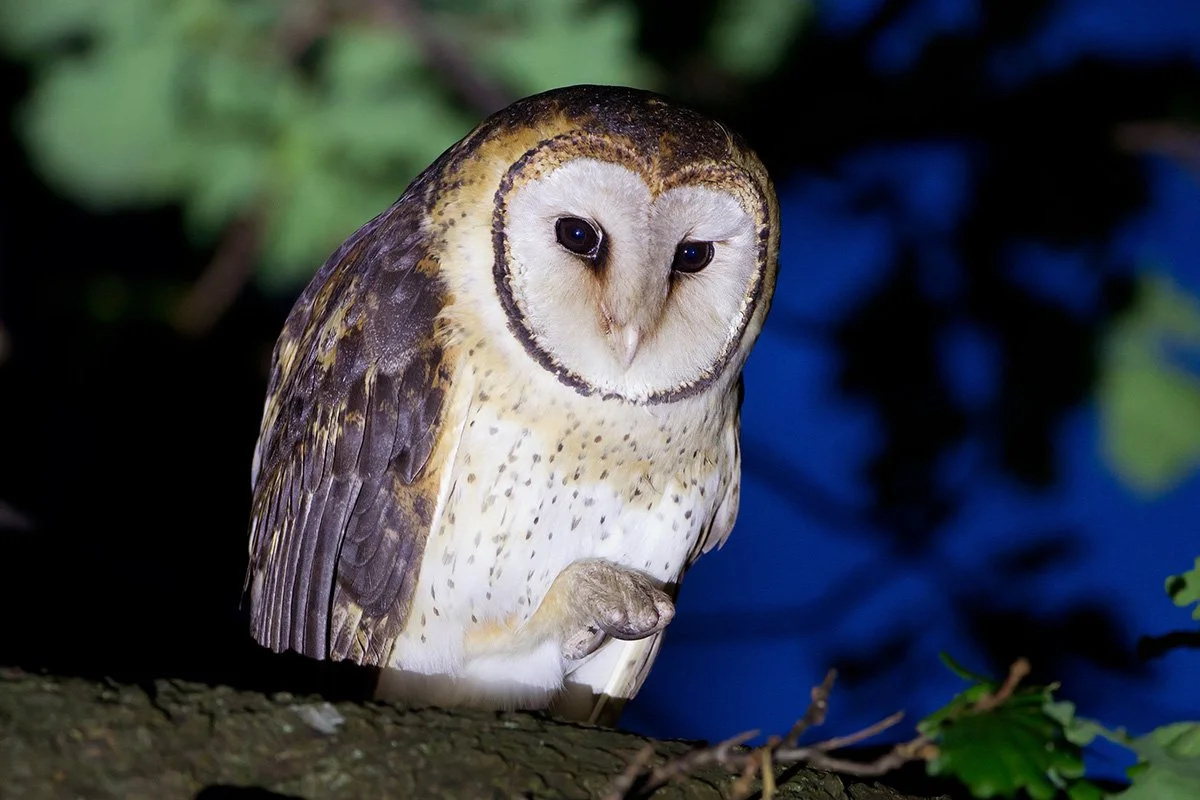
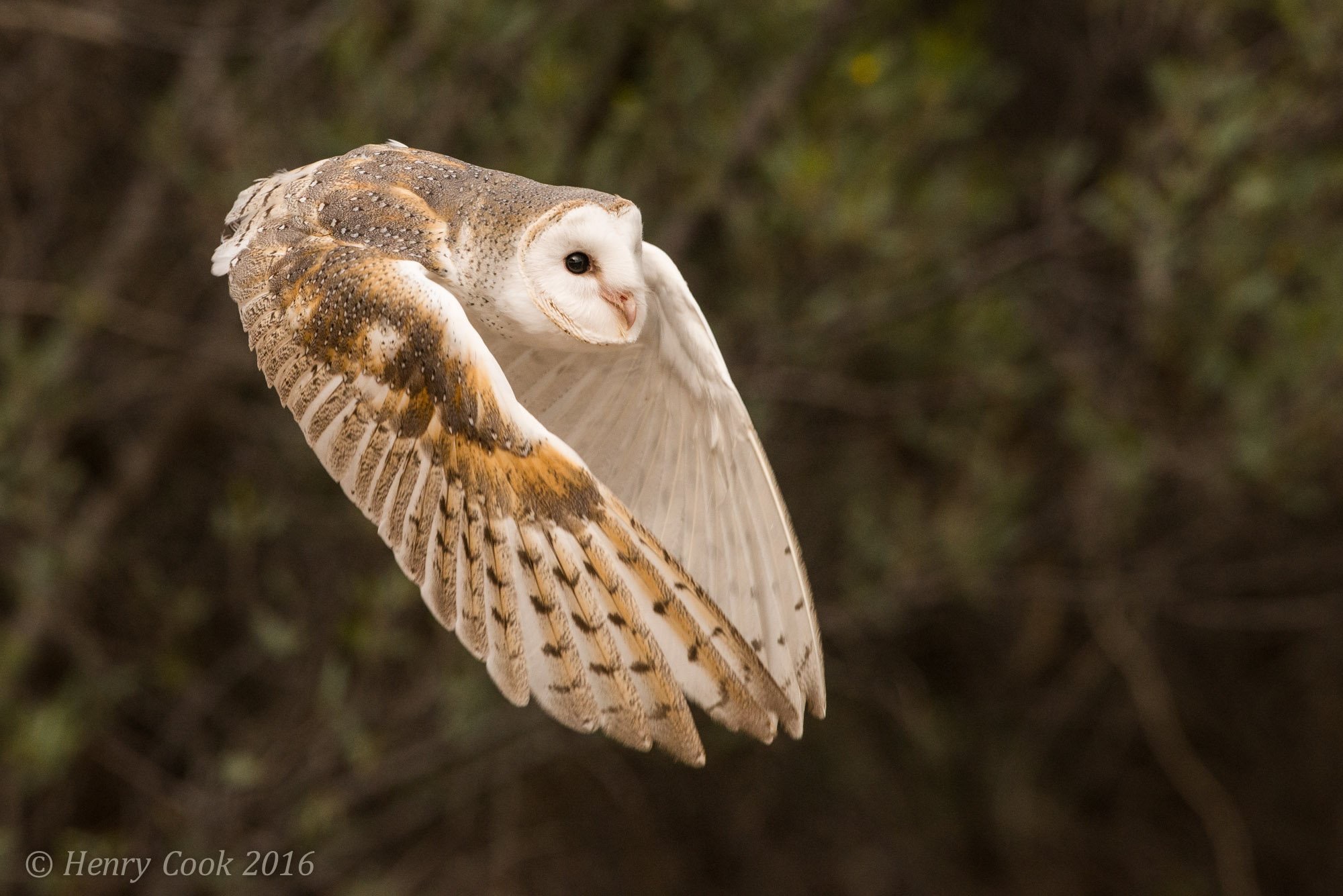
The Tasmanian masked owl is a large, powerful owl found only in Tasmania. It is a top nocturnal predator that hunts mostly small mammals, but can also take birds and larger prey. This owl relies on old-growth forests and large eucalypt trees for shelter and nesting, making it vulnerable to habitat loss.
Above photo: JJ Harrison
Why is it in trouble?
Loss of old-growth forest
Clearing and logging remove the large trees with deep hollows that masked owls need to nest.
Limited nesting sites
The owls only nest in very large, old eucalypts, which are now rare in many landscapes.
Disturbance & habitat fragmentation
Fragmented forests reduce suitable hunting and nesting areas within their large home ranges.
Why is it difficult?
Rare & wide-ranging
Masked owls live at low densities and defend very large territories.
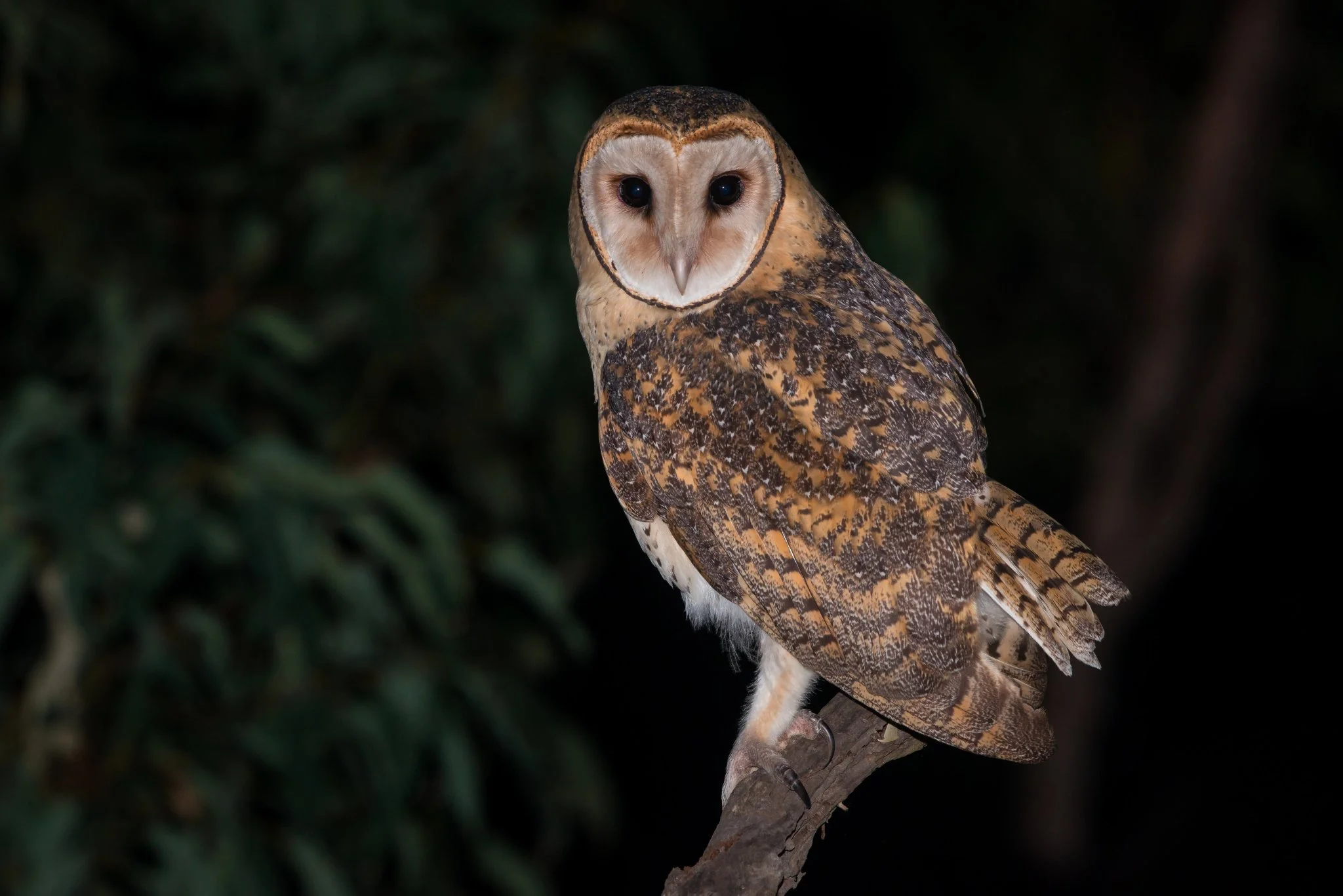
Nocturnal & secretive
They hunt at night and roost in hidden places during the day.
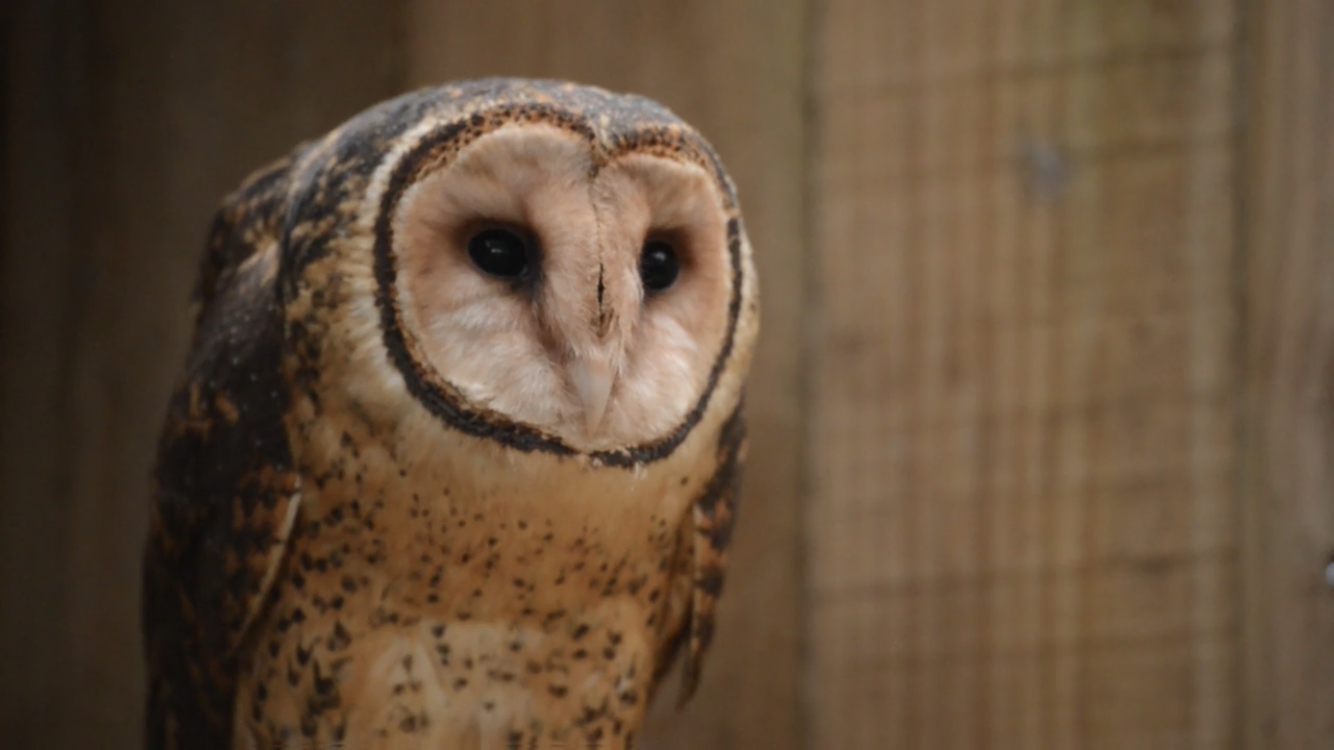
Hard to detect
Even when calls are played, owls may not respond or may be far away.
What are we doing?
Research and Monitoring
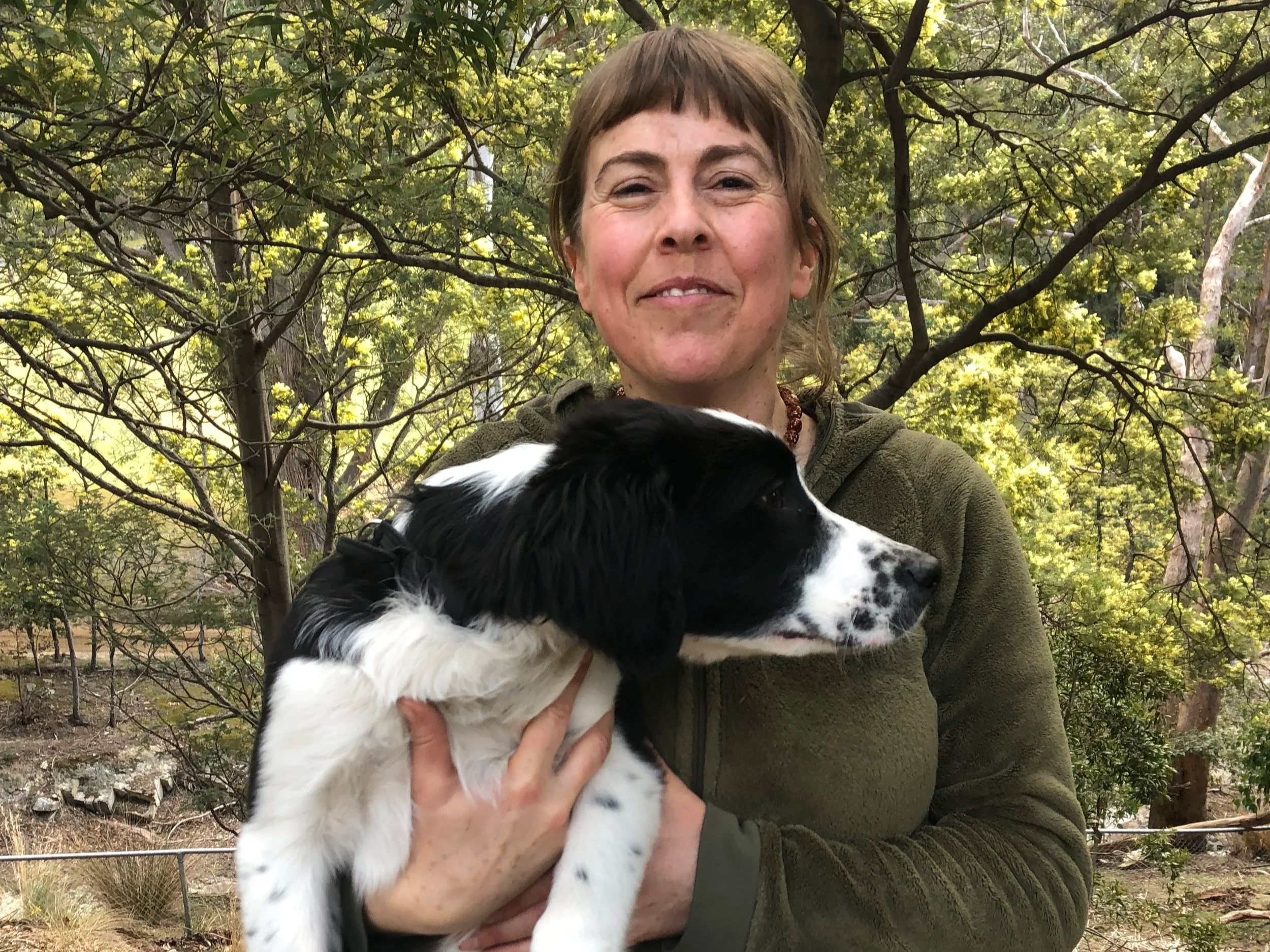
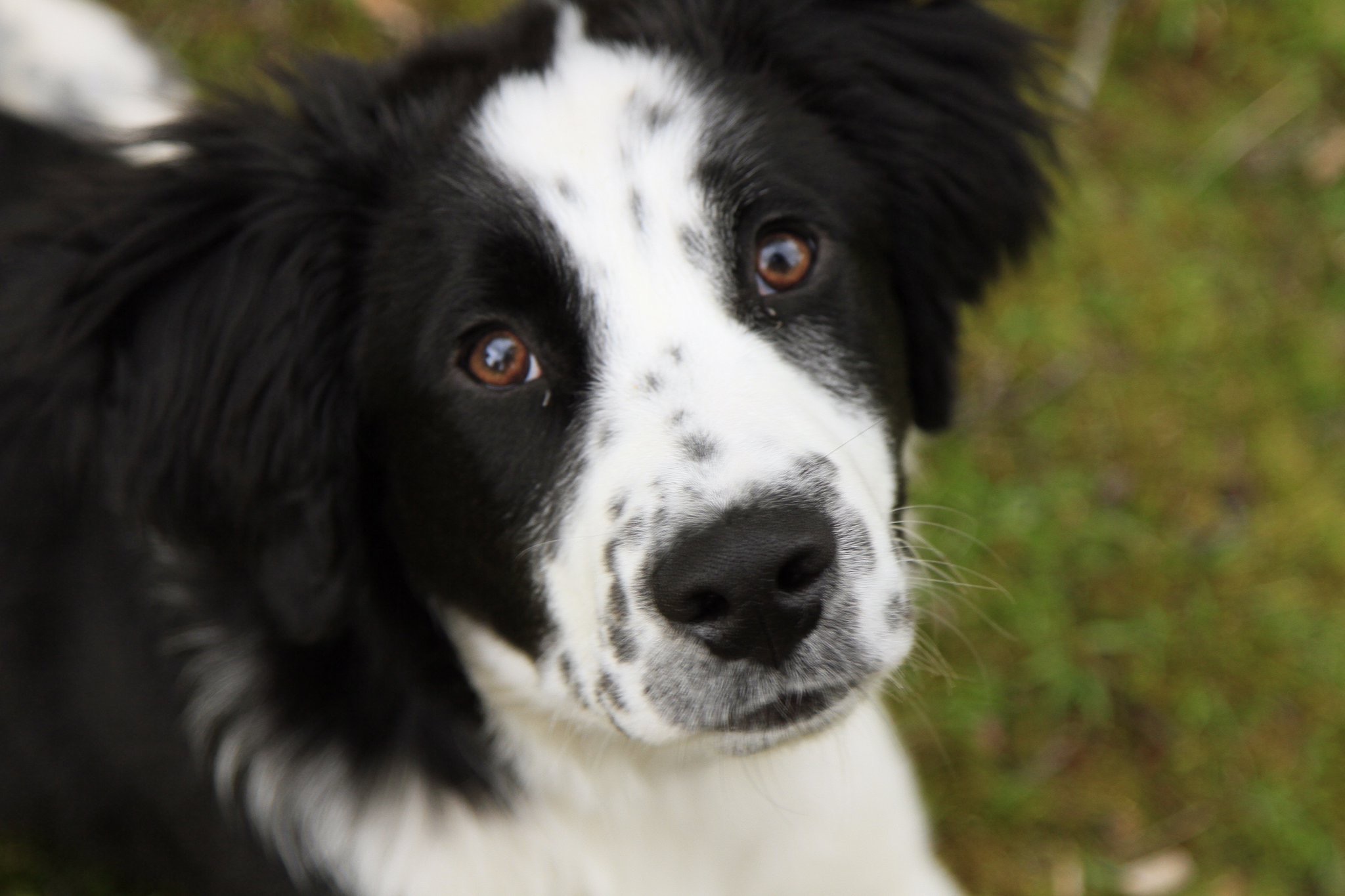
We are developing new ways to detect Tasmanian masked owls and learn more about their ecology. This includes using specially trained detection dogs to find owl pellets, which mark roosting and nesting areas.
Future research
DNA from pellets and feathers will help reveal where owls live, how many there are and how they move through the landscape. This information will support better conservation planning for this rare and secretive species.
Publications
Rufous Scrub-bird
Rufous Scrub-bird
Rufous Scrub-bird
Atrichornis rufescens
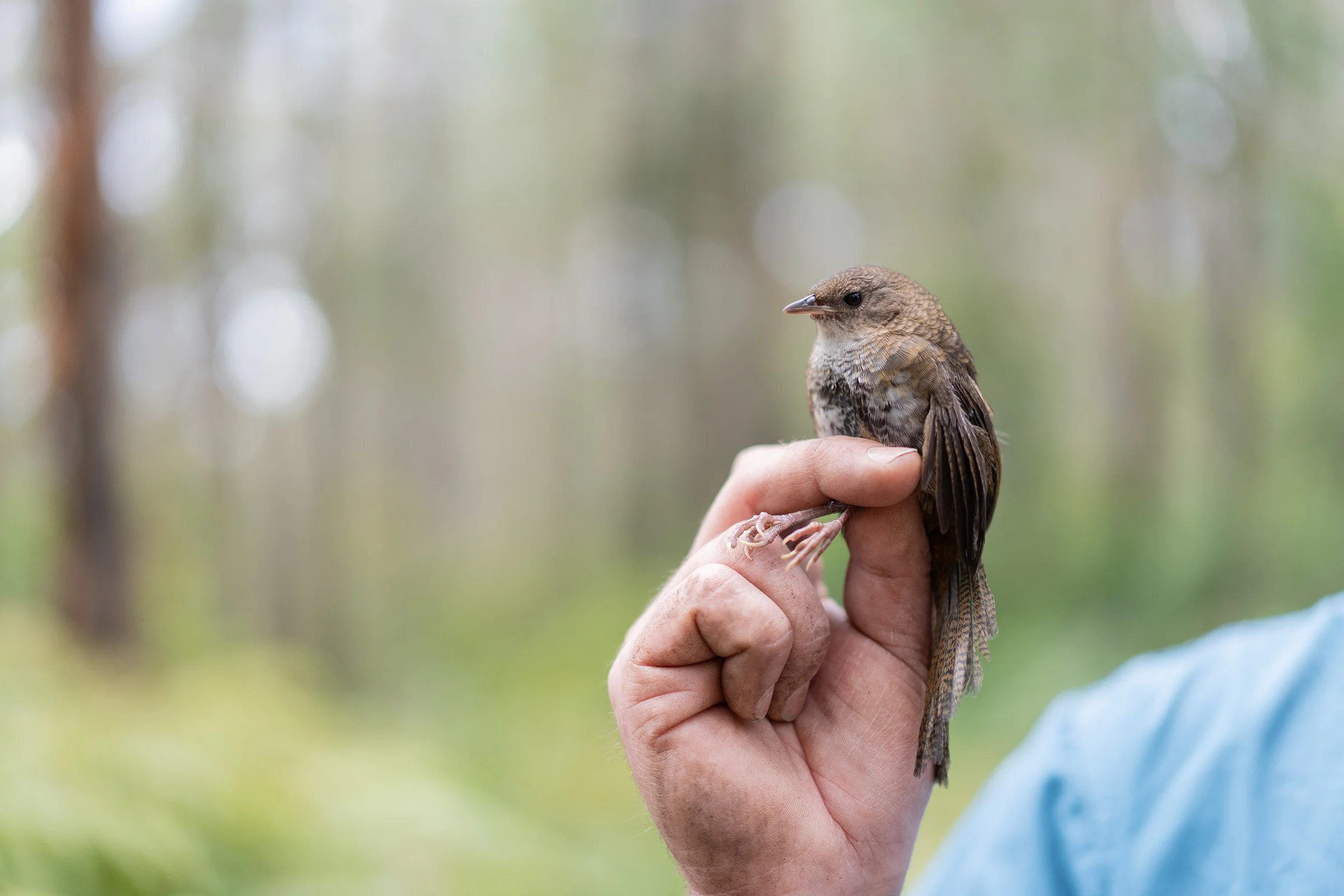
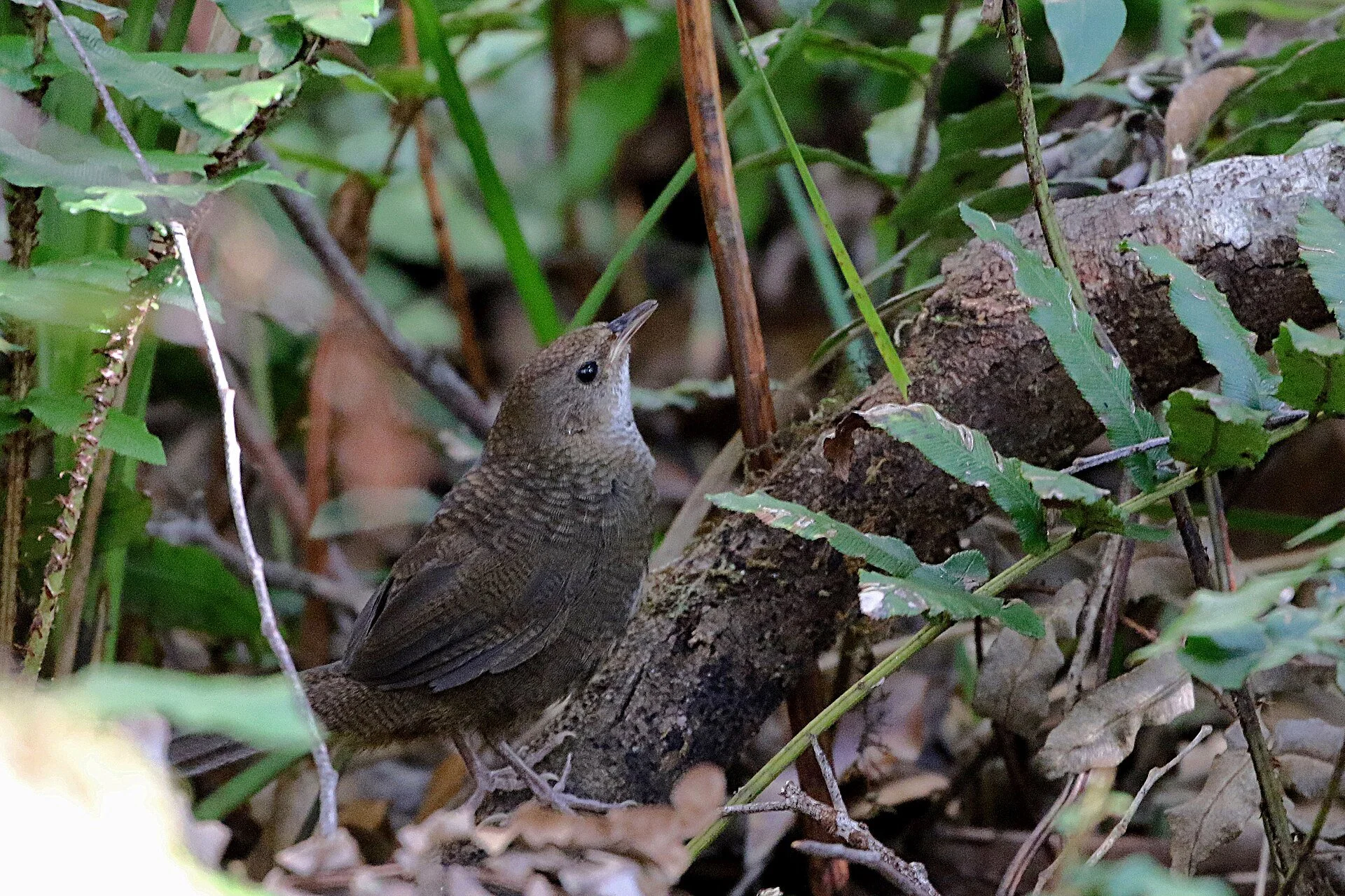
The rufous scrub-bird is a rare, ancient songbird found in dense rainforests across parts of north-eastern New South Wales and south-eastern Queensland. Less than 2,000 of these birds remain, and their survival is threatened by habitat loss and natural disasters like bushfires. We have started a DNA project to learn more about the bird’s genetics, which could help guide future conservation efforts.
Why is it in trouble?
Small population size
With fewer than 2,000 birds left, the rufous scrub-bird is vulnerable to chance events and population loss.
Habitat damage
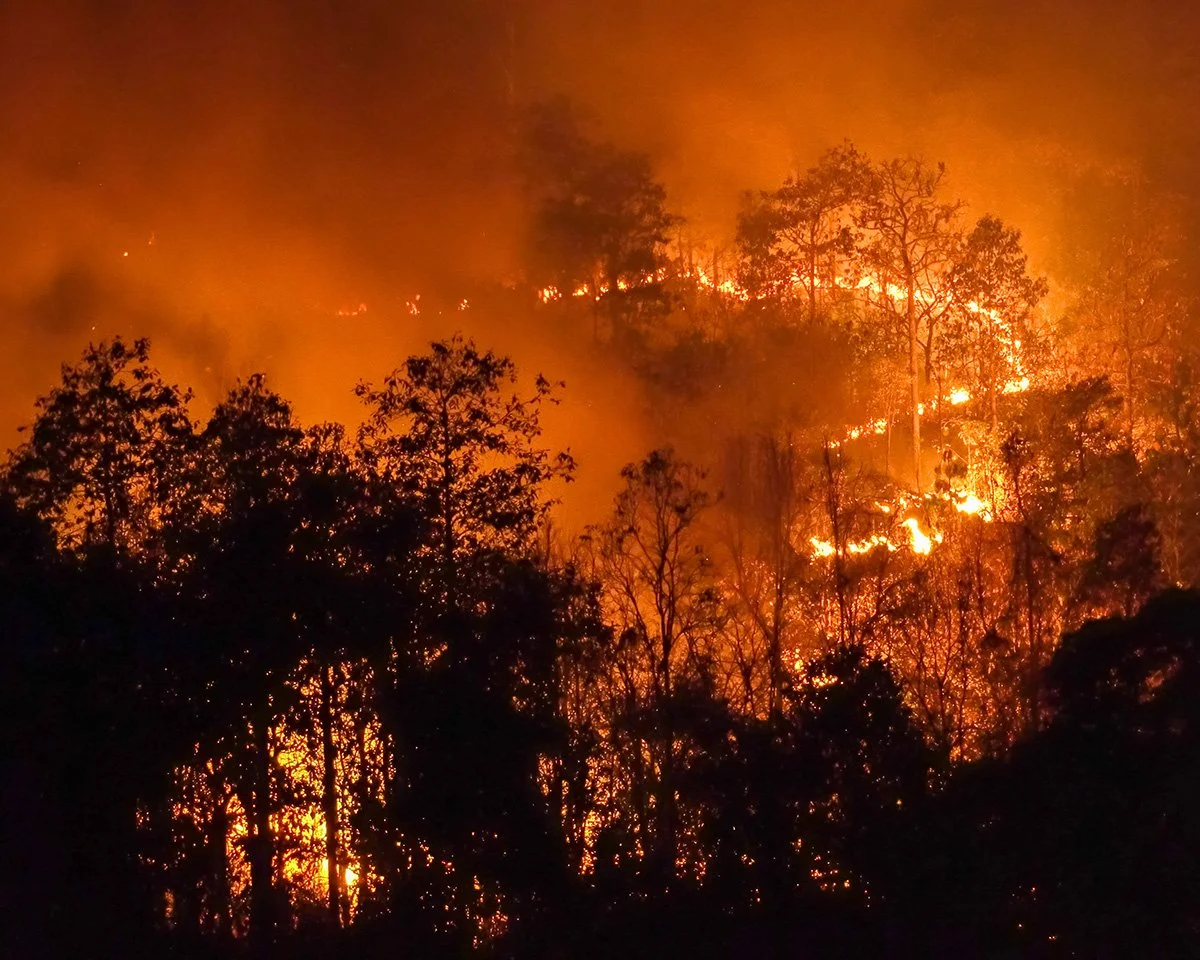
Bushfires, especially the Black Summer fires, have destroyed large areas of rainforest and reduced the bird’s habitat.
Fragmented populations
The remaining birds exist in separate colonies, making it harder for them to mix and maintain healthy genetic diversity.
Why is it difficult?
Extremely elusive
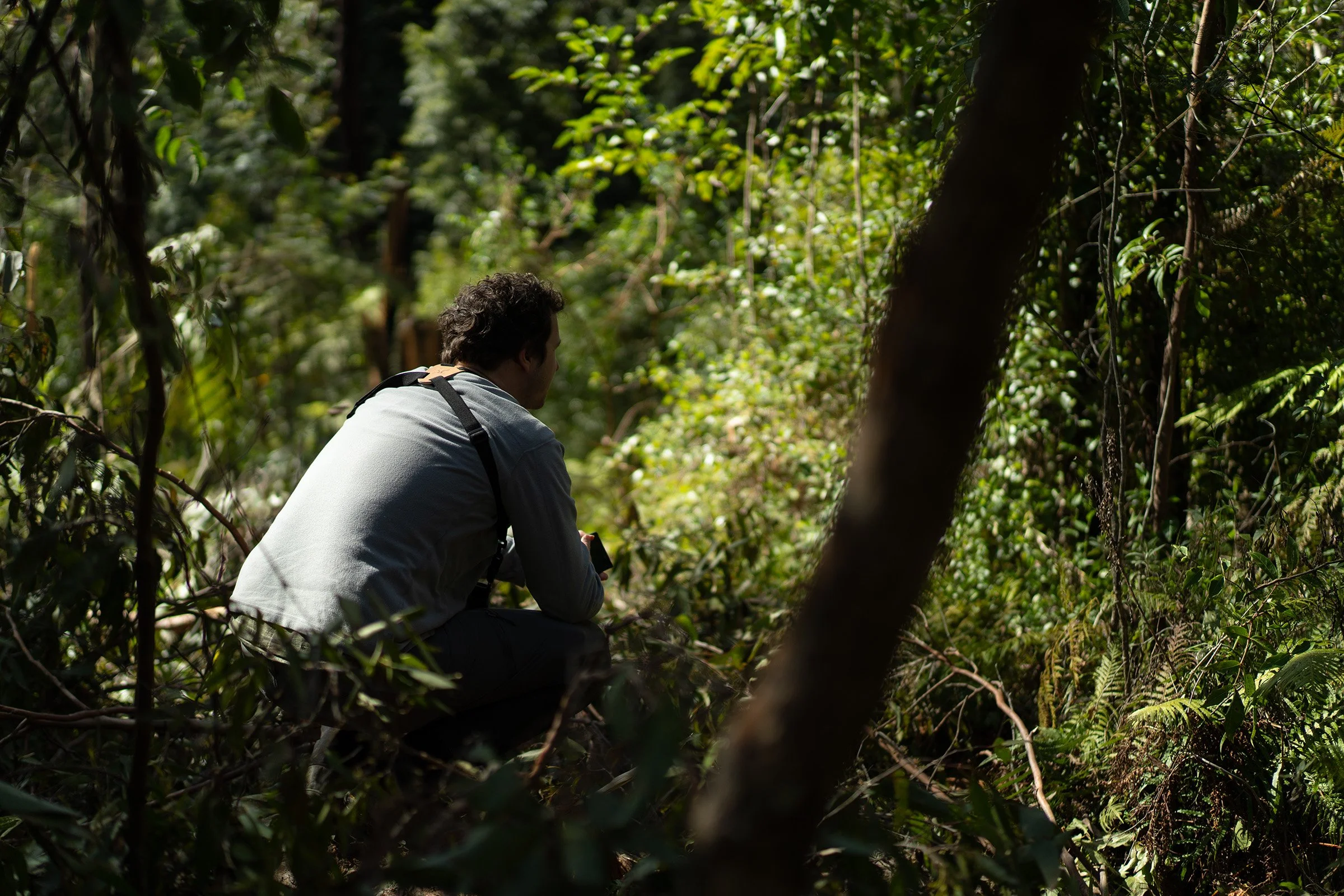
Rufous scrub-birds live in very thick rainforest undergrowth where they are hard to see.
Small and fast
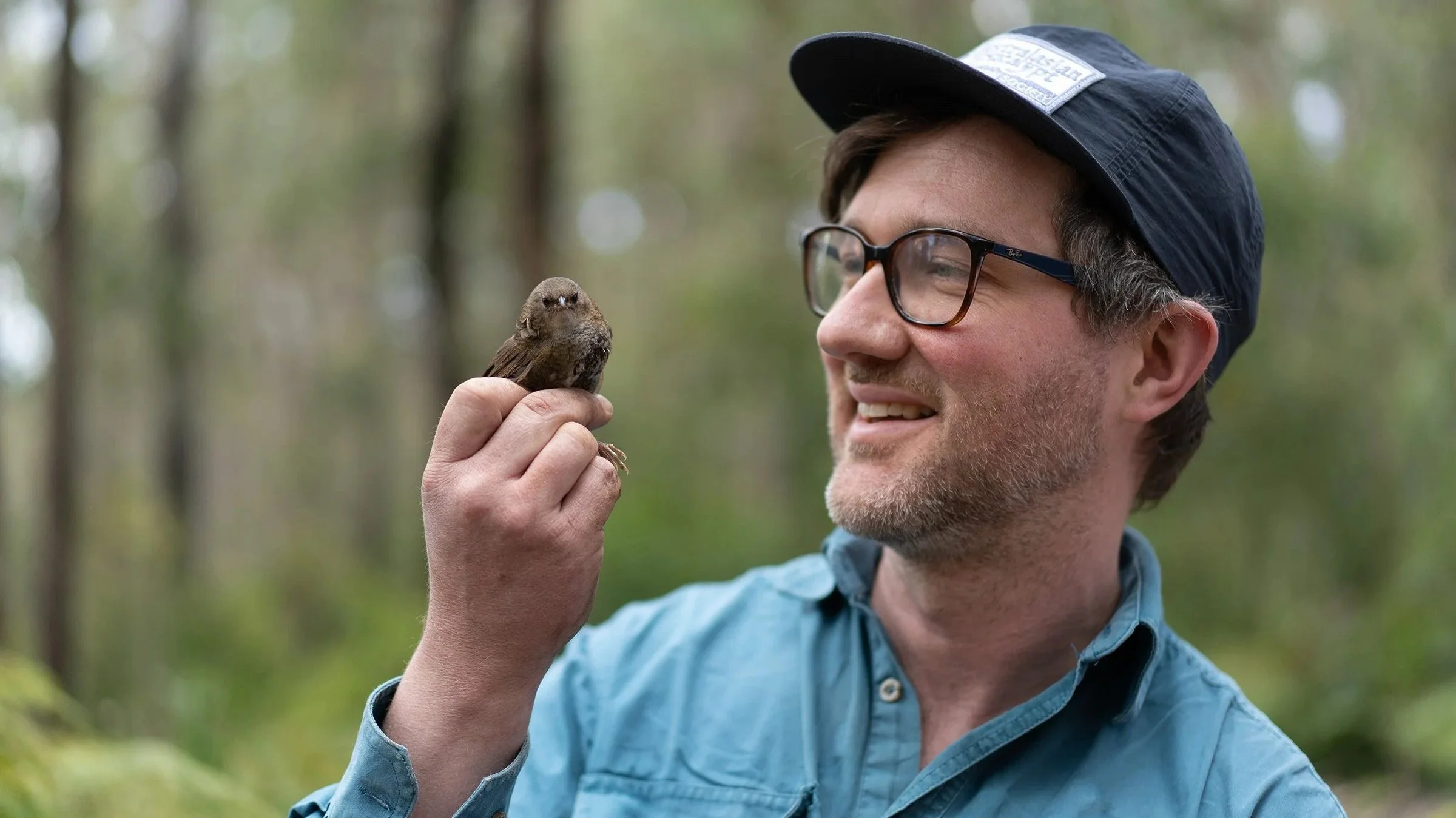
The birds are quick and agile, making them difficult to catch for research.

Spread out over rugged terrain
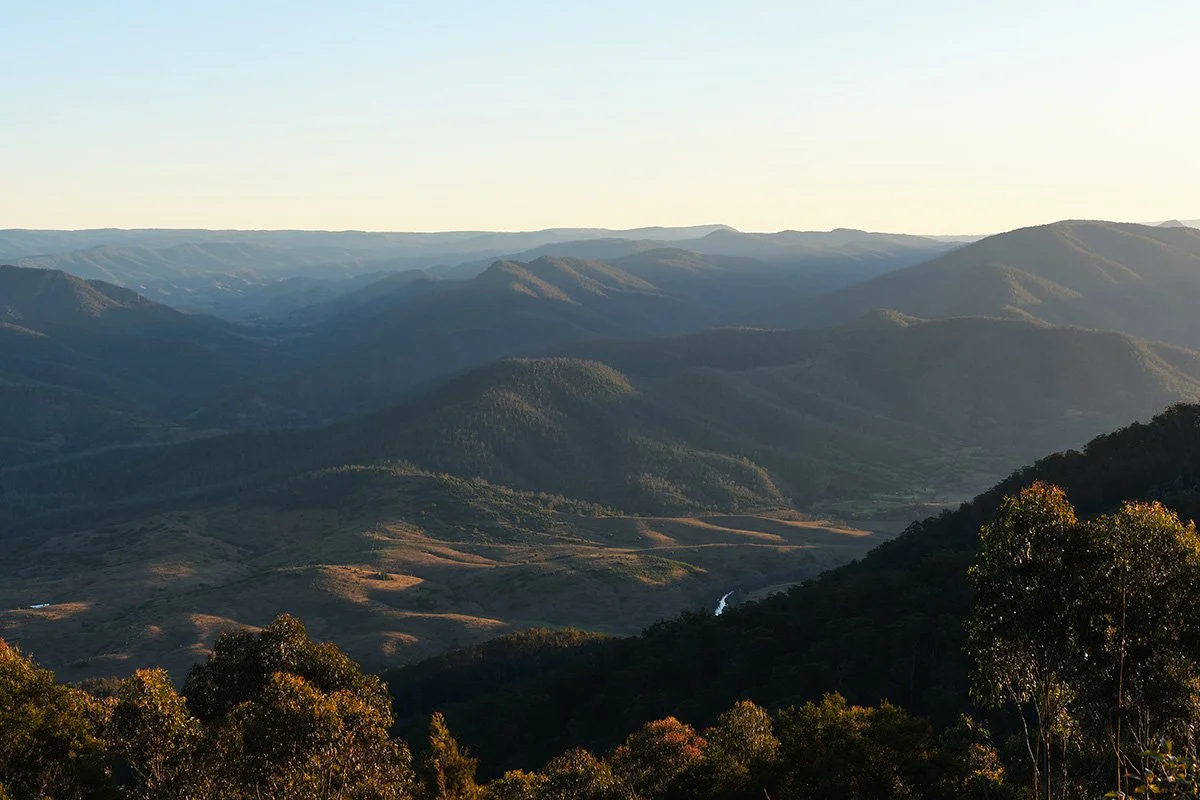
Birds occur in isolated colonies across mountainous forest regions, which makes fieldwork challenging.
What are we doing?
Research and Monitoring
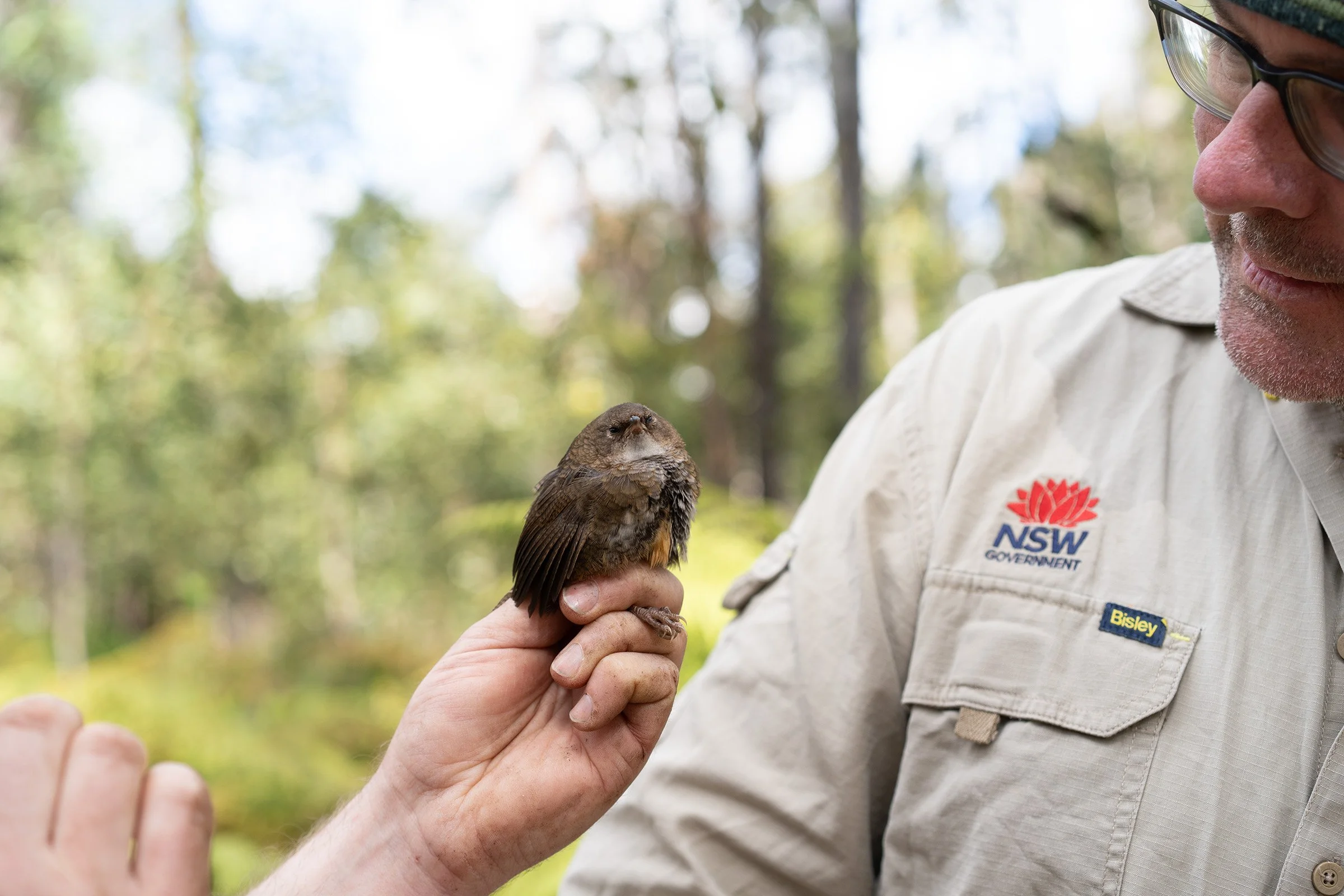
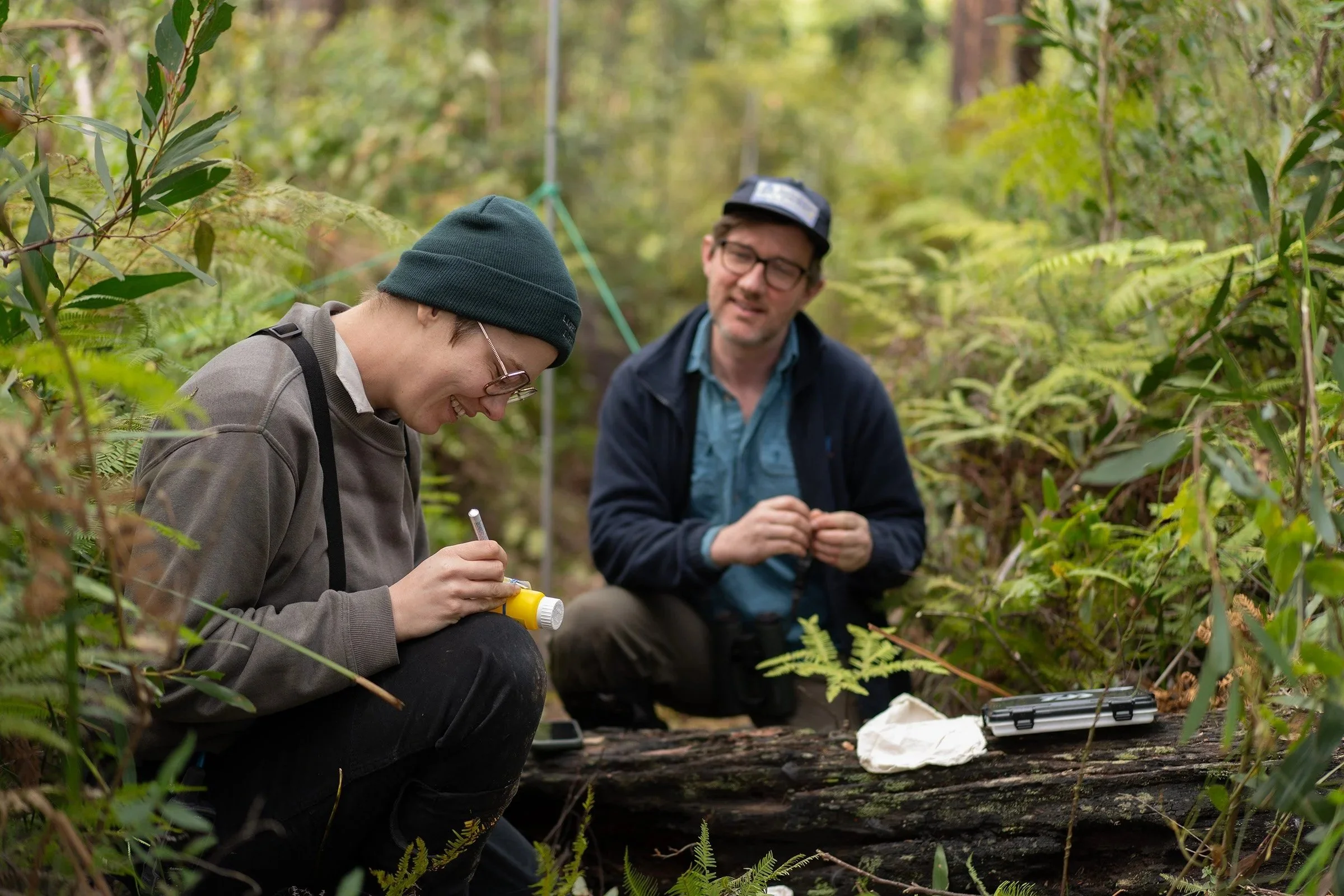
Scientists from ANU and the NSW Department of Climate Change, Energy, Environment and Water are collecting DNA from different scrub-bird colonies. They aim to understand the genetic differences between groups so they can plan future conservation actions.
Future research
Future work will continue DNA analysis across all colonies to build a full picture of the species’ genetic health. This will underpin efforts to boost resilience, guide any captive breeding programs and ensure that conservation actions help keep the species from disappearing.
King Island Birds
Birds of King Island
King Island Birds
Birds of King Island
The King Island scrubtit and King Island brown thornbill are two tiny birds found only on King Island. Both are island subspecies of more common mainland birds, but on King Island their populations have fallen to extremely low levels. The scrubtit is listed as Critically Endangered, and the brown thornbill as Endangered, yet very little is known about how many remain or how best to protect them.
Why is it in trouble?
Severe habitat loss
More than two-thirds of King Island’s native vegetation has been cleared, leaving only small patches of suitable habitat.
Fire and habitat damage
Wildfires can destroy large areas of remaining habitat in a single event, as seen in key scrubtit strongholds.
Very small populations
With so few confirmed sightings, both birds are at high risk of local extinction.
Why is it difficult?
They are extremely rare
There have been very few confirmed sightings over several decades.
Their habitat is highly fragmented
Remaining habitat occurs in small, scattered patches that are hard to survey.
We know very little about their ecology
Especially for the brown thornbill, basic information about habitat needs is missing.
What we are doing?
We have undertaken the first systematic surveys on King Island for both of these critically endangered birds. Our surveys have provided the richest data on both the scrubtit and thornbill available in contemporary times, and our efforts represent the largest systematic survey of these species ever undertaken.
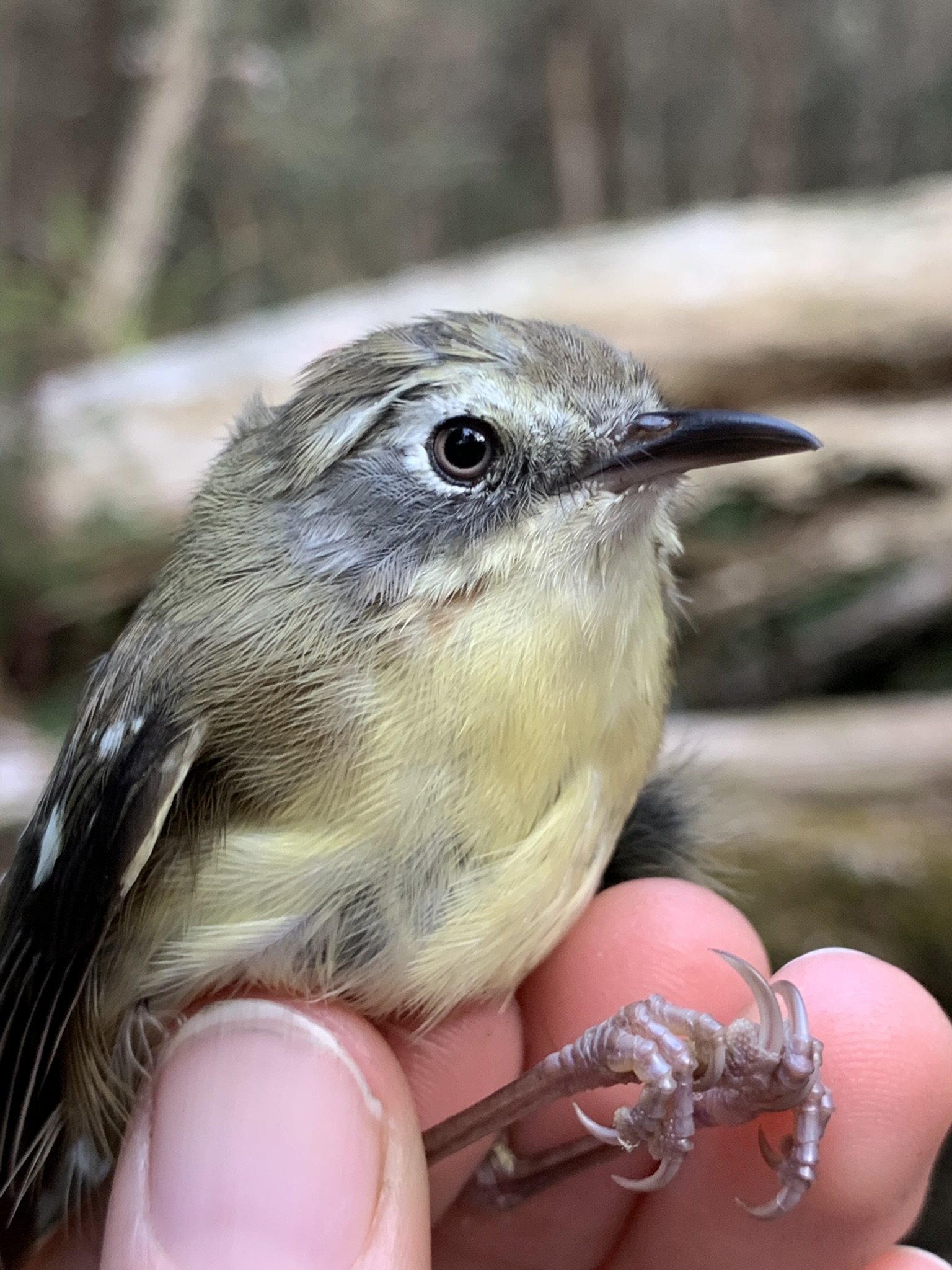


Photos: Tim Paasila
-
Crates et al (2024), Genomic insights into the critically endangered King Island scrubtit, Journal of Heredity 115, 552-564
Regent Parrot
Regent Parrot
Regent Parrot
Polytelis anthopeplus
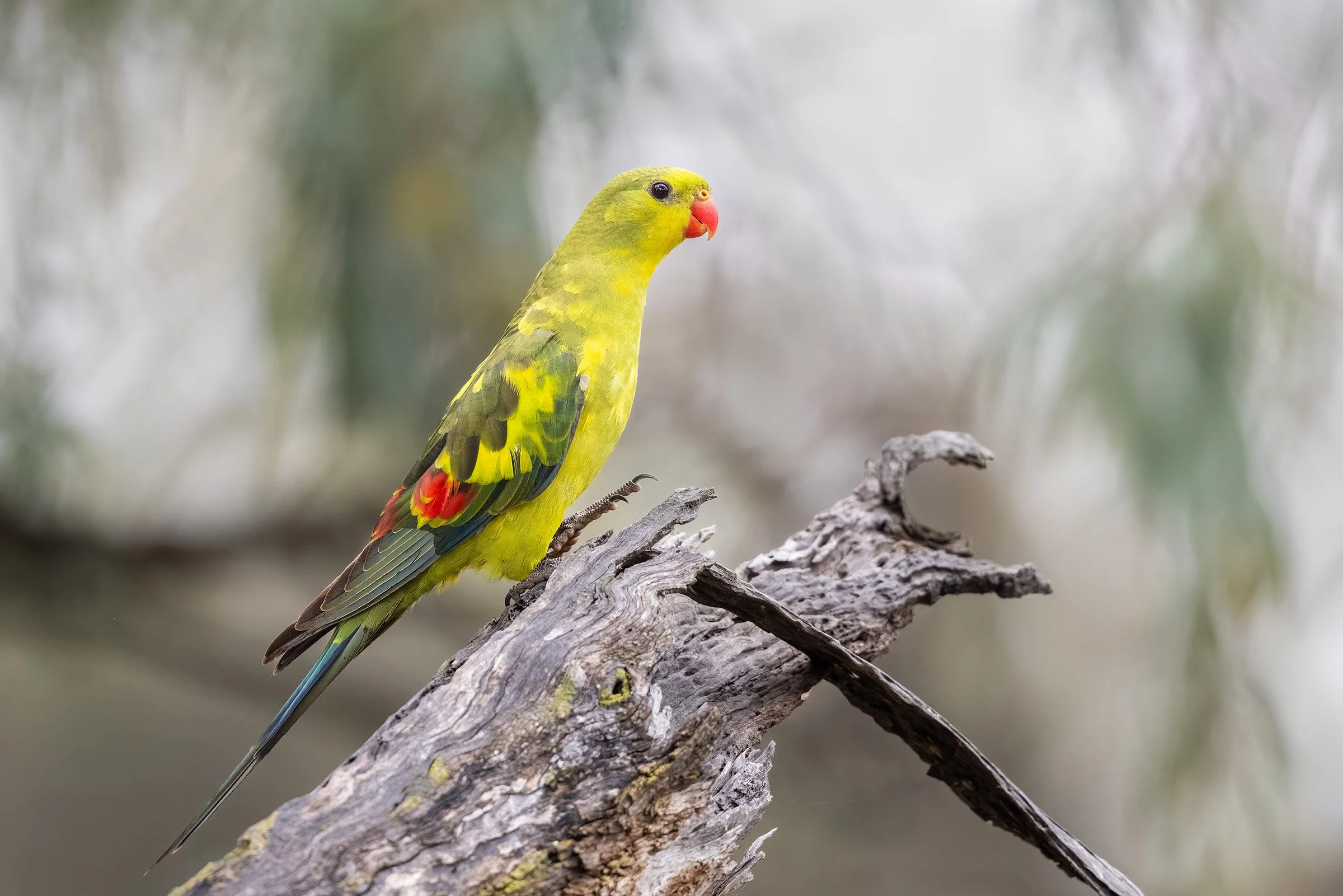
The regent parrot is a striking green and yellow parrot found in southern, temperate Australia. It relies on river systems and nearby woodlands for nesting, feeding and breeding. While still locally common in some areas, the species has declined across much of its range and is now considered threatened in several states, making its long-term survival uncertain.
Above photo: David Stowe
Why is it in trouble?
Loss of nesting trees
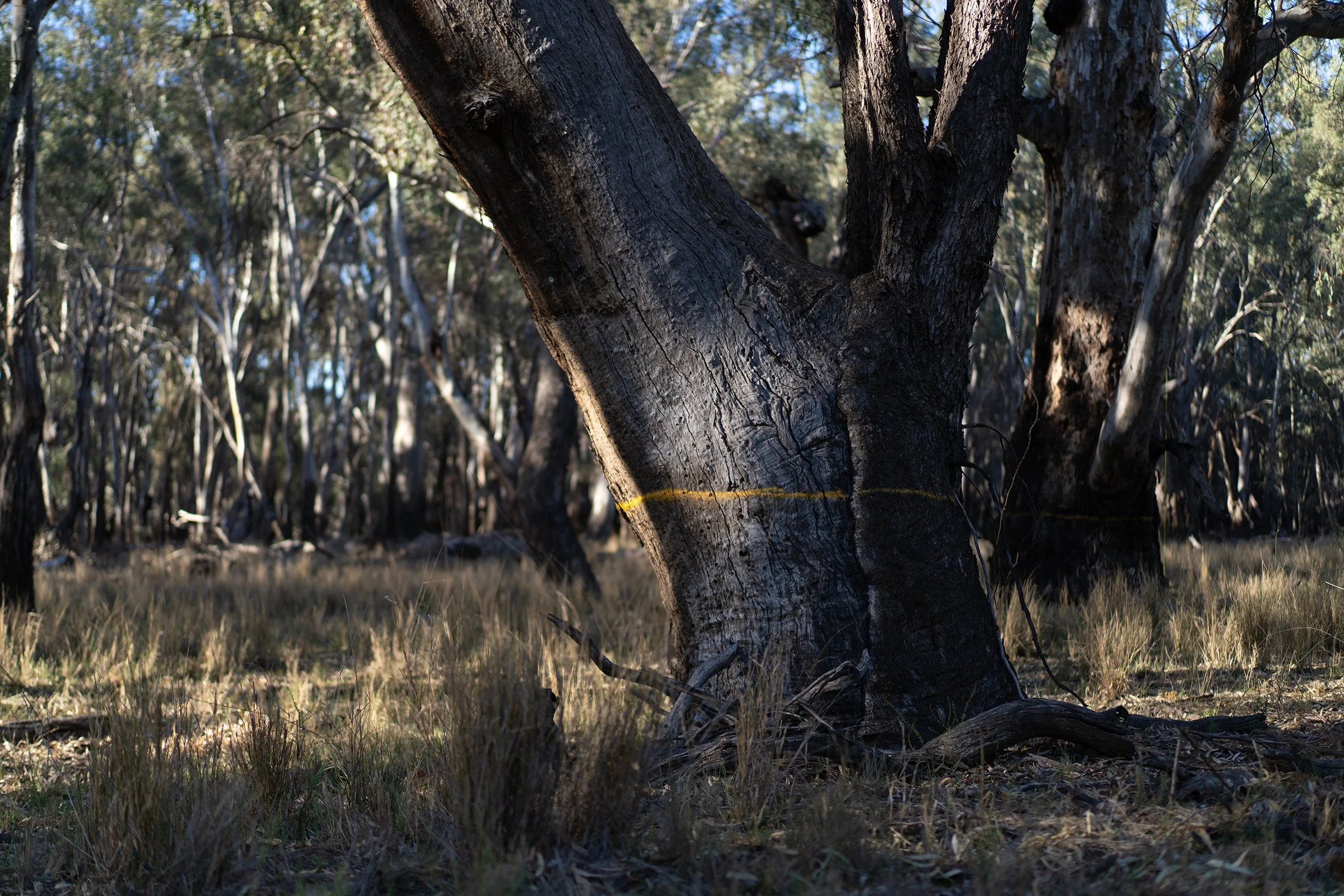
Regent parrots rely on large, old river red gums for nesting hollows. Clearing, logging and tree decline have greatly reduced the number of suitable nesting trees available.
Degraded river and woodland habitats
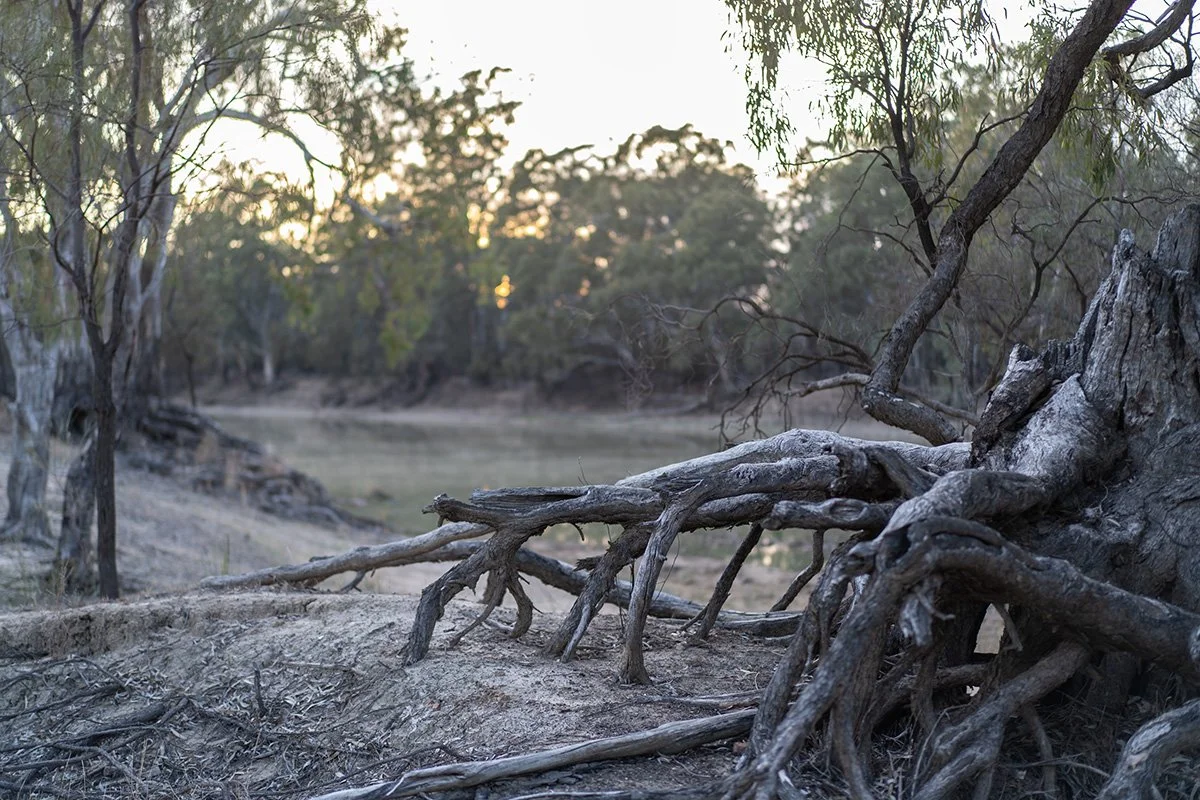
Changes to river flows, water extraction, grazing and weeds have damaged floodplain and woodland habitats, reducing food availability and overall habitat quality.
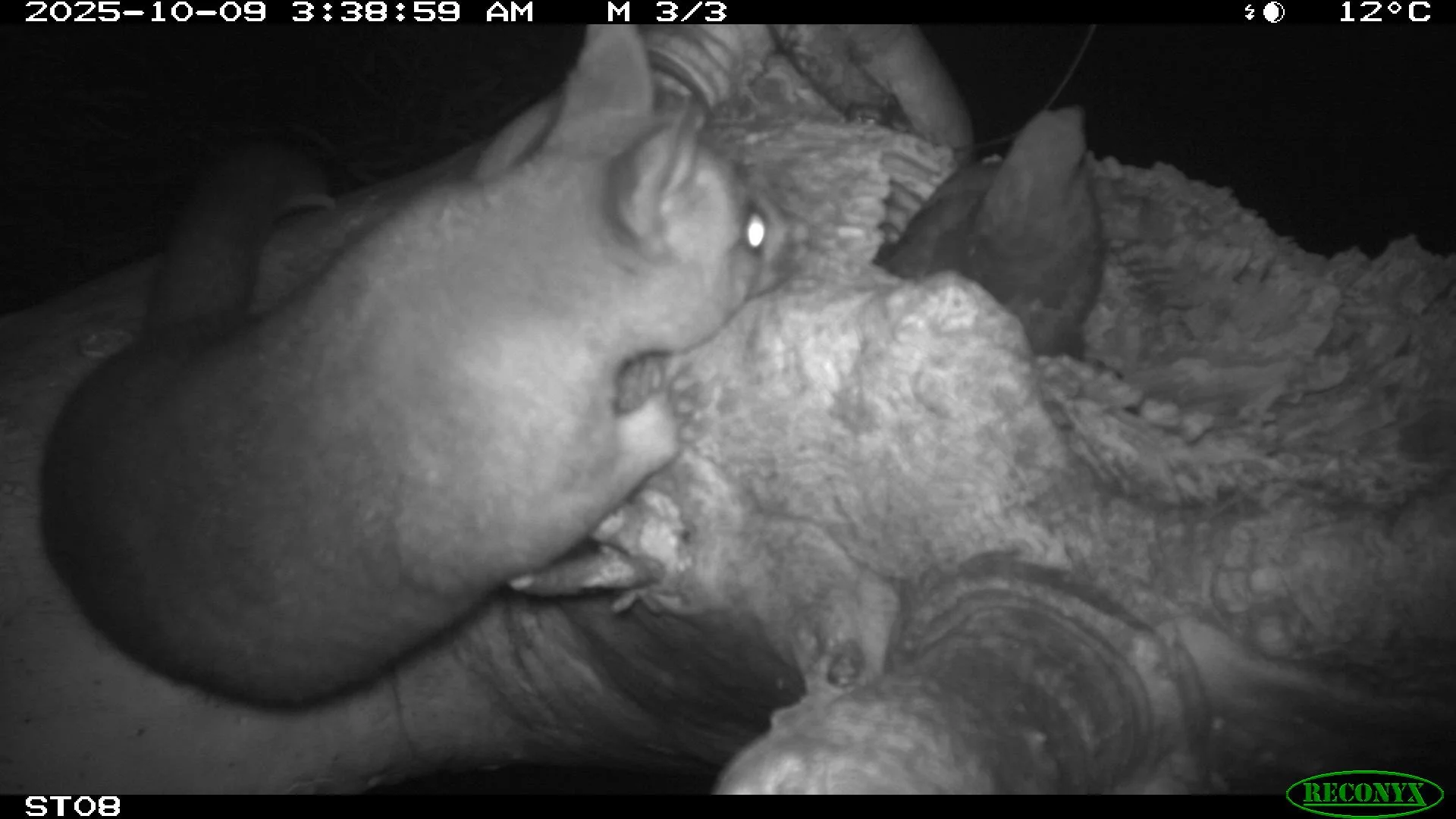
Competition and environmental stress
Regent parrots face growing competition for nesting hollows from other birds and animals. Climate change is likely to increase heat stress and further reduce habitat suitability over time.
Why is it difficult?
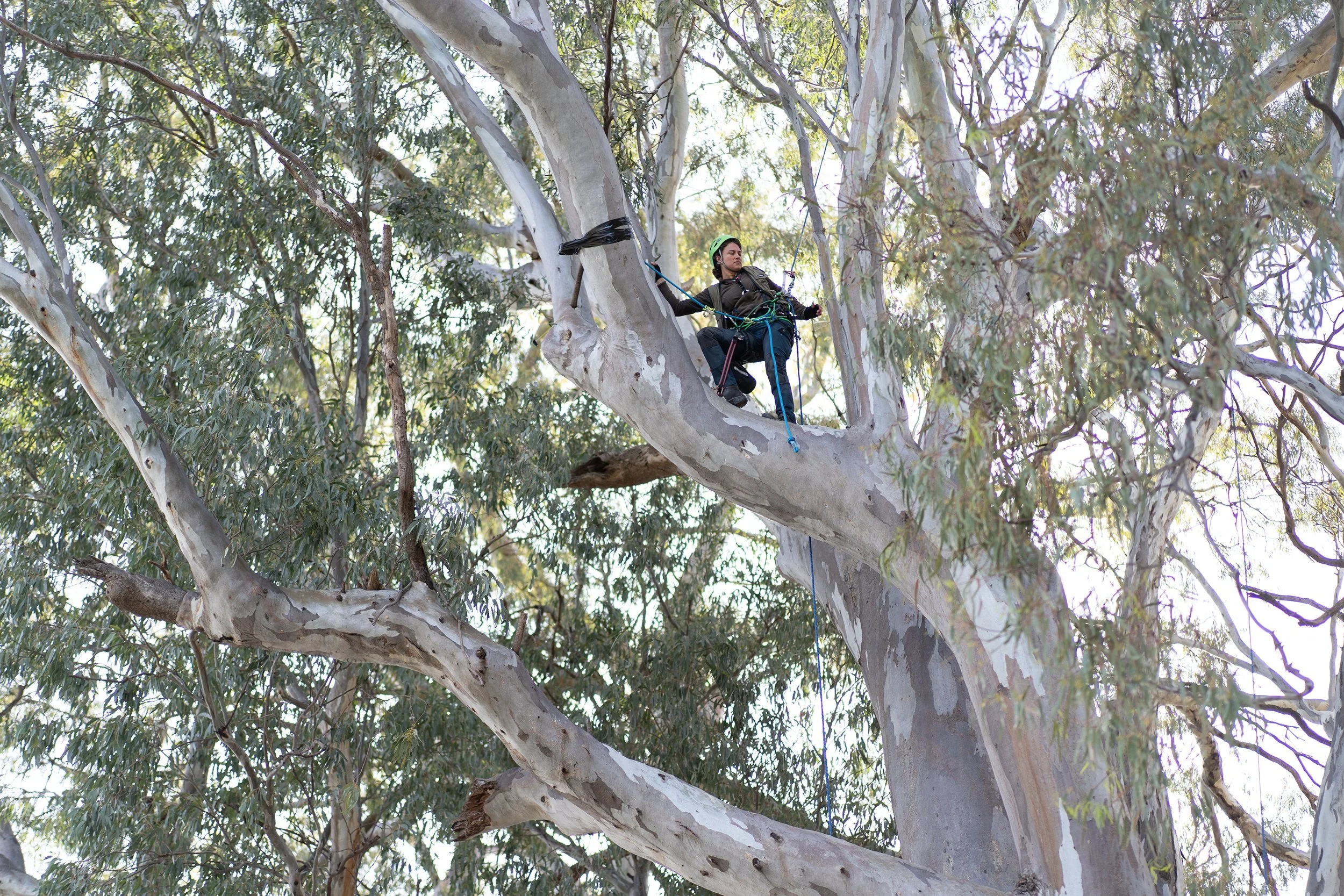
Nest high in tree hollows
Nests are often located high in large trees along rivers, which makes them hard to find, access and monitor safely.
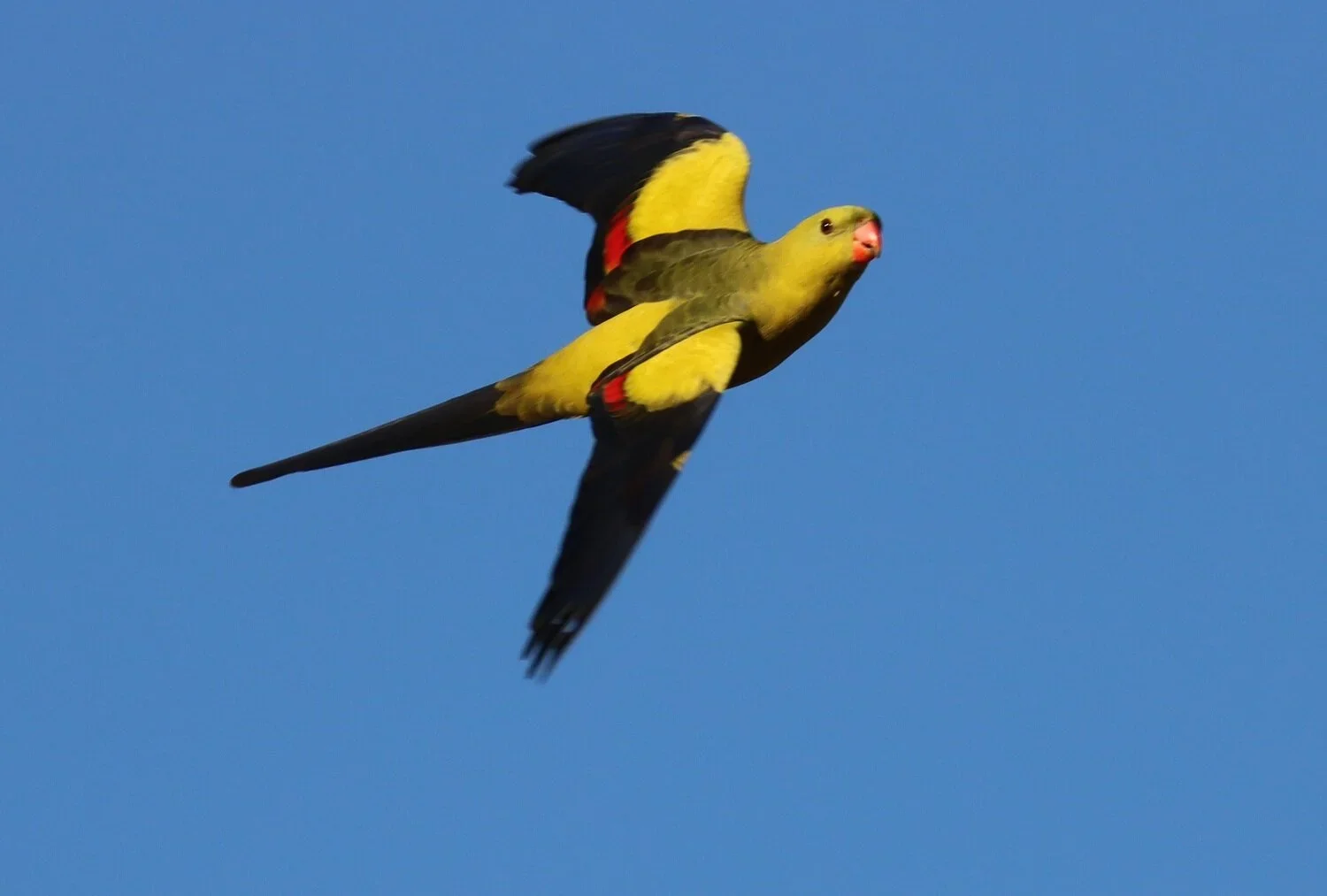
On the move
Regent parrots can travel long distances between feeding and breeding sites, making it difficult to track individuals and understand how they use the landscape.
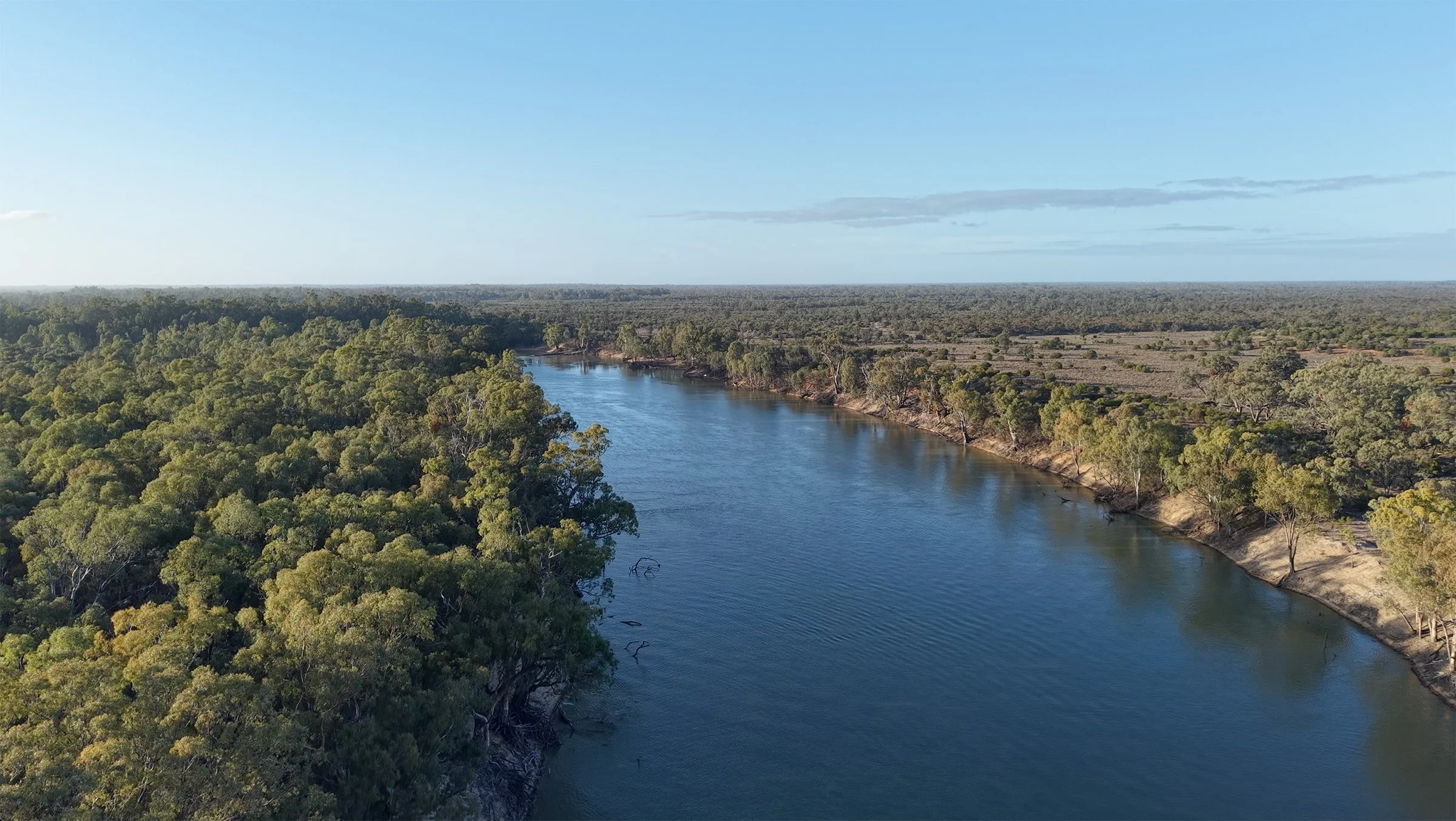
Spread across large, remote areas
Many regent parrot populations occur in remote river systems, requiring significant time and resources to survey consistently.
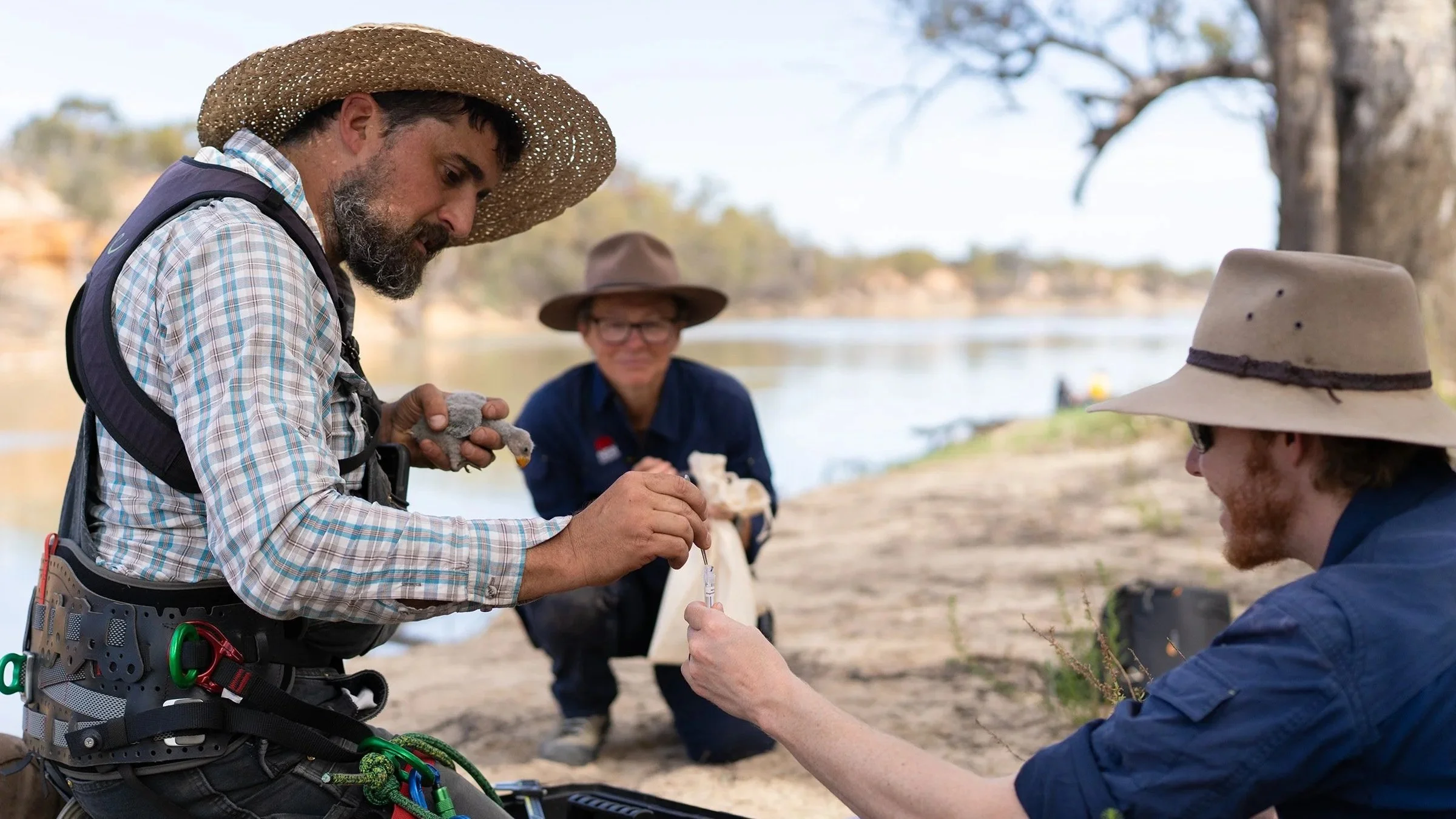
Photo: Elsie Percival
What are we doing?
Research and monitoring
Researchers are monitoring regent parrot populations to better understand where they breed, how successful nests are, and which habitats are most important for survival. This includes surveys of nesting sites, tracking movements, and assessing the availability and condition of tree hollows. These data help identify priority areas for protection and guide habitat management decisions.
Future research
Future research will focus on understanding how regent parrots respond to habitat restoration and changes in water management. There is also a need to investigate how climate change may affect breeding success and food availability. By filling these knowledge gaps, researchers can develop more effective conservation strategies to help secure the future of this iconic parrot.
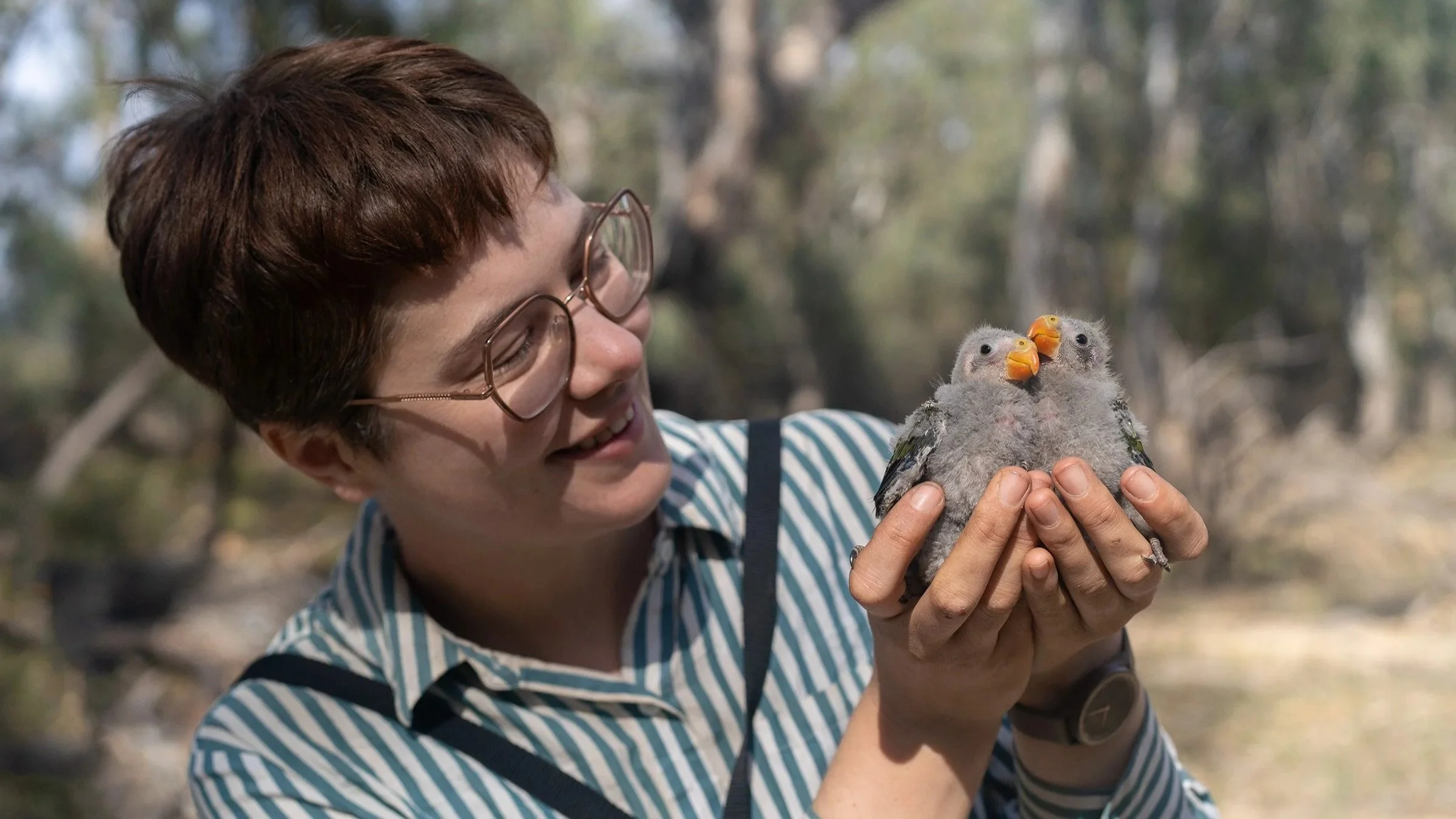
Photo: Elsie Percival
Blue-winged Parrot
Blue-winged Parrot
Blue-winged Parrot
Neophema chrysostoma
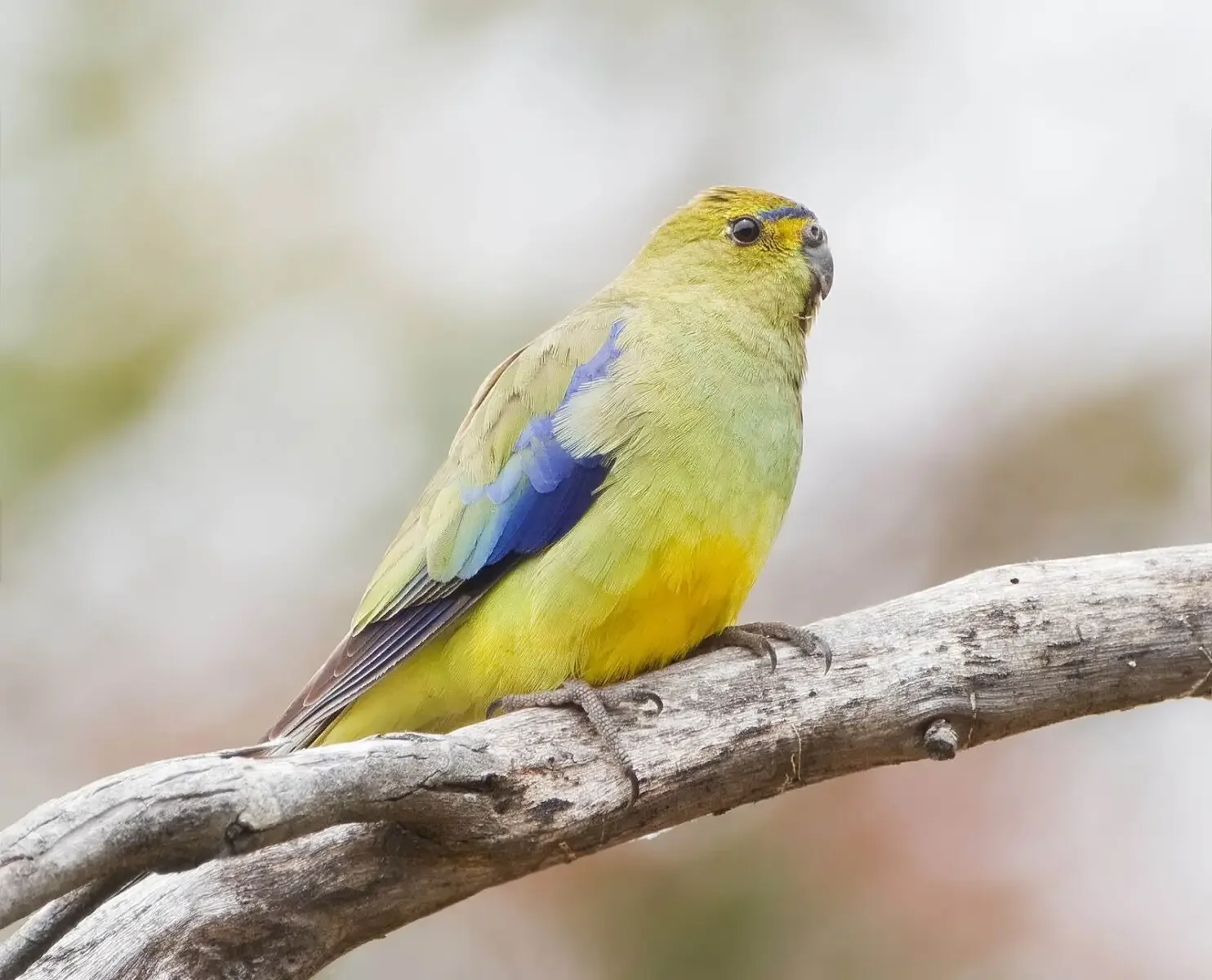
Closely related to the orange-bellied parrot, the blue-winged parrot is a small, fast-moving bird found across south-eastern Australia. It breeds in Tasmania, Victoria and south-eastern South Australia, with many birds migrating to the mainland during winter.
Despite being widespread, the species is poorly studied and was recently listed as Vulnerable due to suspected population declines. Blue-winged parrots live in open habitats such as grasslands, woodlands and coastal areas. They feed on seeds at ground level and nest in tree hollows in mature eucalypts.
Why is it in trouble?
Habitat loss and change
Clearing for agriculture, urban growth and renewable energy infrastructure removes feeding areas and nesting trees.

Nest predation & introduced species
Nest predators such as sugar gliders may threaten breeding success, especially in Tasmania.
Human-related mortality
Blue-winged parrots are vulnerable to collisions with wind turbines, power lines and vehicles, particularly during migration.
Why is it difficult?
Migrate long distances
Many birds move hundreds to thousands of kilometres each year, making them hard to track.
Movements are poorly understood
It is unclear how different breeding populations are connected or where birds spend winter.

Knowledge gaps
Despite their wide range, key details about population size, trends and breeding success are still unknown.
What are we doing?
Research and Monitoring
Researchers are working to fill major knowledge gaps by studying where Blue-winged parrots breed, feed and migrate. This includes identifying important nesting and foraging habitats and understanding how different populations may be connected.
Future research
Future work will focus on tracking movements, assessing risks from wind farms, studying nesting success and predation, and understanding population size and trends. This research is critical to guide conservation action and prevent further declines in this little-known parrot.
Princess Parrot
Princess Parrot
Princess Parrot
Princess Parrot
Intro
The princess parrot is one of Australia’s most beautiful desert birds. With soft pink, blue-grey and olive-green feathers, and long pointed wings built for fast flight, it is perfectly adapted to life in some of the country’s driest landscapes.
These parrots roam across deserts, sand dunes and savanna woodlands, feeding on seeds, flowers and nectar. They nest in tree hollows, but much of their life–including where and when they breed–remains a mystery.
Why are they in trouble?
1. Harsh and changing desert conditions
Princess parrots rely on unpredictable desert resources, which can shift dramatically with drought and rainfall.
2. Limited nesting sites
They depend on old trees with hollows for breeding, which may be scarce in some areas.
3. Knowledge gaps
Because we know so little about their movements and population size, it is difficult to protect the areas most important for their survival.
4. Altered fire regimes & buffel grass
Changes in fire patterns have led to hotter, larger wildfires that destroy hollow‑bearing trees and food sources, a problem made worse by the spread of invasive buffel grass, which fuels even more intense fires.
Why is it difficult?
1. They are highly nomadic
Princess parrots move vast distances depending on local conditions, and may not return to the same area for many years.
2. They live in remote deserts
Their habitat spans more than two million square kilometres across Western Australia, the Northern Territory and South Australia.
3. Sightings are rare and unpredictable
In some regions, decades can pass without confirmed sightings, making long-term monitoring extremely challenging.
What are we doing?
Research and Monitoring
We have begun gathering up-to-date information on where princess parrots occur, how many there may be, and how they move across the landscape. Working with communities and conservation groups, we are collecting sightings and building a clearer picture of their distribution.
Future research
By mapping key habitats and understanding movement patterns, we aim to identify the areas most important for conservation and ensure these remarkable desert parrots can survive long into the future.
What you can do
Have you seen the princess parrot?
We are collecting sightings and information from people who have seen this bird in the wild. If you have seen a princess parrot or have any other information about them, please fill out our sightings form.