
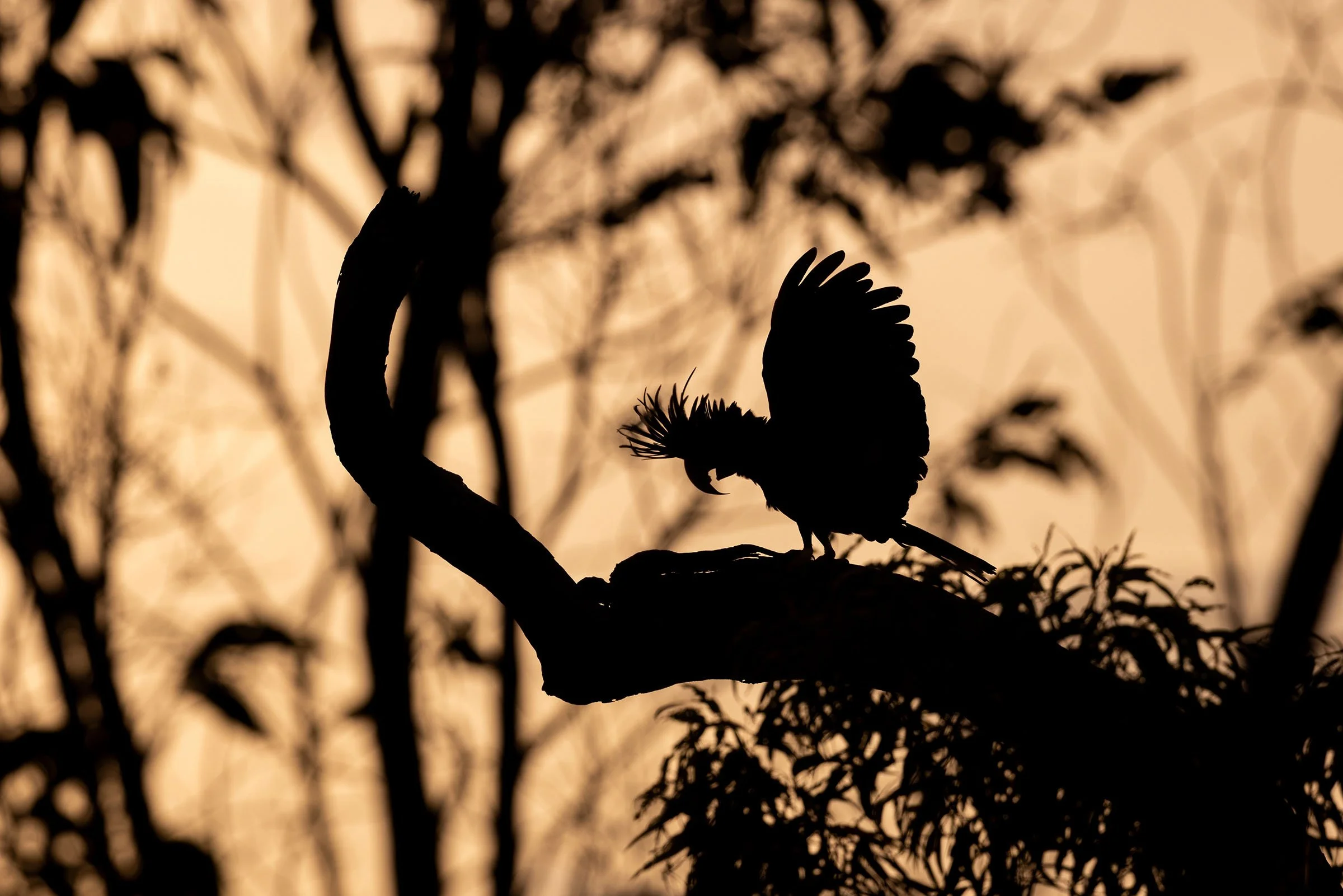

Palm Cockatoo
Probosciger aterrimus
Photo: JJ Harrison
The palm cockatoo is one of northern Australia’s most striking and intelligent birds, famous for its wild crest, powerful bill, and unique drumming displays. Despite its charisma, this iconic species is in serious trouble. Our research shows that Palm Cockatoos on Cape York Peninsula are declining rapidly, mainly due to habitat loss from mining, altered fire regimes, and very low breeding success.
Palm cockatoos are also the only non-human species known to craft and play a musical instrument. Males snap off branches, shape them into drumsticks, and beat on hollow trees to impress potential mates.
By studying their behaviour and the threats they face, we’re working to ensure this extraordinary bird continues to drum in the wild for generations to come.
Banner image above: David Stowe
Why is it difficult?
Remote and Hard to Reach
Palm cockatoos live deep in the remote woodlands of Cape York, up to 20 hours north of Cairns, some of the most inaccessible country in Australia. To study them, researchers climb trees or use cameras on tall poles to peek into nests.
Shy and Elusive
These birds are incredibly wary and difficult to approach, making traditional research methods nearly impossible and requiring patience, creativity, and years of persistence.

Loss of habitat
Palm cockatoos are rapidly losing habitat due to poor fire management and ongoing land-clearing.

One Egg, Few Survivors
Females lay just one egg every two years, and only about one in five chicks survives, making this one of the lowest breeding rates of any parrot.
What are we doing?
Research & monitoring
Conservation Biology
Our team has been studying palm cockatoos since 1999, uncovering the challenges behind their decline. Females lay just one egg every two years, and only about one in five chicks survives, making this one of the lowest breeding rates of any parrot. This discovery led to the species being listed as Vulnerable under Australian law, giving it stronger protection.
We now study palm cockatoos across Cape York Peninsula to understand how different populations are connected. Our current focus is the western Cape York population, where land clearing from bauxite mining has changed large areas of habitat. We are researching breeding success, nest hollows and habitat use to better understand the risks facing these birds and how best to protect them.
Drumming Behaviour
Palm cockatoos are also famous for their rhythm. Males snap off branches, shape them into drumsticks, and beat on hollow trees to impress females. We have recorded this behaviour more than 60 times, confirming it as the only known example of musical instrument use by a non-human species. It offers a rare window into the evolution of intelligence and creativity.
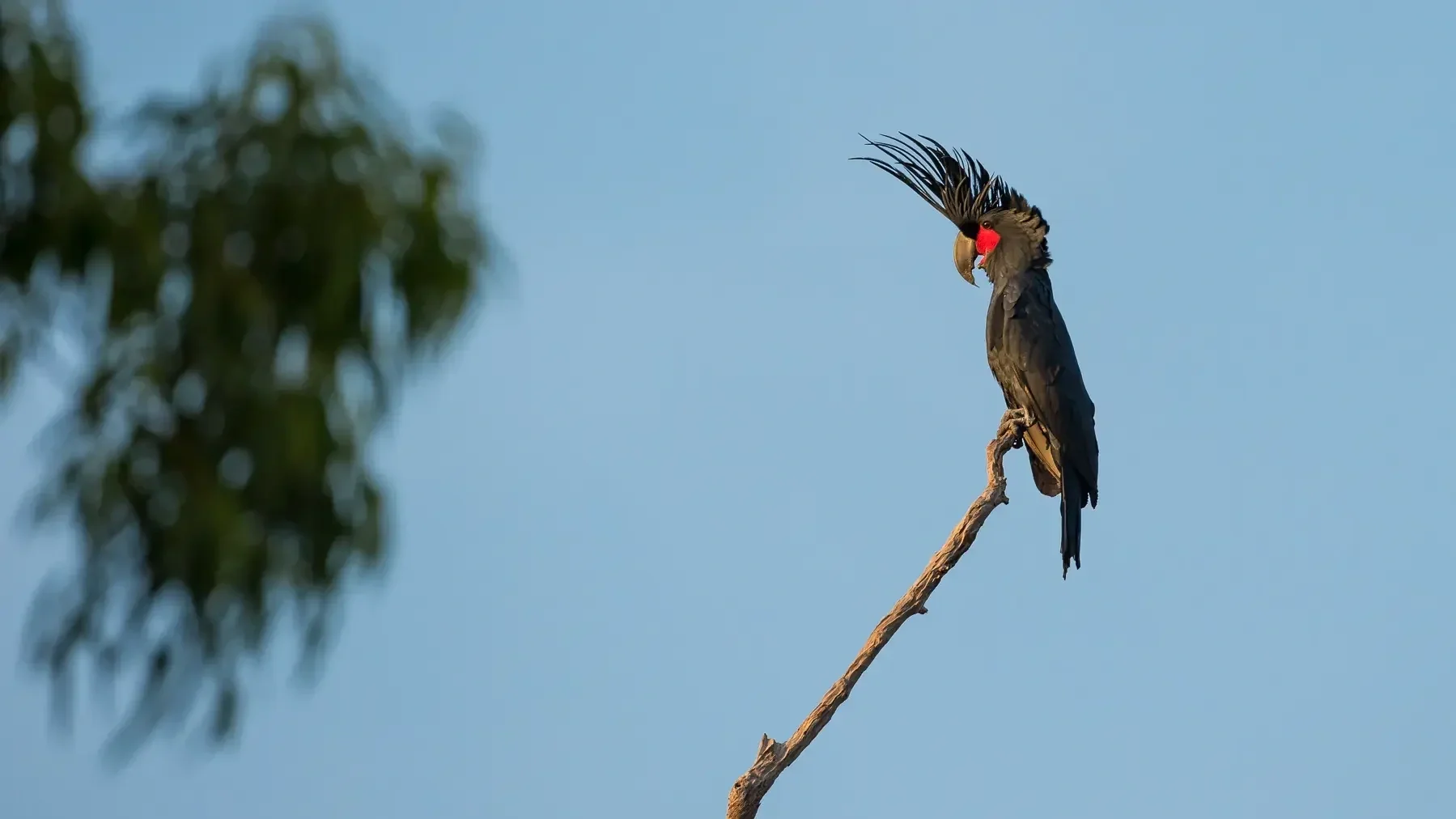
Photo: David Stowe