
Orange-bellied Parrot
Neophema chrysogaster
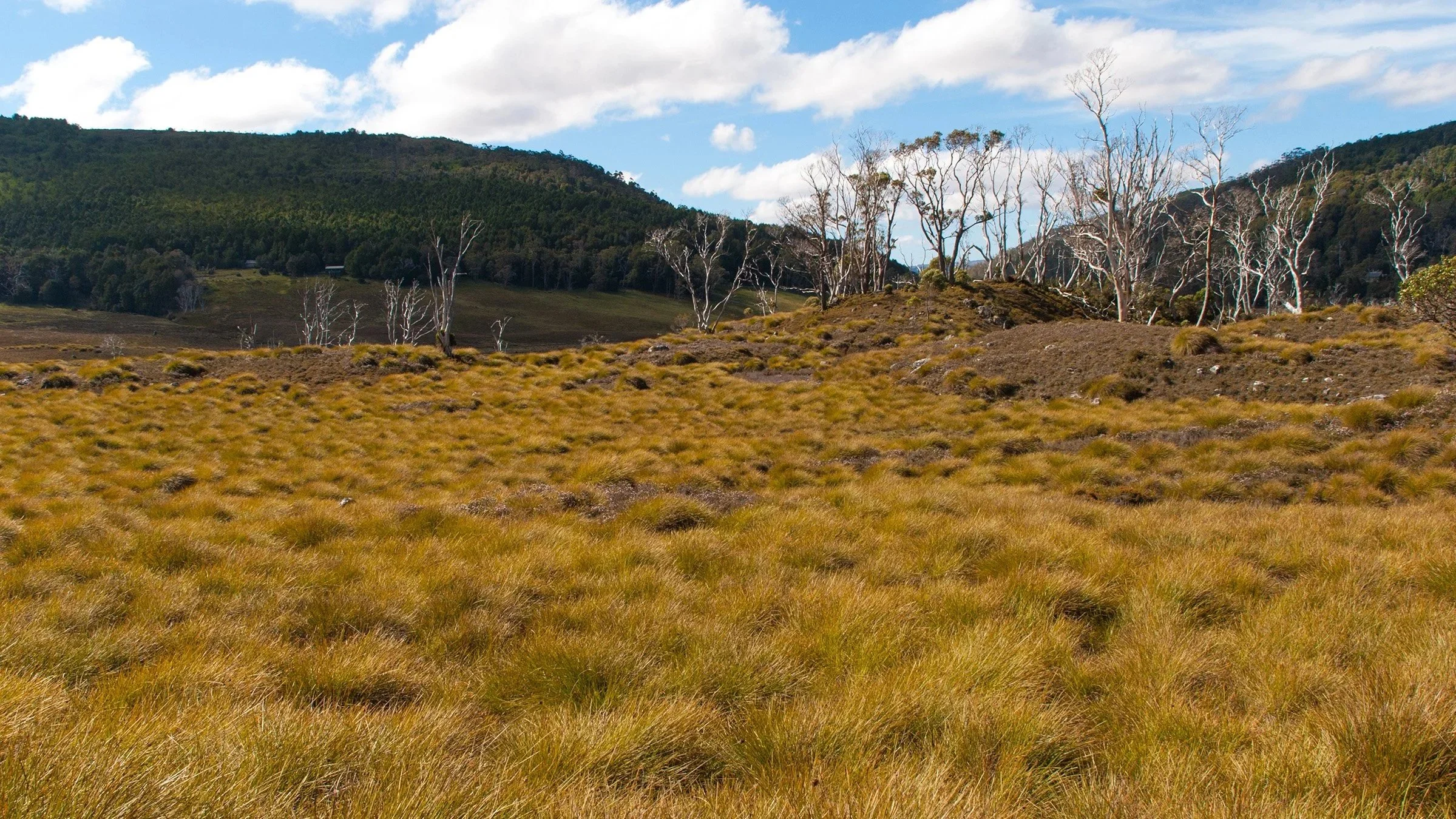
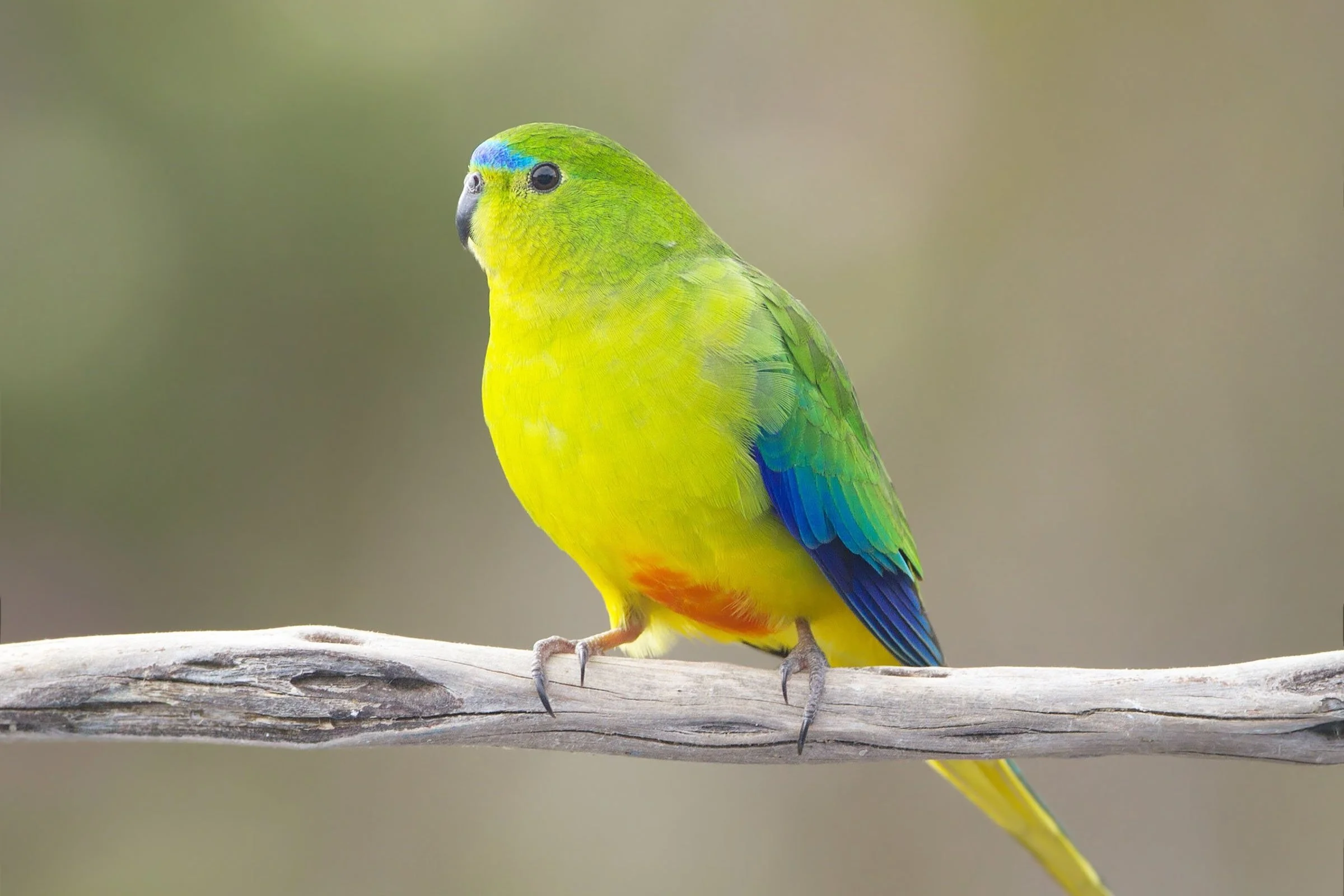
The orange-bellied parrot is one of Australia’s most endangered birds. It migrates each year between Tasmania’s wild southwest, where it breeds, and the mainland’s coastal salt marshes. Once common across southeastern Australia, its numbers have crashed to fewer than 100 in the wild. Decades of dedicated conservation, from captive breeding to habitat restoration, are now offering hope, with over 90 birds returning to breed in 2024.
Photo J. J. Harrison.
Why is it difficult?

Remote and migratory lifestyle
The species breeds in a small, isolated area of southwest Tasmania and migrates across Bass Strait to mainland Australia each year. This long-distance movement across remote regions makes tracking and studying the birds extremely challenging.

Introduced species
Predation by cats, foxes, and rats, as well as competition for food and nesting sites from starlings, sparrows, and rabbits, further threaten survival.

Severe population decline
With fewer than 100 wild adults left, the population is critically small. Such low numbers make it hard for researchers to collect enough data and increase the risk of extinction from random events or disease.
Habitat Loss and Fragmentation
The parrots depend on very specific habitats—coastal saltmarshes and Tasmanian forests—many of which have been lost or degraded through land use changes, fire, and development, leaving them with fewer safe breeding and feeding sites.
What are we doing?
Research, conservation & monitoring
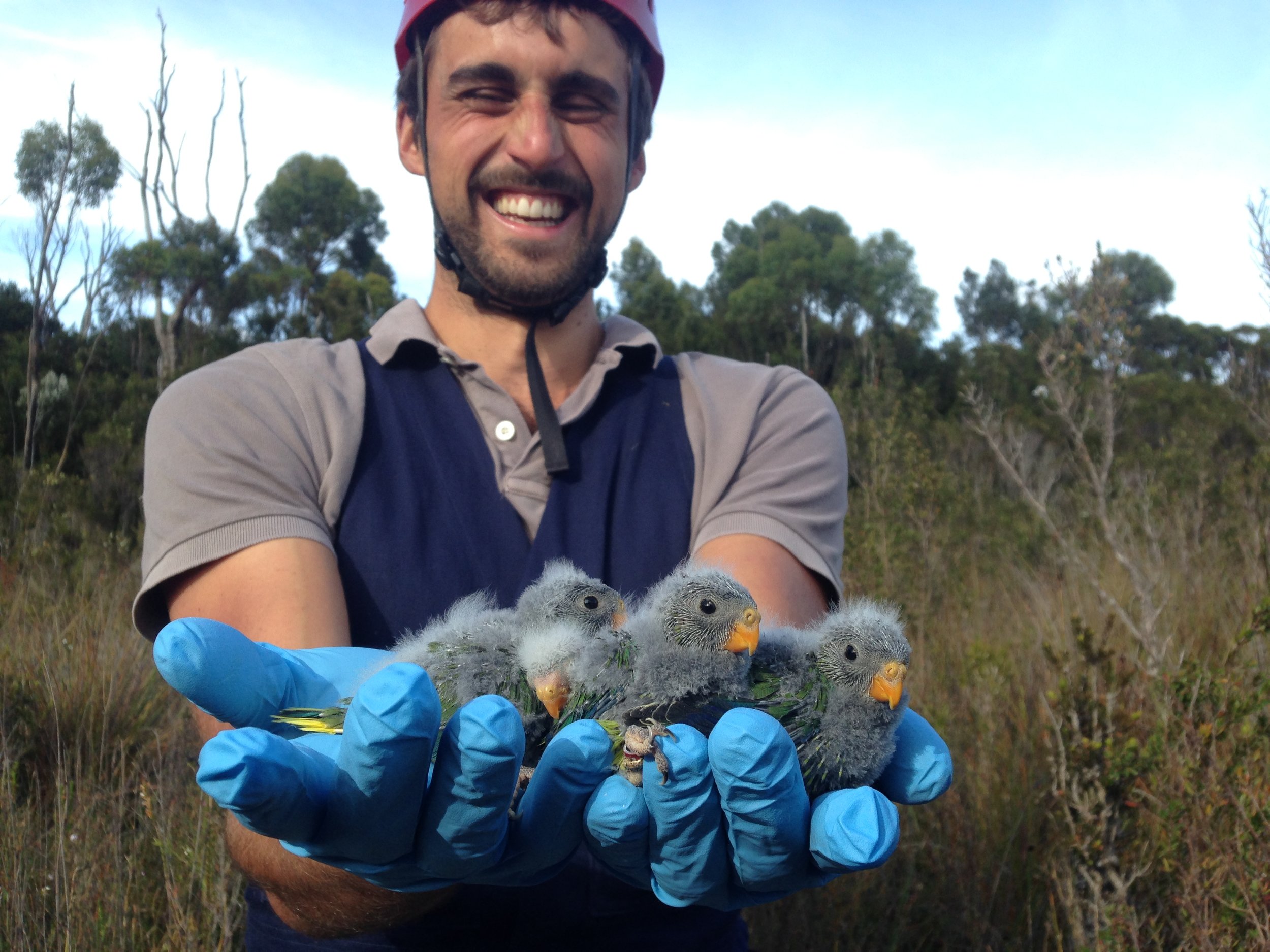
We take hands-on, individual-based approaches to boost the number of wild-born orange-bellied parrots. Our team swaps infertile eggs for fertile ones from captivity, adds extra eggs or chicks to nests to balance brood sizes, and steps in during emergencies to hand-rear or feed struggling young.
Each nest is monitored with cameras to track behaviour and breeding success. We also manage habitat quality through ecological burns, study competition with other species, and analyse decades of data to continually refine how we protect and grow this fragile population.
Future research
1. Survival:
Why do so few young parrots survive today? Why do released captive birds struggle to migrate? We are looking for ways to reduce deaths and help wild populations thrive with less human intervention.
2. Habitat:
Parrots need the right food, shelter, and safe habitats to survive. We are studying how fire, invasive species, and other changes affect their feeding, nesting, and wintering areas. Protecting and improving these habitats is vital.
3. Migration:
These parrots travel long distances each year, but many mysteries remain. Where exactly do they go in winter? What hazards do they face along the way? Understanding their movements helps guide conservation and land management.
4. Population and Genetics:
Keeping the population healthy means maintaining genetic diversity and managing diseases. We are exploring strategies like genetic rescue to strengthen the species and prevent the loss of wild lineages.
Publications
-
Stojanovic, D. & Heinsohn, R. 2023 Orange-bellied parrots. Current Biology 33, R939-R940. (doi:https://doi.org/10.1016/j.cub.2023.06.075).
Stojanovic, D., Gibbons, P., Young, C.M. & Owens, G. 2023 Fire-mediated tree cavity reduction needs to be considered in reintroduction strategies for a critically endangered bird. Restoration Ecology n/a, e13962. (doi:https://doi.org/10.1111/rec.13962).
Bussolini, L.T., Crates, R., Magrath, M.J.L. & Stojanovic, D. 2023 Identifying factors affecting captive breeding success in a critically endangered species. Emu - Austral Ornithology In Press. (doi:10.1080/01584197.2023.2194541).
Stojanovic, D., Hogg, C.J., Alves, F., Baker, G.B., Biggs, J.R., Bussolini, L., Carey, M.J., Crates, R., Magrath, M.J.L., Pritchard, R., et al. 2023 Conservation management in the context of unidentified and unmitigated threatening processes. Biodiversity and Conservation. (doi:10.1007/s10531-023-02568-0).