
Swift Parrot
Lathamus discolor
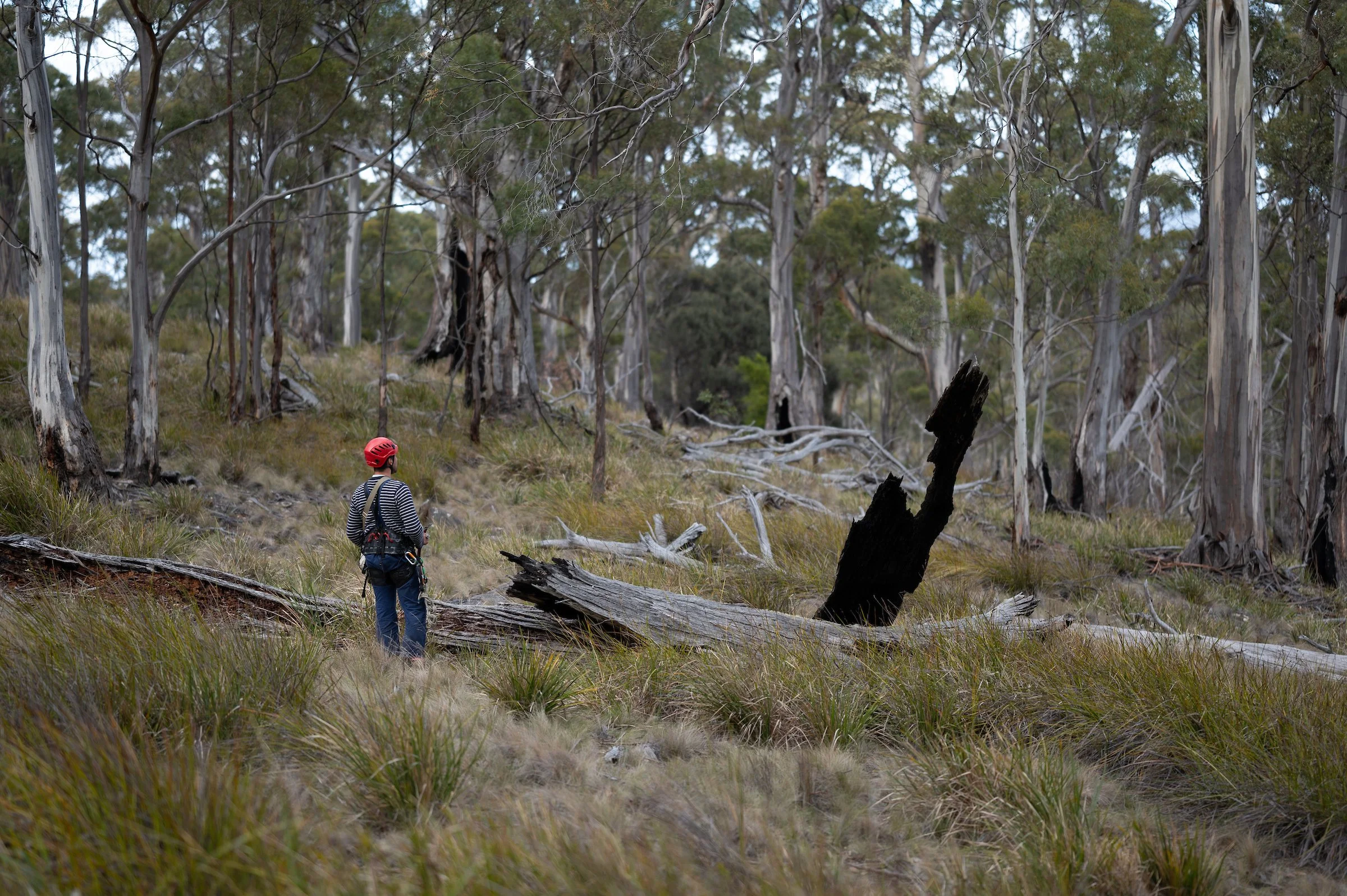
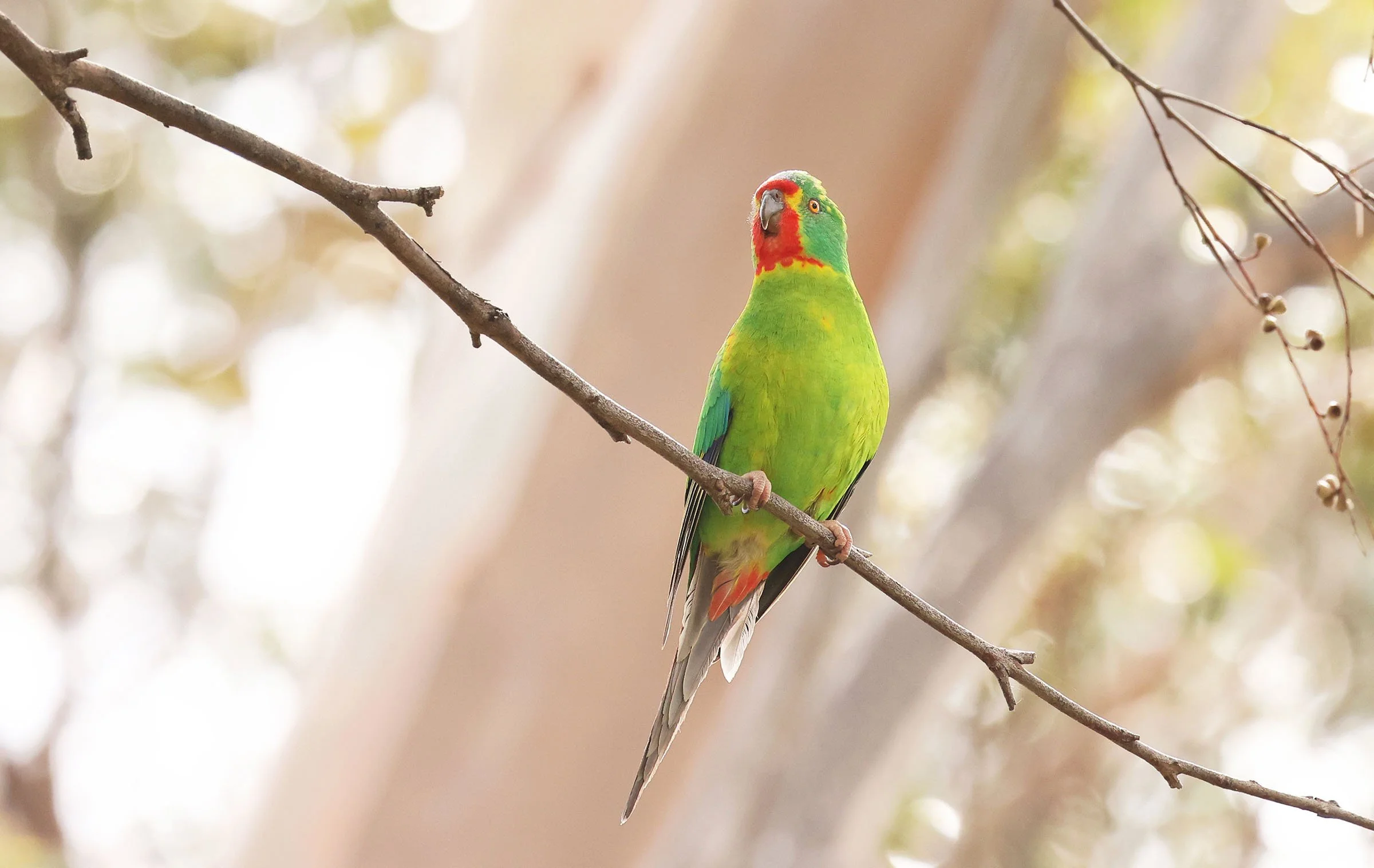
The bright green, fast-flying swift parrot breeds in Tasmania and migrates to the mainland of Australia each year. It is currently listed as Critically Endangered, with numbers continuing to fall rapidly. This vibrant parrot relies on flowering eucalypt forests for food and nests in deep tree hollows in old trees. Logging of habitat and predation on nests continue to place the Swift Parrot at serious risk, making urgent conservation action essential to secure its future.
Why is it difficult?

Habitat loss
The small area of Swift Parrot breeding habitat directly overlaps with focal areas of native forest logging.

Predation
The most serious predator of Swift Parrots is the sugar glider (Petaurus notatus). Sugar gliders are able to squeeze past the small entrance hole of Swift Parrots, and are not daunted by entering the deep nest cavities.

Moving around
As well as making the annual trip across the Bass Strait to breed, swift parrots move around in their Summer and Winter locations based on food availability. This makes them vulnerable while migrating, and harder to protect.
What are we doing?
Research & monitoring
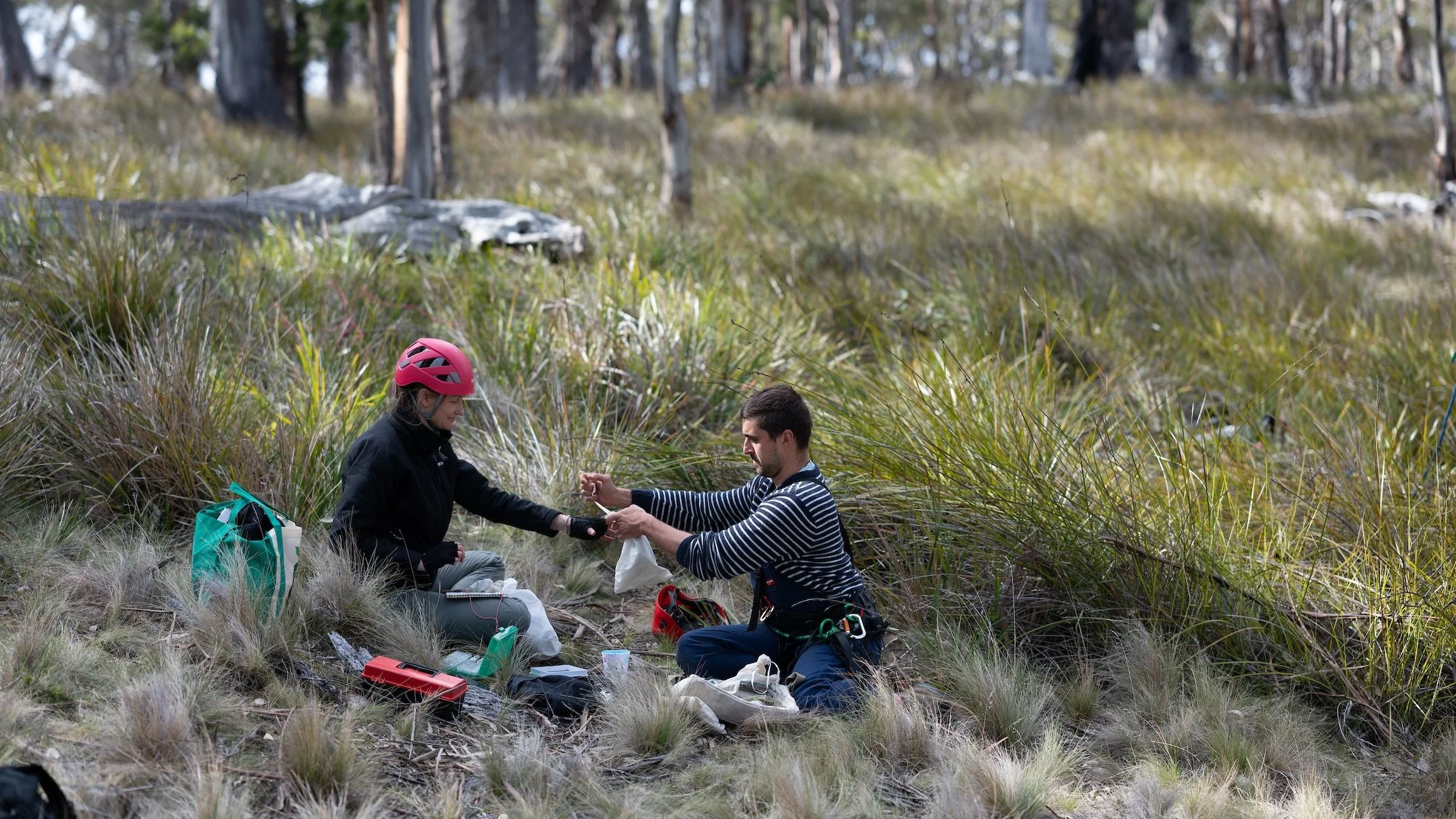
For over ten years, our team has been monitoring the Swift Parrot, researching behaviour, survival, and the challenges it faces. We continue to test how well conservation efforts are working—trialling nest boxes and new ways to keep them safe from predators. One of our most tangible successes was upgrading the listing of the Swift Parrot to Critically Endangered, helping to protect the species further, and increase conservation efforts.
Future research
Despite the intensive research and public interest in the conservation of swift parrots, there are many knowledge gaps about their conservation and ecology.
Life history
The background of swift parrot mortality rates.
Finding an effective way to accurately estimate population size.
Understanding where swift parrots go, and how they travel between breeding seasons.
Understanding how winter habitat affects swift parrot health.
Conservation management
Finding simple, effective and affordable ways to stop sugar gliders from attacking swift parrot nests.
Predicting when and where food trees will flower.
Understanding the ecology of sugar gliders in healthy vs. disturbed swift parrot habitat in Tasmania.
Do sugar gliders attack the same places every year?
Are nest boxes a useful conservation tool?
How long do nest hollows last and how quickly do new ones form after logging?
Are restoration efforts are helping swift parrots?
Are the remaining forests in Tasmania enough for swift parrots to survive long-term?
What can you do?
Help us monitor existing nest boxes
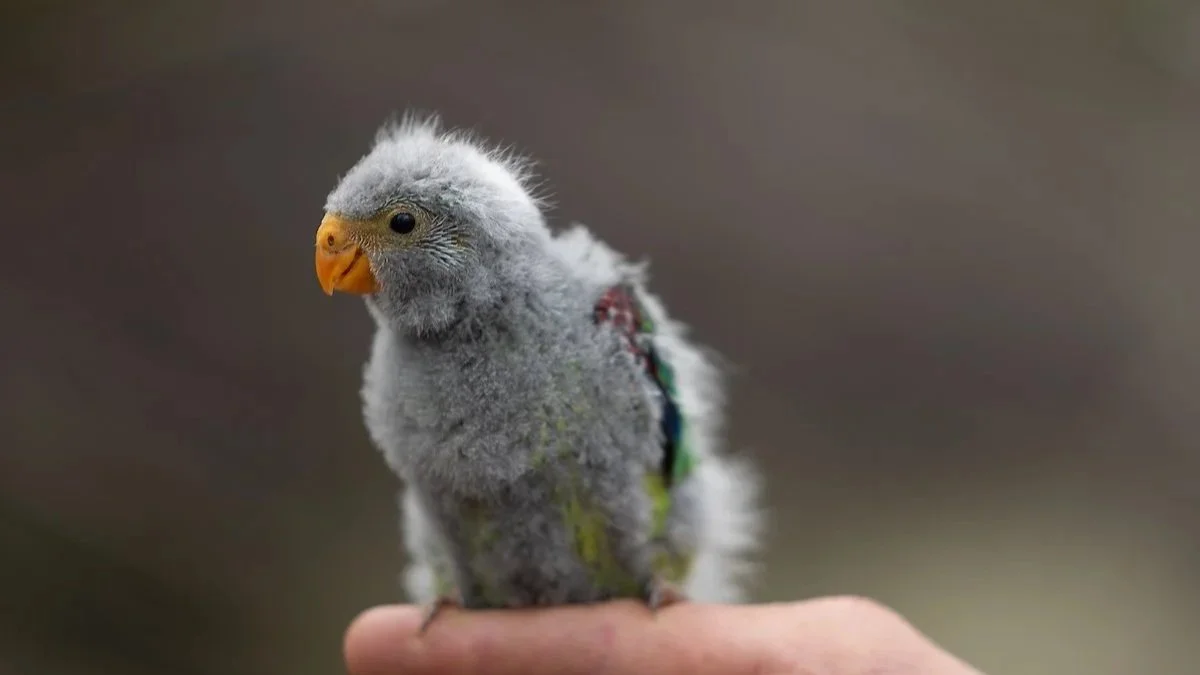
If you come across a nest box, you can contribute to research by recording ground-based observations, including which species are using them, via our web form.
Note: checks of nest boxes can only be done by ANU approved personnel, under animal ethics and scientific permits.
Publications
-
Owens, G., Heinsohn, R., Gibbons, P. et al. Quantifying forest degradation, deforestation and land use change in vital swift parrot breeding habitat. Sci Rep15, 8546 (2025).
Silver LW, Stojanovic D, Farquharson KA et al. A reference genome, mitochondrial genome and associated transcriptomes for the critically endangered swift parrot (Lathamus discolor). F1000Research 2024, 13:251
Olah, G., Waples, R. S., & Stojanovic, D. (2024). Influence of molecular marker type on estimating effective population size and other genetic parameters in a critically endangered parrot. Ecology and Evolution, 14, e11102.
Owens, G., Heinsohn, R., Crates, R. & Stojanovic, D. 2022 Long-term ecological data confirm and refine conservation assessment of critically endangered swift parrots. Animal Conservation. In Press
Stojanovic D., Olah G., Webb M., Peakall R. & Heinsohn R. 2018. Genetic evidence confirms severe extinction risk for critically endangered swift parrots: implications for conservation management. Animal Conservation, In Press
Campbell C. D., Sarre S. D., Stojanovic D., Gruber B., Medlock K., Harris S., MacDonald A. J. & Holleley C. E. 2018. When is a native species invasive? Incursion of a novel predatory marsupial detected using molecular and historical data. Diversity and Distributions, In Press
Stojanovic, D. et al. 2016. Loss of habitat for a secondary cavity nesting bird after wildfire. — Forest Ecology and Management 360: 235-241.
Porfirio, L. L., R. M. B. Harris, D. Stojanovic, M. H. Webb, and B. Mackey. 2016. Projected direct and indirect effects of climate change on the Swift Parrot, an endangered migratory species. Emu 116:273-283.
Heinsohn, R., M. H. Webb, R. Lacy, A. Terauds, R. Alderman, and D. Stojanovic. 2015. A severe predator-induced decline predicted for endangered, migratory swift parrots (Lathamus discolor). Biological Conservation 186:75-82.
Stojanovic, D. et al. 2015. Exploiting the richest patch has a fitness payoff for the migratory swift parrot. — Journal of Animal Ecology 84: 1194-1201.
Webb, M. H. et al. 2014. Location matters: Using spatially explicit occupancy models to predict the distribution of the highly mobile, endangered swift parrot. — Biological Conservation 176: 99-108.
Stojanovic, D. et al. 2012. Ground-based survey methods both overestimate and underestimate the abundance of suitable tree-cavities for the endangered swift parrot. — Emu 112: 350-356.
Saunders, D. L. and Heinsohn, R. 2008. Winter habitat use by the endangered, migratory swift parrot (Lathamus discolor) in New South Wales. — Emu 108: 81-89.