
Superb Parrot
Polytelis swainsonii
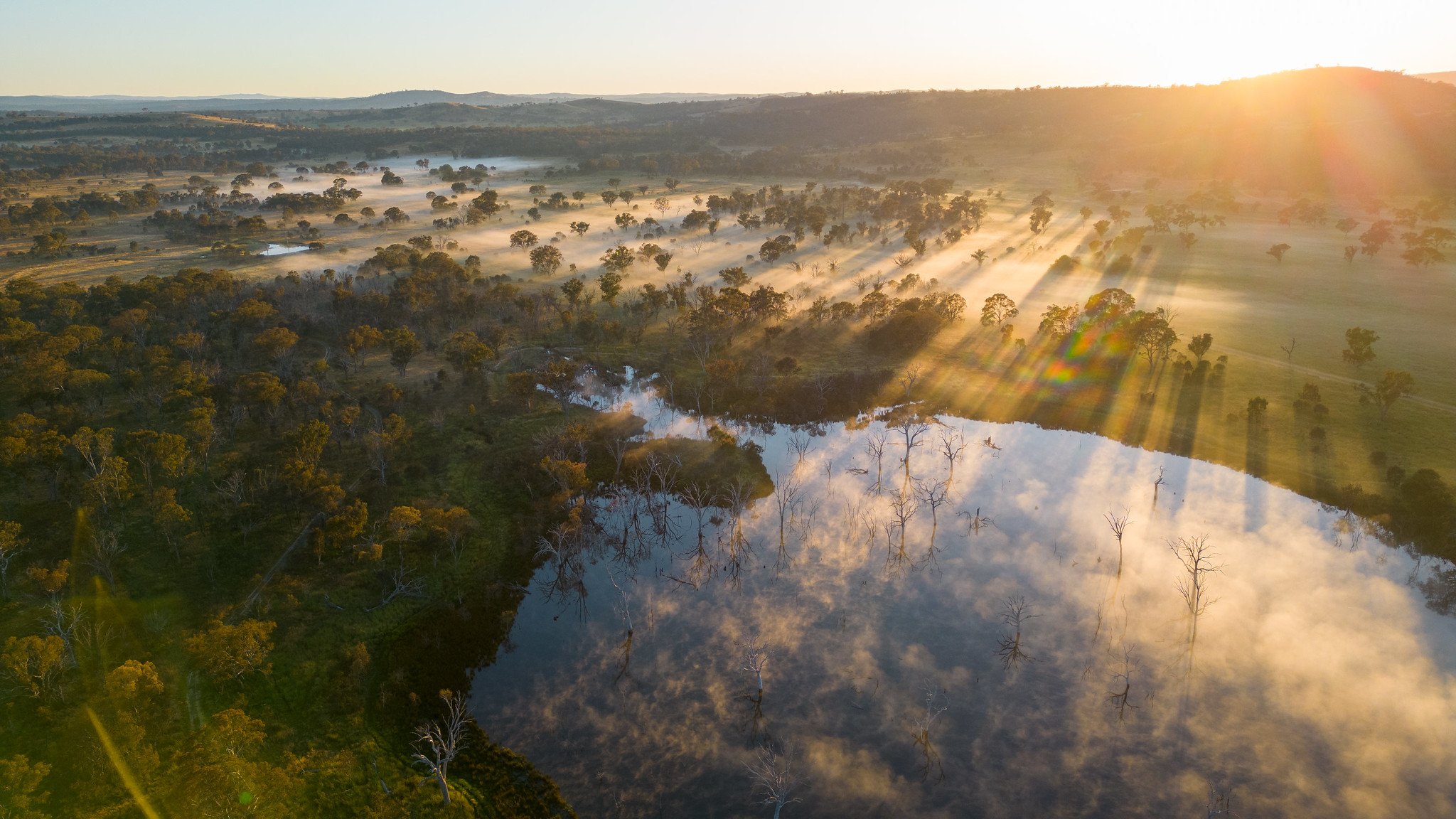
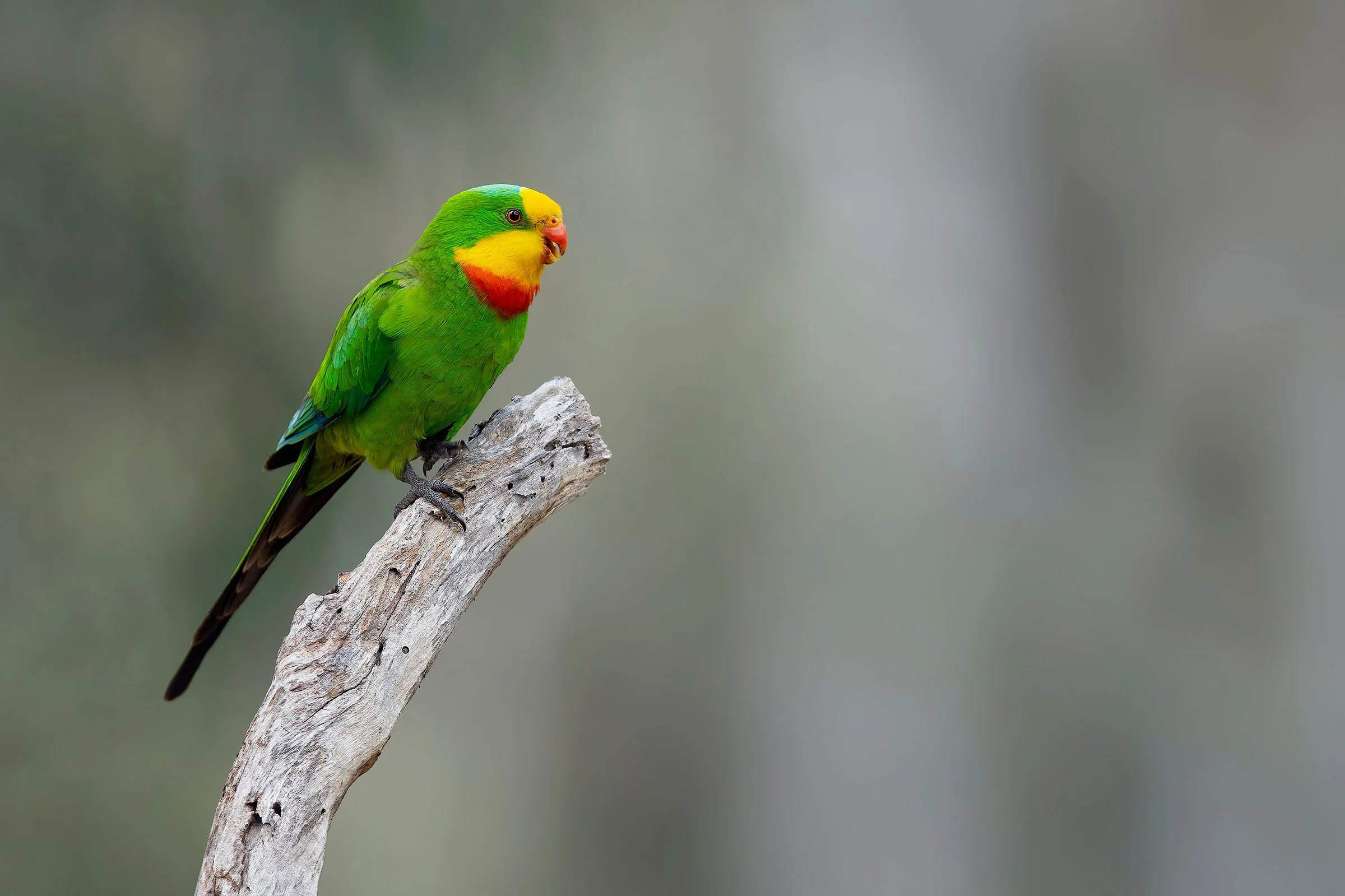
The superb parrot is a bright, colorful bird from south-eastern Australia. It follows food like seeds and flowers and nests in large hollow trees that take hundreds of years to grow. With most of its habitat cleared for farming and competition from other animals, these parrots face compounding challenges in their struggle to survive.
Photo J. J. Harrison.
Why is it difficult?

Habitat loss
Over 90% of the superb parrot’s woodland habitat has been cleared for farming, and with nesting trees taking over 220 years to form, parrots struggle to find safe places to live and move between.

Urban and renewable energy development
New buildings, roads, and wind or solar farms can destroy habitat or cause direct harm.

Competition for nests
With fewer nesting hollows available, parrots compete with other birds like crimson rosellas, european starlings, and honeybees, as well as marsupials like brushtail possums. This can reduce the number of chicks that survive and limit genetic diversity.

Climate Change
Rising temperatures, droughts, and bushfires may shrink suitable habitat and increase risks across their range.

Moving around
Superb parrots travel across a wide range depending on the season, availability of food, and breeding. This makes it tricky to understand their population size, mortality, and which areas to protect.
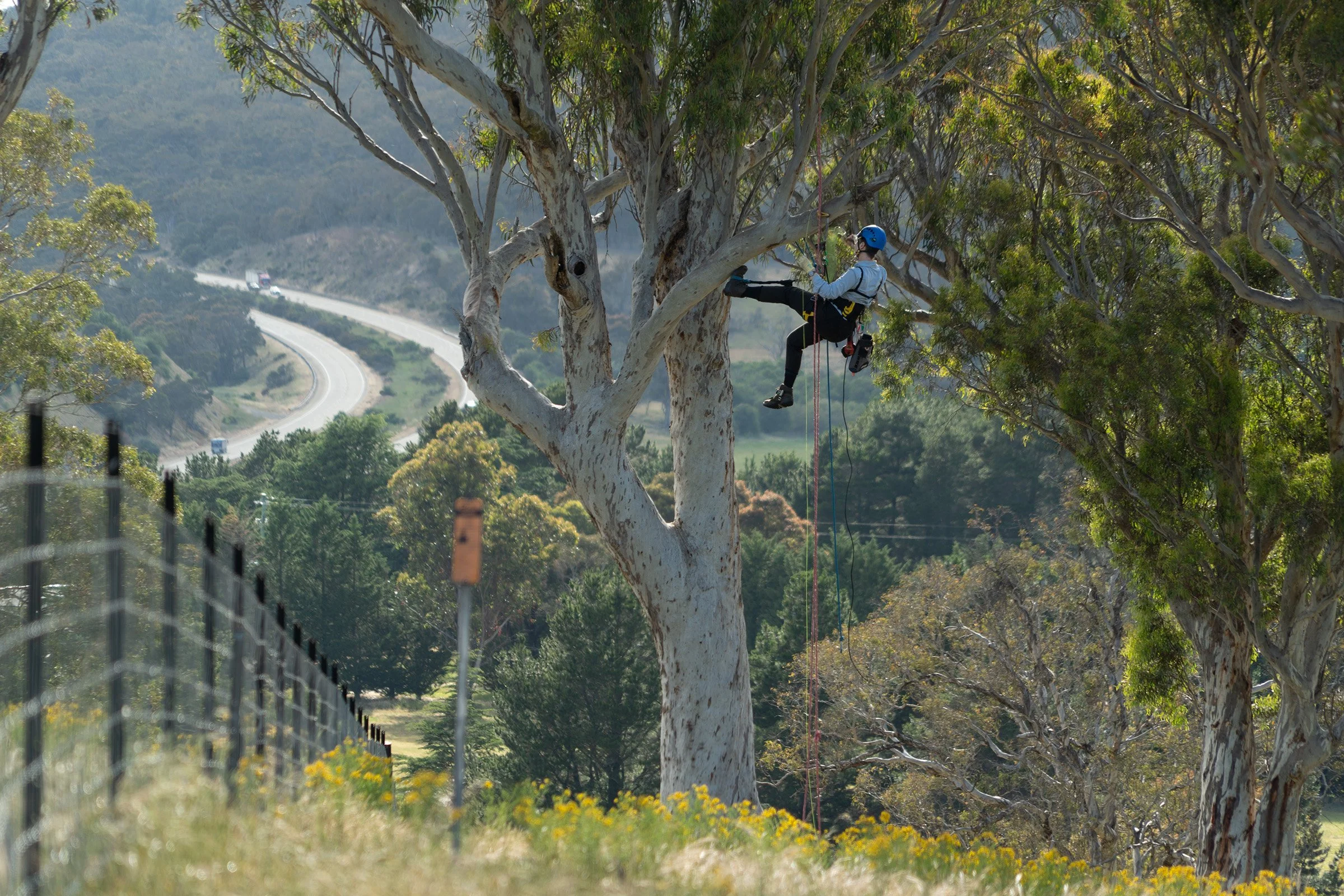
Photo: Elsie Percival
What are we doing?
Research & monitoring
The superb parrot is currently listed as Vulnerable, but with the loss of old, hollow-bearing trees and changes to climate, it could become “future endangered.” Many of the threats it faces are already happening, so starting research now is vital. By studying these birds in the wild, we can understand their movements, nesting needs, and population health before it’s too late.
Working with Professor Adrian Manning (ANU) and the ACT Government, we’ve studied where parrots choose to nest, tracked their movements using GPS devices, and banded over 40 birds. We’ve also monitored key breeding adults to understand how they use their habitat.
Next, we plan to expand our research across the parrot’s entire breeding range. This will help us learn how populations are connected, how they respond to climate change, and how the number of nesting trees affects survival. By collecting this information early, we can take smarter actions to protect the Superb Parrot and ensure these amazing birds continue to thrive in the wild.
Future research
Some of the key priorities for future research on the superb parrot include:
Seasonal movements: Track where birds go during different times of the year and how they use important habitat corridors.
Genetics: Study how different groups of birds are related and connected across their range.
Nest threats: Look at competition for nests and dangers from predators, both native and introduced.
Survival after leaving the nest: Find out how many young birds survive and join the adult population.
Human impacts: Understand how things like wind farms could affect the birds.
Nesting help: Test how effective nest boxes and hollow tree enhancements are.
Climate change: Explore how changing temperatures and weather patterns could affect where birds live.
Habitat restoration: See which ways of restoring habitat actually help the species.
Behaviour and habitat: Study how the birds’ social habits affect the places they use.
Where they settle: Find out what habitat features make certain sites attractive.
Movement patterns: Learn whether the birds travel, wander, or stay in one place.
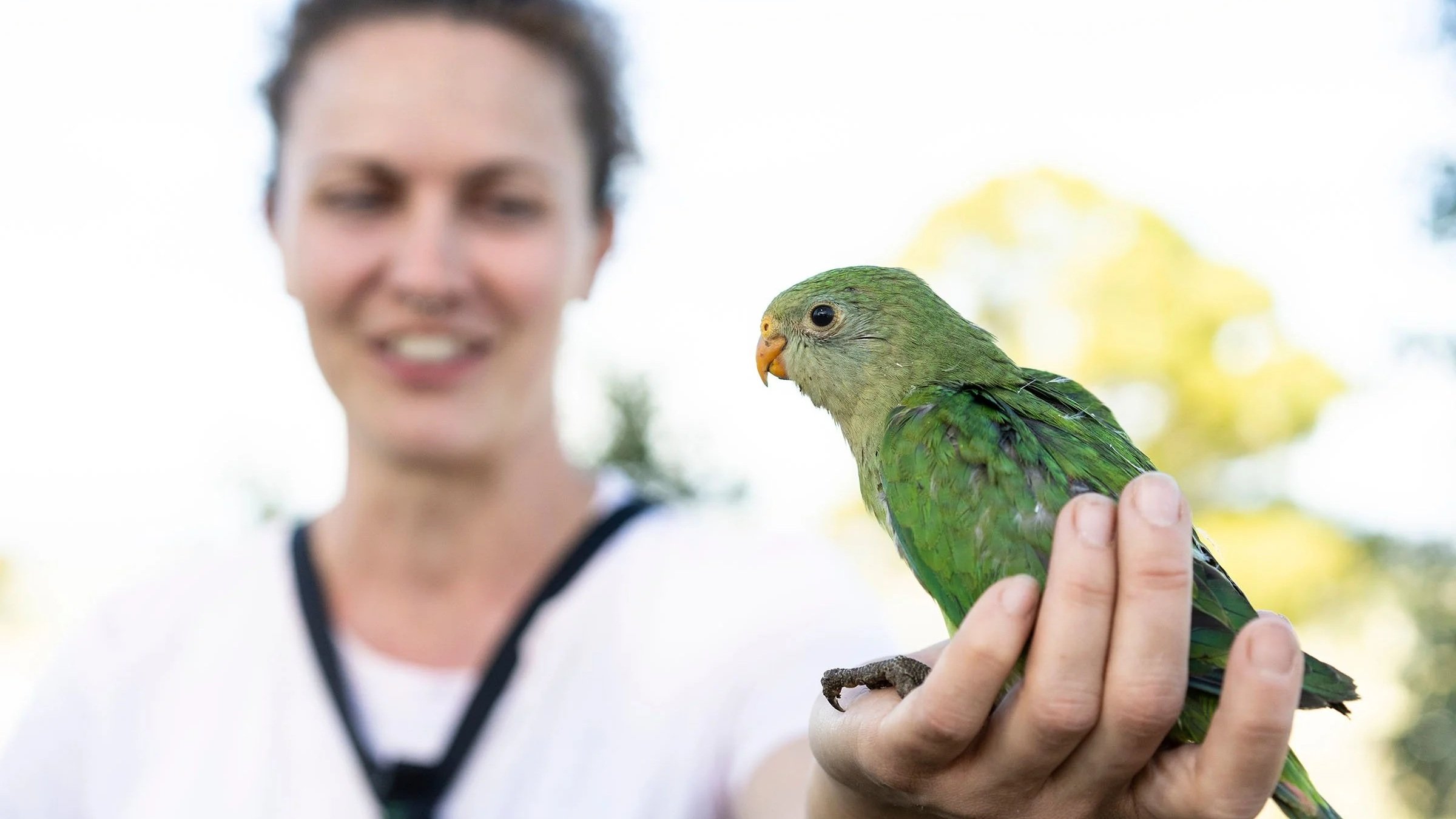
Photo: Elsie Percival
What can you do?
Working with the superb parrot Recovery Team and our research partners, we have created a long‑term monitoring program across the South‑west Slopes of NSW, the main breeding area for Superb Parrots.
The program focuses on two key questions: where superb parrots are breeding, and how their home range is changing over time. To help answer these questions, we have set up permanent survey sites to record parrot sightings, breeding activity, and important habitat features.
Because superb parrots move long distances and respond quickly to changes in their environment, long‑term monitoring is essential to understand how climate, habitat, and local threats affect their future.
Landholders, birdwatchers, community groups, and local organisations are encouraged to get involved. If you are interested in taking part, please contact the program leaders.
Contact
McLean.Cobden@act.gov.au
Laura.Rayner@act.gov.au