
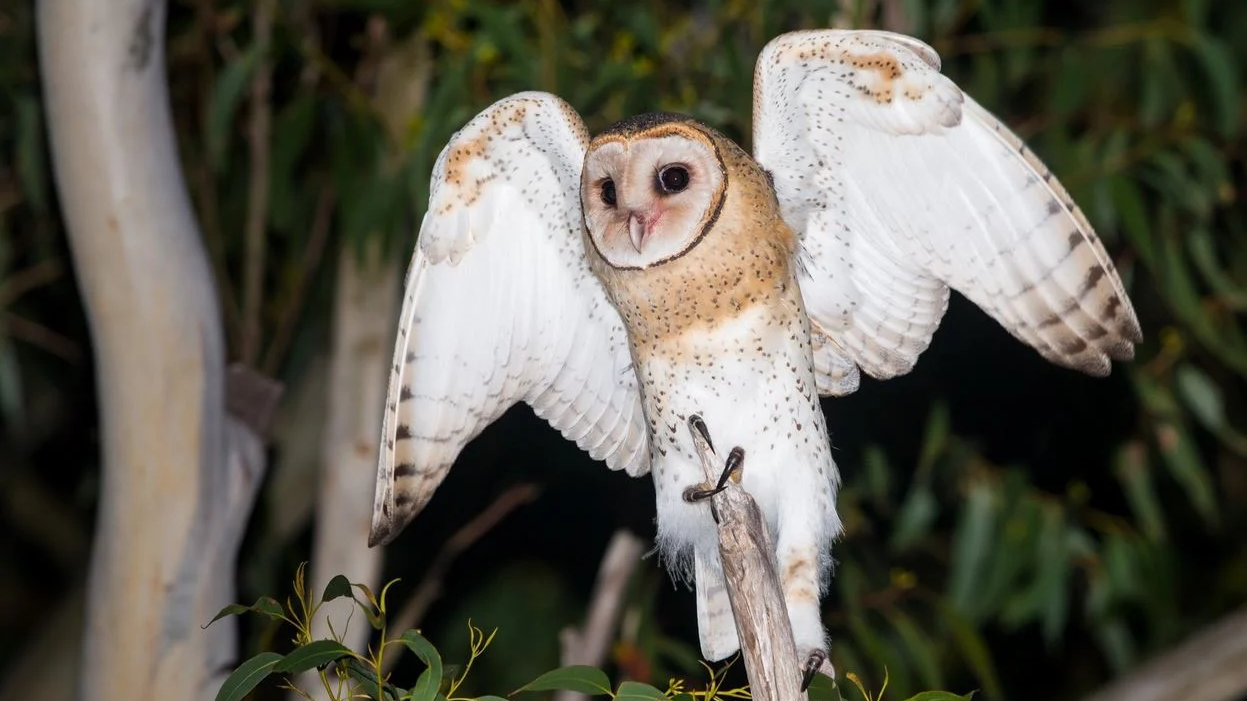
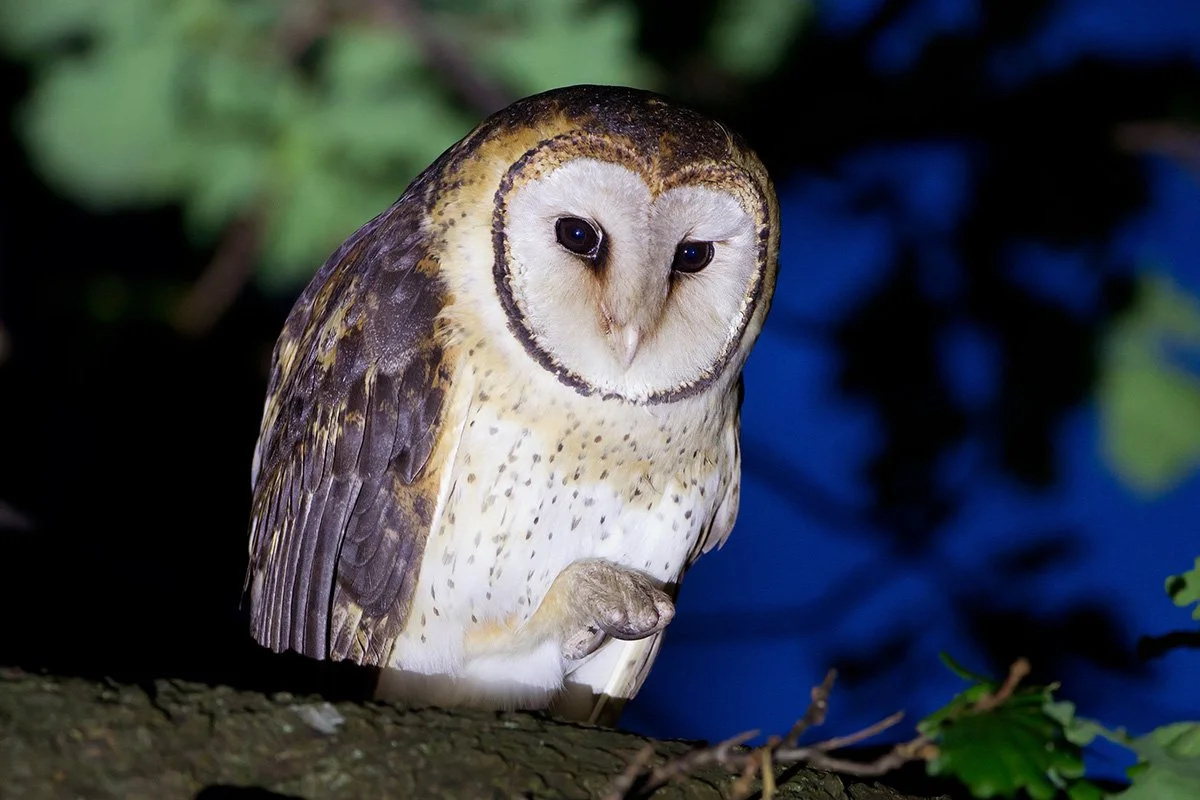
Tasmanian Masked Owl
Tyto novaehollandiae castanops
The Tasmanian masked owl is a large, powerful owl found only in Tasmania. It is a top nocturnal predator that hunts mostly small mammals, but can also take birds and larger prey. This owl relies on old-growth forests and large eucalypt trees for shelter and nesting, making it vulnerable to habitat loss.
Above photo: JJ Harrison
Why is it in trouble?
Loss of old-growth forest
Clearing and logging remove the large trees with deep hollows that masked owls need to nest.
Limited nesting sites
The owls only nest in very large, old eucalypts, which are now rare in many landscapes.
Disturbance & habitat fragmentation
Fragmented forests reduce suitable hunting and nesting areas within their large home ranges.
Why is it difficult?
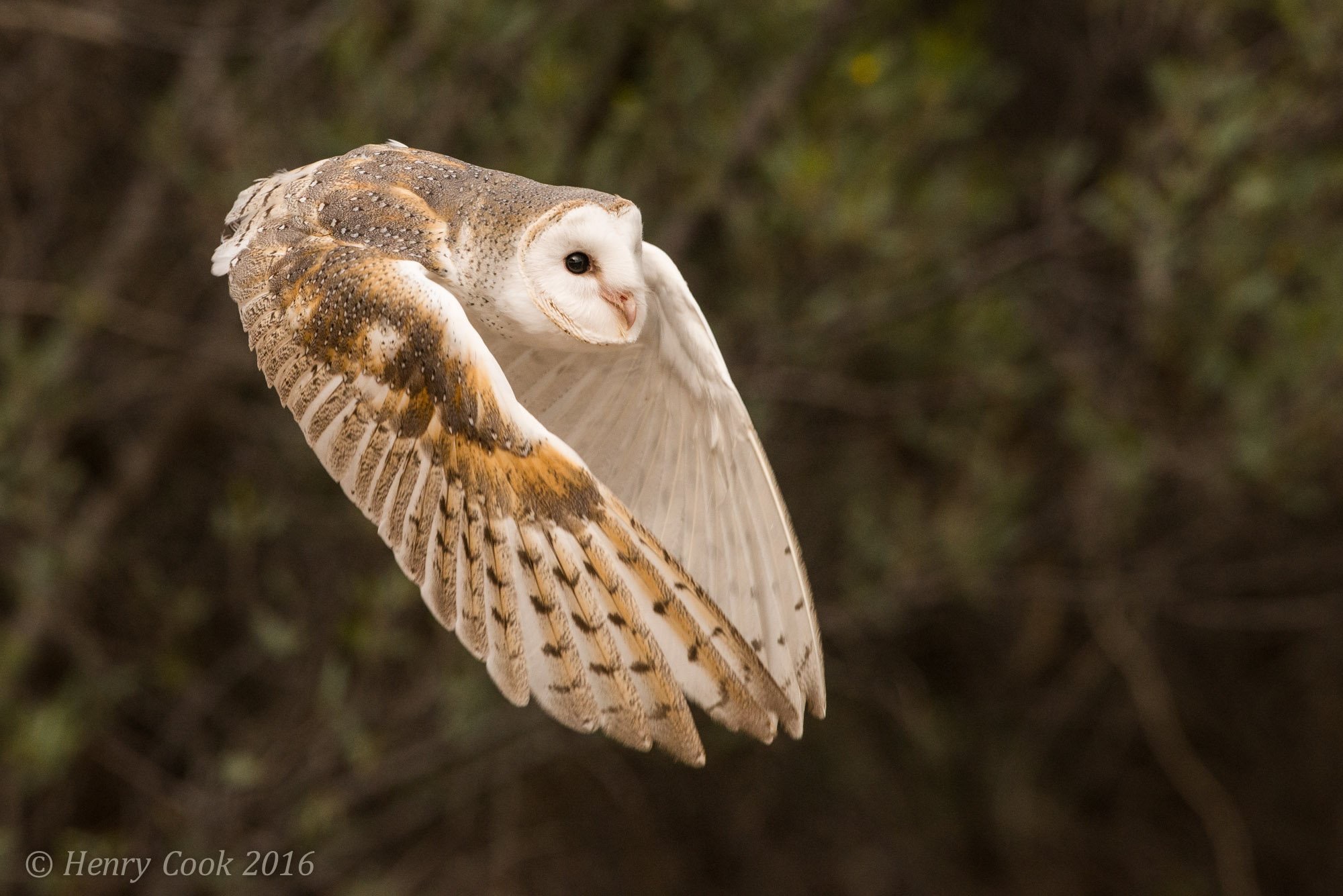
Rare & wide-ranging
Masked owls live at low densities and defend very large territories.
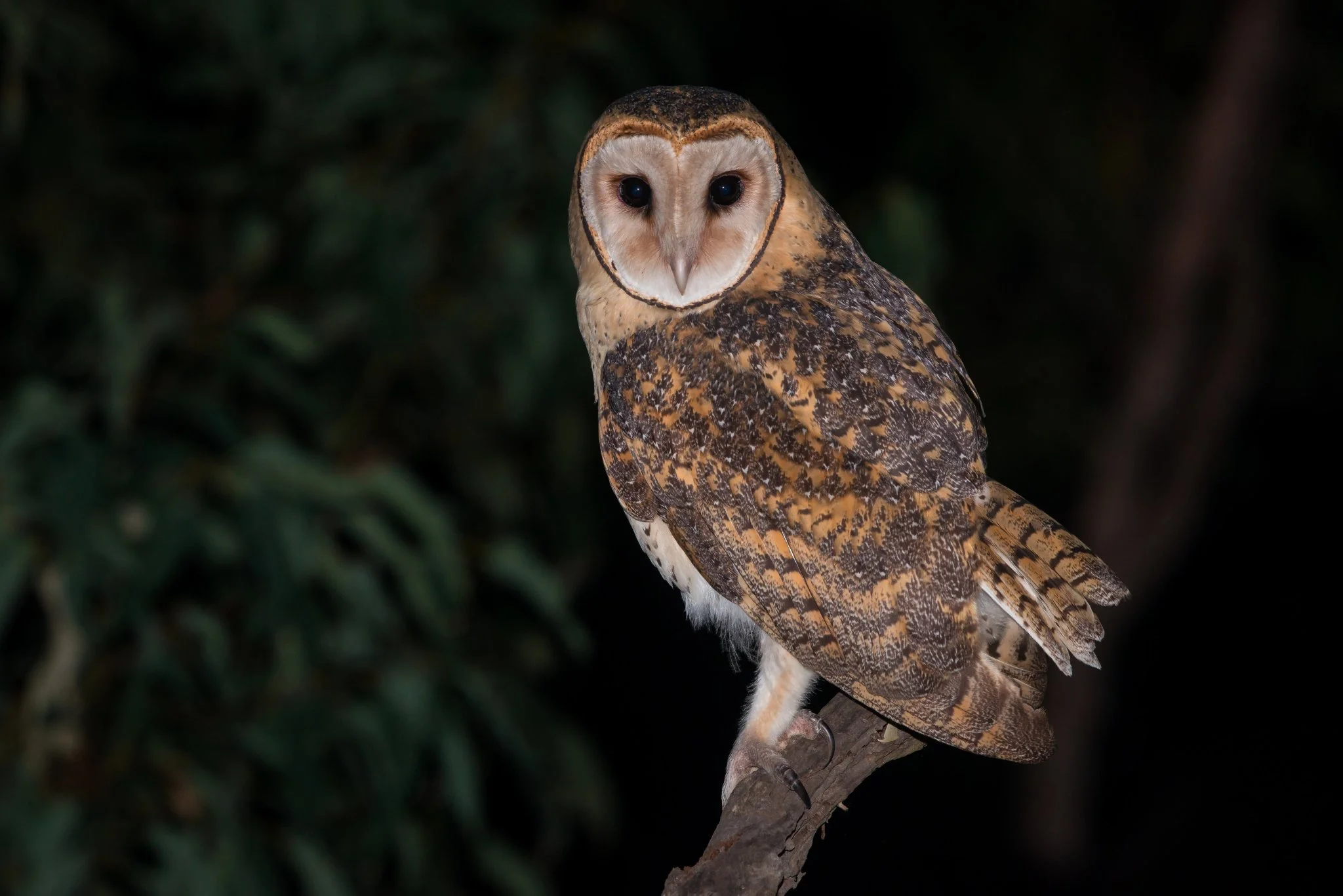
Nocturnal & secretive
They hunt at night and roost in hidden places during the day.
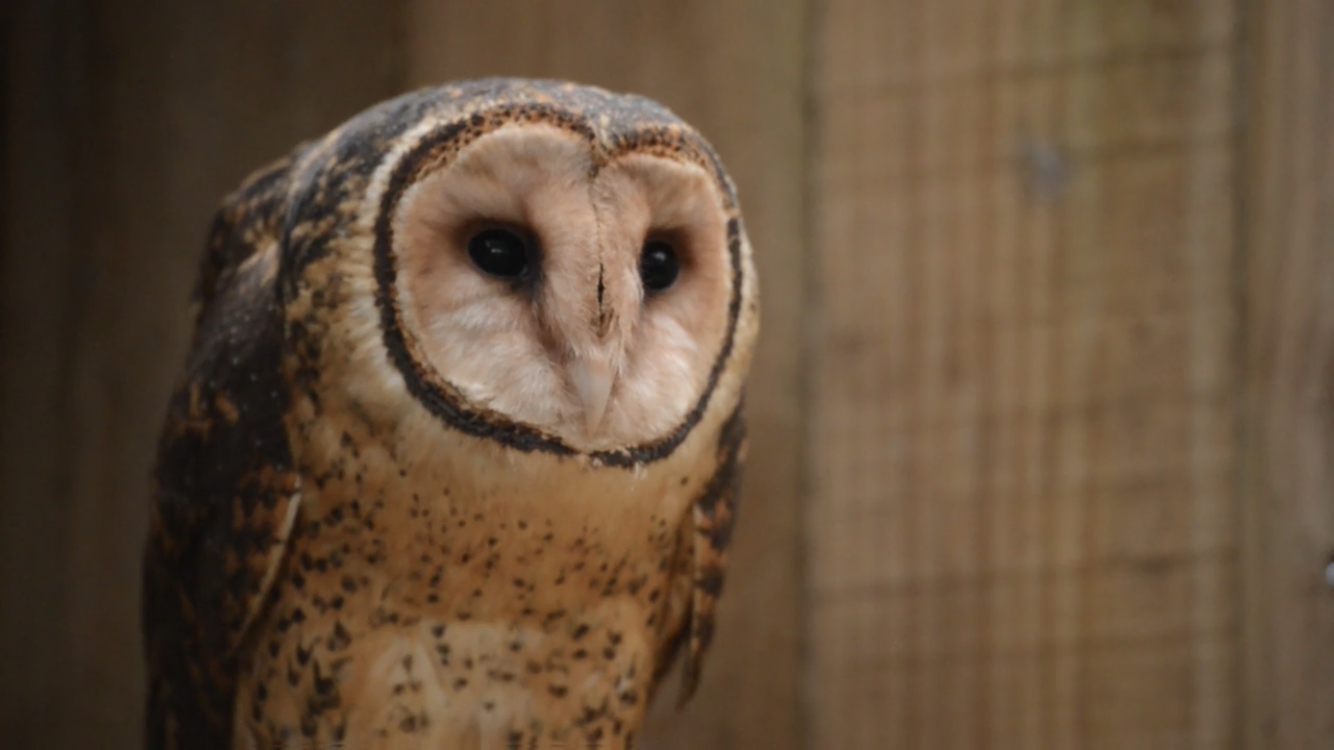
Hard to detect
Even when calls are played, owls may not respond or may be far away.
What are we doing?
Research and Monitoring
We are developing new ways to detect Tasmanian masked owls and learn more about their ecology. This includes using specially trained detection dogs to find owl pellets, which mark roosting and nesting areas.
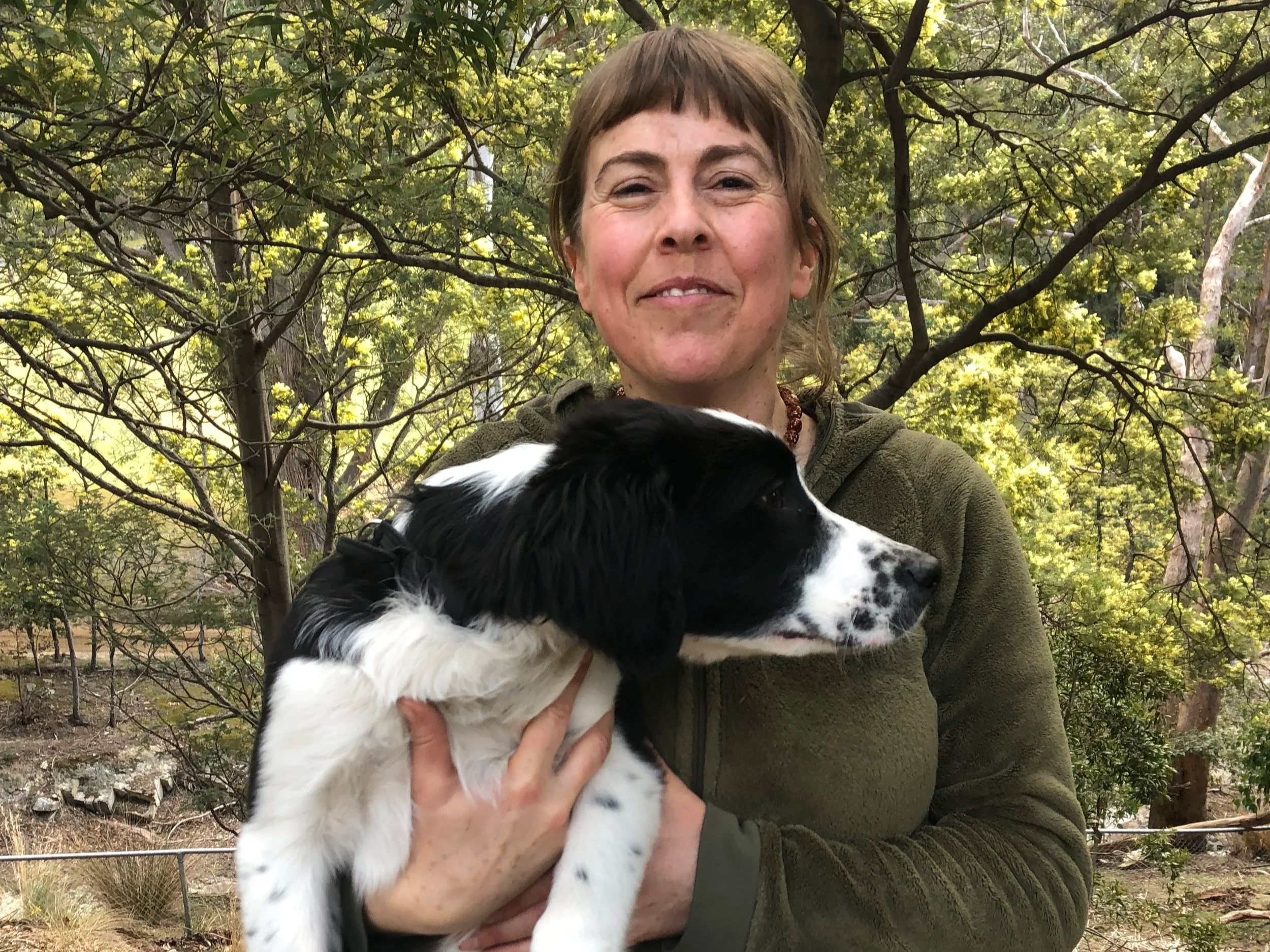

Future research
DNA from pellets and feathers will help reveal where owls live, how many there are and how they move through the landscape. This information will support better conservation planning for this rare and secretive species.